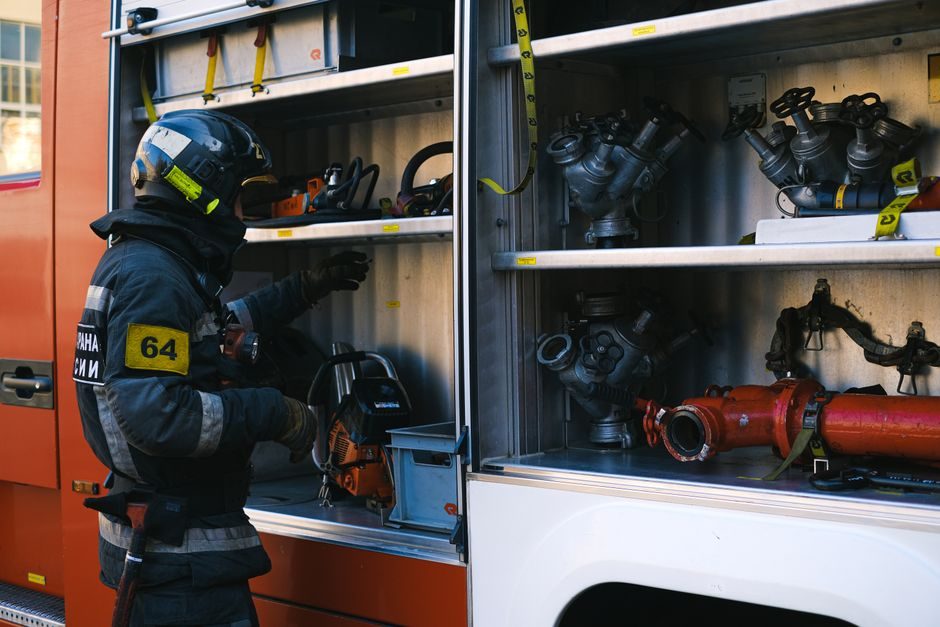
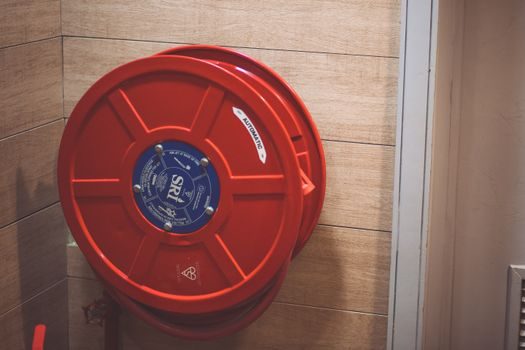
A heavy-duty spring-rewind reel such as the Alemite 8078 series handles oil, grease, air, and water on a fixed-mount industrial platform, with a five-position guide arm and a sealed-bearing swivel designed to keep torque load off the power spring [S1]. For lighter wall- or ceiling-mounted service, the HOSE & REEL PRODUCTS BV 808 series offers 10–20 m of hose on a powder-coated steel frame rated to 100 °C, weighing 24–32 kg depending on configuration [S2].
Buyers routinely confuse "hose reel" with "cable reel" or "cord reel" because manufacturers such as Coxreels group them under a single product family covering spring-driven, hand-crank, and motorized retraction for power transmission, transportation, utility/fleet, and welding-gas service [S3]. The physical principle is identical — a stored-elastic or mechanical-advantage mechanism spools the line — but the working pressure, abrasion class, and explosion-proof requirements diverge sharply, which is why a single selection matrix rarely fits both.
Four Drive Types and Where Each Earns Its Place
Spring-rewind reels remain the default for hose lengths up to roughly 20 m because the enclosed, factory-lubricated power-spring cassette returns the hose smoothly without operator input, and a ratchet anti-lockout pawl prevents lockup at full extension [S1]. The 808 series demonstrates the spring-rewind envelope: 10 m minimum, 20 m maximum, full-flow leakage-proof swivel, multi-position ratchet lock, and a 9-position guide arm adjustable for ceiling, wall, or floor mount [S2].
Hand-crank reels are specified when electricity is unavailable, the hose is too long or too heavy for a spring (typically above 20–25 m of ½ in. hose, beyond which spring torque becomes unmanageable), or the duty cycle is intermittent enough that manual rewind is acceptable — Coxreels lists them as a core retraction family alongside spring and motor options [S3]. Motorized reels enter the spec when the hose is too long for hand operation, the cycle is continuous, or the installation is on a vehicle (service trucks, lube skids) where the reel is plumbed to an engine-driven hydraulic or 12/24 V DC supply.
Pneumatic-driven reels are a fourth category used in flammable atmospheres where an electric motor would create an ignition source, and they are typically matched to the plant's existing compressed-air ring main. In all four cases, the hose itself is the limiting factor: a heavier or longer hose forces the buyer up the drive-type ladder.
Hose Length, Working Pressure and the Swivel Joint
Hose-length selection is a friction-and-torque calculation, not a guess. The 808 series publishes a 10–20 m window as the standard spring-rewind envelope for industrial and automotive use, and any extension past the rated length over-tensions the spring and accelerates fatigue at the swivel [S2]. For the Alemite 8078 family, the heavy-metal arbor and sealed bearings are engineered to take the side-load that long high-pressure lubrication hose imposes; the manufacturer emphasises "optimum performance and safety" as a function of keeping the spring's torque load within its design band [S1].
Working pressure is set by the hose, not the reel. A typical 1/4 in. grease hose at 5,000 psi, a 3/8 in. air hose at 300 psi, and a 1 in. water hose at 150 psi place very different burst-load demands on the swivel joint. A "full flow" or "leakage-proof" swivel — as fitted to the 808 series — is a stated must-have for oil and air service; for grease, the swivel must additionally tolerate the higher viscosity and the axial load of pumped semi-fluid lubricant [S2][S1].
For higher-pressure washdown or hydraulic service above roughly 3,000 psi, specify a reel whose maximum pressure rating is published by the manufacturer; do not assume a "heavy-duty" reel covers hydraulic pressures unless the OEM datasheet states it. Swivel seal material — Buna-N, Viton, EPDM — must also be cross-checked against the media; a Viton seal is the conservative choice for petroleum oils and many solvents, while EPDM is required for brake fluid and some water-based chemicals.
Mounting Configuration and Reel Material
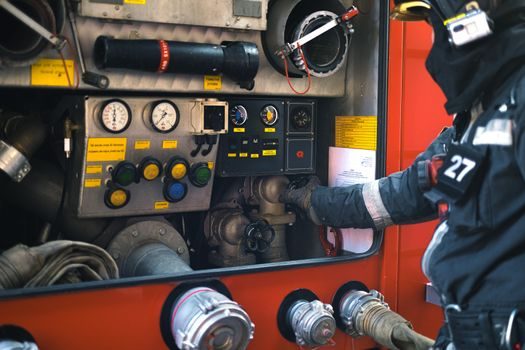
Three mounting formats cover the majority of industrial installations: fixed (bench, wall, or ceiling), portable (cart or truck-bed), and retractable boom (overhead crane or service-vehicle arm). The 8078 series is described as a fixed-mount rugged reel engineered for "tough work environments" and is the form factor most commonly bolted to a workshop wall or under a service-bay ceiling [S1]. The 808 series is explicitly listed as wall-mounted and can be reoriented for ceiling or floor use because the guide arm and ratchet mechanism are position-independent [S2].
Reel material drives both weight and corrosion class. The 808 series uses epoxy powder-coated steel in the 24–32 kg range — heavier, more rigid, and more corrosion-resistant in a humid or chemical-exposure environment [S2]. Plastic reels, such as the 705 and 701 series from the same Dutch manufacturer, are listed for light-industrial indoor service where weight matters and the media is benign (typically water or low-pressure air) [S2]. Stainless-steel reels enter the spec in food, beverage, pharmaceutical, and offshore installations where caustic washdown or salt spray would attack powder-coated carbon steel.
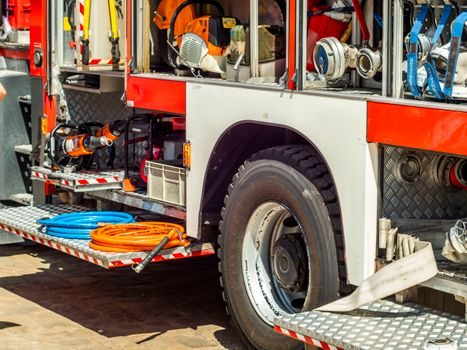
For mobile or vehicle-mounted service — utility and fleet trucks, lube skids, and welding carts — Coxreels positions its line specifically for "increasing worksite safety and efficiency by managing hoses, cables, and cords neatly and conveniently" on the truck body, which dictates a vibration-resistant mount and a hose stop matched to the trailer or chassis geometry [S3]. Mounting bolts, not the reel frame, are usually the fatigue point on mobile equipment; a flexible isolator or a backing plate is normal practice.
Compatibility With Lubricants, Fuels and Welding Gases
Media compatibility is the single most common field-failure root cause, and the OEM datasheets make a point of stating the approved media list. The 8078 series is explicitly rated for oil, grease, air, and water; the manufacturer highlights this list as a "Compatibility" line in the product description and notes three colour options for visual segregation on the shop floor [S1]. The 808 series is positioned for industrial and automotive applications — broadly covering oil, air, water, and antifreeze within its 100 °C temperature ceiling [S2].
For fuels and solvents, the Samoa RM-12 series shown alongside the 8078 is explicitly listed for fuel and water service, while the RM-12CL and RM-12CLX variants are restricted to grease and water — a useful illustration of how a near-identical reel frame is re-spec'd by seal and hose material for different media classes [S1]. Welding-gas reels (oxyacetylene twin-line) require non-sparking materials and a twin-hose spool; Coxreels publishes a dedicated welding-gas reel line for this duty, with spring, hand-crank, and motorized retraction available across the same frame family [S3].
Where explosion risk is present — fuel farms, solvent dispensing, LNG — a non-sparking reel (aluminium or brass internals, no electric motor) is required, and the site hazardous-area classification dictates whether a pneumatic-drive reel is mandatory over an electric-motorized one. For general shop and fleet service, a sealed-bearing powder-coated steel reel with the correct seal material is the safe default.
Selection Procedure: Five Gates Before You Order
Gate 1 — define the media. Oil, grease, air, water, fuel, solvent, or welding gas each map to a different seal and hose combination, and to a different OEM product line (e.g. the Samoa RM-12 family segregates fuel from grease at the model suffix) [S1]. Gate 2 — set the working pressure and temperature. The 808 series carries a published 100 °C ceiling and a full-flow swivel rated for the hose's working pressure; match the reel's pressure rating to the hose, not to the system's nominal pressure [S2].
Gate 3 — measure the required hose length and add 1–2 m of service loop. The 808 series' 10–20 m spring-rewind window is the design envelope, and exceeding it requires a hand-crank or motor upgrade [S2]. Gate 4 — confirm the mounting. Fixed wall/ceiling, vehicle body, or portable cart each have different frame and bracketry requirements; the 8078 is fixed-mount, the 808 is wall/ceiling/floor, and Coxreels covers the truck-bed category with vibration-rated brackets [S1][S2][S3]. Gate 5 — verify standards. For forklift and material-handling applications, Cascade Corporation's mast-and-hose-reel selection logic is published separately and ties the reel to the truck's hydraulic supply group, the mast type (single vs. double internal reeving), and the sideshifter option — a useful reference for OEM-spec buyers, though it predates 2026 [S4](2023-06) [S5](2025-12).
Comparison: Spring vs. Hand-Crank vs. Motorized on Five Decision Criteria
On retraction speed, spring-rewind reels are fastest because the operator simply walks back; hand-crank is slowest and depends on operator effort; motorized matches or exceeds spring retraction for long hose lengths [S3]. On hose-length capability, spring-rewind tops out around 20 m for typical 3/8 in. hose (the 808 series is explicitly 10–20 m), hand-crank handles 20–35 m, and motorized extends to 50 m and beyond on the same frame family [S2][S3].
On cost, spring-rewind is the lowest unit price for short hose lengths, hand-crank is mid-tier, and motorized is the highest initial outlay but the lowest operator-labour cost on a high-cycle line. On installation environment, spring-rewind is the safest default for indoor and general outdoor service, hand-crank is preferred where no power is available, and motorized (especially 12/24 V DC) is standard for service-truck and lube-skid bodies [S3]. On hazardous-area suitability, pneumatic-driven reels are specified for Zone 1/Zone 2 flammable atmospheres where an electric motor is unacceptable, and a hand-crank reel is also a defensible Zone 1 choice where operator presence is required anyway. The Alemite 8078 "heavy metal arbor design … eliminates breakage associated with non-metal and light weight metal arbors" is a published durability claim that directly addresses a known spring-rewind failure mode — arbor fatigue under cyclic load [S1].
Failure Modes, Maintenance and What to Verify on Receipt
Three failure modes account for the majority of warranty claims. First, the power spring loses tension or breaks because the hose was over-length or the duty cycle exceeded the design band; the 808 series' "easy tension adjustment" is the OEM-provided field fix, but a broken spring cassette usually means a factory replacement [S2]. Second, the swivel seal leaks because the seal material was mismatched to the media; cross-check the OEM media list (oil/grease/air/water for the 8078, industrial/automotive fluids for the 808) against the actual fluid in service [S1][S2]. Third, the ratchet pawl locks out at full extension, which the 8078 specifically eliminates via an "Anti-Lockout Design … ratchet prevents lockup when hose is fully extended" — a feature worth confirming if the operator routinely pulls the hose to its full length [S1].
On receipt, verify that the guide arm adjustment range matches the planned mounting orientation (the 808 series is 9-position; the 8078 is 5-position), confirm the swivel pressure rating equals or exceeds the hose working pressure, and inspect the powder-coat or plating for transit damage that will become a corrosion site. For Cascade-spec forklift installations, the dedicated "Cascade Hose & Cable Reel Selection Guide, Part No. 212199" must be used to match the reel group to the mast type, the sideshifter option, and the solenoid adaption, per the OEM service manual [S4](2023-06) [S5](2025-12).
For buyers cross-shopping against broader fluid-handling components, the same five-gate logic — media, pressure, length, mounting, standard — applies across industrial hose and industrial valve selection, and the upstream flow meter spec should be locked before the reel length is finalised because flow measurement accuracy degrades with hose-side turbulence. Two trackable signals to watch into the second half of 2026: Coxreels' new XTM heavy-duty retractable reel family, currently featured on the manufacturer's homepage, and the continued migration of OEM colour-coding schemes (the 8078 is now offered in three colours) as a low-cost way to segregate lubricant, air, and water service on a shared shop floor [S1][S3].
For related coverage, see Carrying Case Price & Cost Guide 2026: Material, MOQ and Use-Case Map.