A concrete batching plant is the supply-side node on a pour day: it doses cement, water, aggregates and admixtures to a recipe and discharges fresh concrete at controlled output rates, with mid-range stationary models typically rated 45-60 m³/h (JS1000 mixer, 130 kW total power, 4.1 m discharge height) and large plants climbing to 90-180 m³/h (HZS90 / HZS120 / HZS180 designations) [S6][S7]. A concrete vibrator is the placement-side node: an electromechanical or pneumatic device that consolidates the just-poured concrete by injecting high-frequency energy, typically 200 Hz-class on motor-internal types and 50 Hz external form-mount types, eliminating entrapped air and ensuring aggregate paste contact.
They are sold off completely different catalogues, but the choice of one constrains the other — the concrete batching plant determines the rate at which concrete arrives at the form, and the concrete vibrator fleet determines how fast that concrete can be consolidated before the next bucket lands. Reading manufacturer catalogues updated in July 2026, the JS-series twin-shaft mixer remains the dominant heart of mid- and high-capacity plants, while the vibrator category splits cleanly into three motor-driven families: MV electrical motor vibrators, ZF/ZW external form-mount vibrators, and ZN inserted poker vibrators [S2].
Definition and Scope: What Each Machine Actually Does
The batching plant is a fixed or relocatable assembly of aggregate bins, a PLD-series aggregate batcher, a cement silo with screw conveyor, a weigh batcher, a water/admixture dosing skid, an electric control system, and the central mixer [S2]. Output is governed by the mixer's per-batch volume and the cycle time: a JS1000 mixer discharging into a 4.1 m bucket on a 60-72 second cycle delivers the 45-60 m³/h figure quoted for the HZS60 plant [S6]. HZS75, HZS90, HZS120 and HZS180 designations step up through larger mixers (JS1500, JS2000, JS3000) and proportionately higher total power draws [S7].
The concrete vibrator is consolidation hardware, not a proportioning or mixing device. Henan Dasion's three product families define the category: MV electrical motor vibrators (motor-internal eccentric weights), ZF/ZW external concrete vibrators (clamp-mounted to the form face), and ZN inserted concrete vibrators (a poker shaft lowered directly into the fresh concrete) [S2]. Selection between them is driven by the element depth, rebar congestion, form geometry, and the slump of the mix leaving the plant.
Selection Criteria: Match the Plant to the Vibrator Fleet
Engineers reading the 2026-07-25 Haomei and Dasion catalogues will notice the plant side is parameterised by model-code-and-output (HZS60 = 45-60 m³/h with JS1000; HZS180 ≈ 180 m³/h class), while the vibrator side is parameterised by power rating, frequency, and shaft length [S5][S2]. A reasonable sizing rule on a single-boom pour: each inserted vibrator handles roughly 4-7 m³/h of placed concrete, so a 60 m³/h plant needs 9-15 pokers in active rotation depending on crew and pump placement. The HZS60's 200 t/h aggregate belt and 1 m³ per-cycle mixing capacity sets a hard upper bound the vibrator fleet cannot exceed [S6].
Plant-side decision gates, in order: (1) HZS output band must equal or exceed the structural element's required pour rate; (2) mixer model (JS1000, JS1500, JS2000, JS3000) must be able to clear the cycle time the plant's belt delivery can sustain; (3) discharge height of 4.1 m on the HZS60 class must clear the truck mixer or pump hopper; (4) total power draw (130 kW on HZS60) must be within site generator or grid capacity [S6]. Vibrator-side decision gates: (1) poker diameter vs minimum rebar spacing; (2) shaft length vs element depth; (3) frequency (high-frequency internal ≈ 12,000-17,000 vpm, external form-mount ≈ 3,000-6,000 vpm) vs mix stiffness; (4) motor IP rating vs site dust and moisture exposure.
Who Batching Plants Are For — And Who They Are Not For
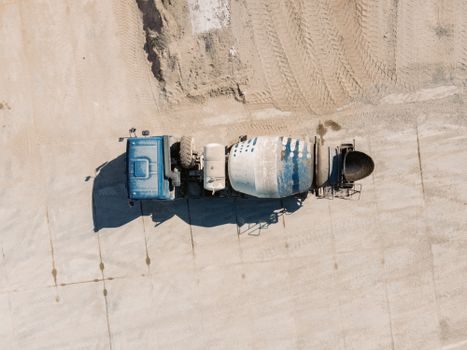
Batching plants are for contractors and ready-mix producers delivering structural concrete at a sustained rate above roughly 25 m³/h: high-rise slabs, bridge decks, industrial floor slabs, precast yards, and highway pavement. A stationary belt-type or bucket-type HZS plant is specified for long-term fixed installations, while a mobile or container-type plant suits phased road or remote-site work [S2]. Shandong Macpex and Quanzhou Sanlong both offer stationary plants from small-capacity (HZS25-class) up to 180 m³/h configurations, with OEM/ODM service and an average response time under 4.28 h on Made-in-China sourcing channels [S3][S9].
A batching plant is the wrong tool for small pours under 5 m³, intermittent repair work, or sites where the truck-mix delivered option is more economical than mobilising an HZS plant. For those cases, a portable JZC/JZM drum mixer or self-loading truck mixer (DS0.5F through DS4.0 capacity bands) replaces the stationary plant entirely [S2]. The vibrator fleet, by contrast, is needed on virtually every structural pour regardless of plant or truck-mix supply, because entrapped air is a defect source no transport method can fix.
Main Options Compared on Decision Criteria
On the plant side, the four common options line up as follows against four selection criteria: [S1]
1) Stationary belt-type HZS plant (e.g. HZS60, HZS75, HZS90): high output (45-90 m³/h class), high total power draw (130 kW and up on HZS60), long mobilisation time, lowest per-m³ cost at sustained utilisation. Spec example: HZS60 = 45-60 m³/h, JS1000 mixer, 1 m³ per batch, 200 t/h aggregate belt, 4.1 m discharge height, 130 kW total [S6].
2) Mobile or compact container-type plant: moderate output, fast setup (1-3 days vs 2-4 weeks for stationary), containerised shipping, suited to road and remote jobs. Lead time 1-3 months off-season per Shandong Macpex published data [S3].
3) Self-loading concrete truck mixer (DS0.5F to DS4.0): batch-and-transport in one unit, 0.5-4.0 m³ per load, suited to small pours, scattered sites, or areas where a central plant cannot be sited [S2].
4) Portable drum mixer (JZC/JZM): lowest output, 220 V or engine drive, suited to site sheds and DIY-scale work [S2].
On the vibrator side, the same criteria-based read: MV electrical motor vibrators are compact and used inside small hoppers and form vibrators; ZF/ZW external vibrators mount to the formwork face for precast and wall elements where insertion is impossible; ZN inserted pokers are the workhorse for slabs, beams, and columns where the operator can lower a shaft into the fresh concrete [S2]. Choose ZN for rebar-congested or thick elements, ZF/ZW for thin precast panels and form-face work, MV for bin and hopper de-aeration on the plant or silo side.
Real Use Cases and a Trackable Pour-Day Workflow
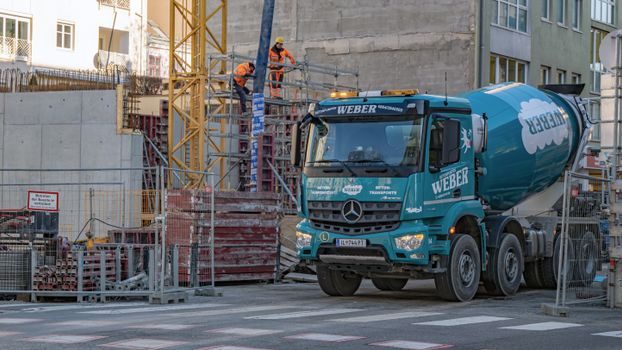
A mid-size commercial slab pour: an HZS75 stationary plant with JS1500 mixer runs at roughly 75 m³/h, discharge height around 4.1 m into truck mixers or a concrete pump. At the placement face, a crew of 3-4 ZN inserted vibrators consolidates each bucket as it lands, with one ZF/ZW external vibrator clamped to the column forms for the tie-cones and beam sides. Torui's published product line confirms HZS75, HZS90, HZS120 and HZS180 as the standard commercially-tracked bands in 2026 [S7].
A precast yard is the inverse use case: a smaller-capacity stationary or mobile plant feeds forms on a slow cycle, and the consolidation work is done almost entirely by external form-mount vibrators (ZF/ZW type) clamped at fixed positions on the form table, because the geometry is repeatable and insertion through rebar is not practical. Dasion's product tree groups the vibrator category alongside cement silos, screw conveyors, and PLD aggregate batchers as the standard "concrete plant optional parts" set sold by a batching-plant OEM [S2].
Limitations, Failure Modes, and Sourcing Signals
Plant-side failure modes are mechanical and electrical: mixer liner wear, belt misalignment, silo over-pressure, aggregate moisture miscalibration, and admixture dosing drift. The 6600 m² Qingdao Elite facility, for example, holds national patents on dry-mix mortar lines but explicitly states the dry-mortar scope rather than wet structural concrete, signalling a domain boundary a buyer should respect when sourcing [S1]. Hamac, Haomei, Dasion, and Torui all publish distinct product trees covering the wet-batching plant category, with Haomei citing 2021-2022 export deliveries (QT6 block line to Zambia) as a trackable post-installation reference [S4][S5][S8].
Vibrator-side failure modes are different: bearing burn-out on internal MV motors, shaft coupling failure on ZN pokers from impact with rebar, and clamp loosening on ZF/ZW external units under extended vibration cycles. Both Shandong Macpex (Diamond Member since 2018, audited supplier) and Quanzhou Sanlong publish a wide product tree including batching plants, pipe-making machines, dry-mortar lines, and twin-shaft mixers [S3][S9]. For the admixture dosing accuracy that determines the mix the vibrator has to consolidate, see the concrete admixture reference; for crack-control decisions after consolidation, concrete fiber and concrete curing compound are the downstream material choices, while concrete groove-cutter governs the contraction-joint pattern cut into the cured slab.
Trackable signals for the next procurement cycle: (1) watch whether any 2026-Q3 OEM catalogue update adds a higher-frequency (>200 Hz) internal vibrator to the MV family, since higher frequency on low-slump mixes is a documented consolidation gain; (2) watch for HZS-series model-code refreshes, as the HZS25-HZS180 ladder is stable across the four 2026-dated catalogues surveyed (Haomei, Hamac, Torui, concretebatchingplants24) but the JS mixer code numbers (JS500, JS750, JS1000, JS1500, JS2000, JS3000) tend to step with each output tier. Cross-referencing the industrial flooring installation gate map is a useful sanity check when specifying a plant-vibrator pair for a slab pour, since prep, place, consolidate, finish, cure, and joint-cut must all align on the same shift.