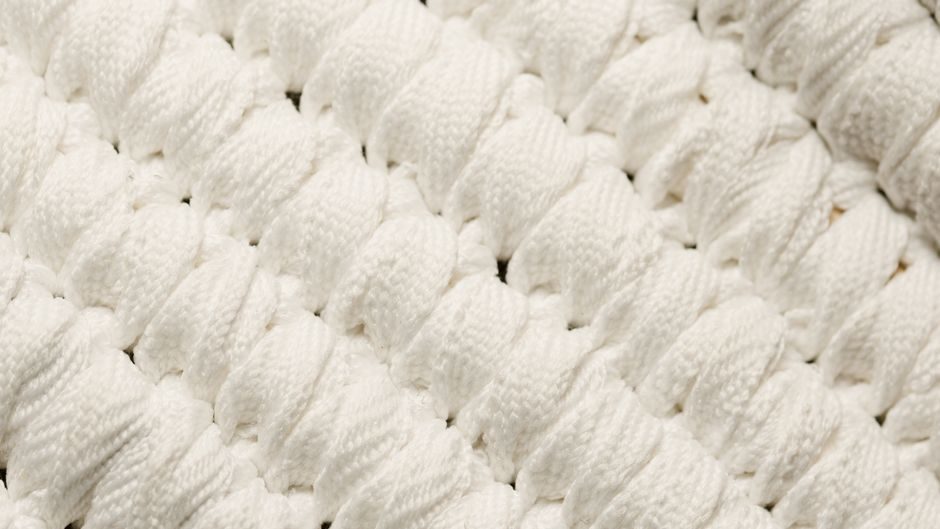
Concrete fiber reinforcement in 2026 splits into three commercial families — steel (hooked-end, cold-drawn, stainless), polypropylene (PP) micro-fiber for crack control, and macro-synthetic structural fiber — with selection driven by ACI 544.3R-2008 dosage bands of 0.3–1.5% by volume [S3].
Procurement-side price reality on 2026-07-06: Chinese PP-fiber makers on Alibaba quote asphalt-grade PP fiber at roughly $2–$6/kg FOB for 20-ton lots, steel fiber ex-works from $800–$1,800/t depending on hooked-end geometry and tensile class, and macro-synthetic structural fiber at $5–$14/kg [S4].
Three Fiber Families on the 2026 Shortlist
Steel fibers — typically cold-drawn wire with hooked ends, 0.5–1.0 mm diameter, 30–60 mm length, tensile strength 1,000–1,600 MPa — replace light mesh in slab-on-grade, shotcrete and tunnel linings; Concrete Fiber Solutions markets its CFS 100-2 hooked-end steel fiber specifically as a rebar/mesh substitute with extended joint spacing [S2].
PP micro-fibers (6–20 mm, 10–40 denier) are monofilament or fibrillated, 300–600 MPa tensile, dosed at 0.6–1.2 kg/m³ purely for plastic-shrinkage crack control and fire-spalling mitigation; TenaBrix lists PP synthetic microfiber alongside macro-synthetic grades as its core concrete reinforcement line [S1].
Macro-synthetic structural fibers (40–60 mm, embossed or twisted, 550–750 MPa tensile) are dosed at 3–10 kg/m³ to substitute for light reinforcing steel in slabs and composite metal decks — the middle ground that does not replace primary rebar but does replace crack-control mesh.
Dosage, Performance and ACI 544.3R-2008 Bands
ACI 544.3R-2008 anchors proportioning around fiber volume fraction Vf: 0.3–0.5% for crack control, 0.5–1.0% for structural slab-on-grade, and 1.0–1.5% for shotcrete and heavy industrial floors [S3].
Residual flexural strength at 3 mm crack mouth opening (R₃, the EN 14488-3 / ASTM C1609 number engineers actually compare) lands at 1.0–3.5 MPa for hooked-end steel at 0.5% Vf, 0.6–1.5 MPa for macro-synthetic at the same Vf, and is essentially zero for PP micro-fiber used below 0.3% — i.e. PP buys crack-width and fire performance, not post-crack load capacity.
Fire-spalling behaviour is the non-negotiable for tunnels and high-strength columns: PP micro-fiber at 1.0–2.0 kg/m³ melts at 160–170 °C, creating permeability channels that relieve pore pressure — PP is specified in many European tunnel codes precisely for this mechanism, not for strength.
Cost Levers That Move 2026 PO Numbers
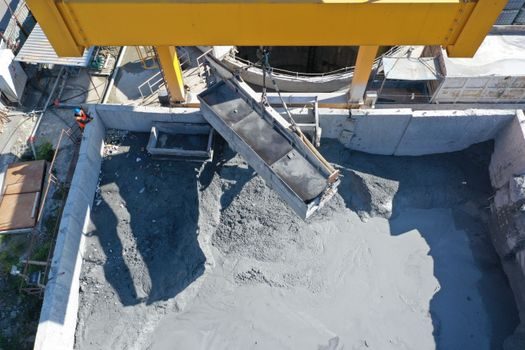
Steel fiber landed cost = (parent wire rod price + draw cost + hooking premium) × scrap adjustment. Wire rod at $560–$640/t on 2026 LME tracks pulls ex-works steel fiber into the $800–$1,800/t window above; stainless 304 fibers run $4,500–$7,000/t for corrosive-floor service. [S1]
PP fiber tracks polypropylene futures (~$900–$1,100/t polymer in 2026) plus fibrillation, surface treatment and packaging — net $2–$6/kg for asphalt-grade and $3–$8/kg for concrete-grade; bids below $2/kg on Alibaba should be treated as suspect on 2026-07-06 because that is below most Chinese producers' variable cost [S4].
Macro-synthetic structural fiber is the highest $/kg ($5–$14) but lowest dosage (3–10 kg/m³) — its cost per m³ of placed concrete at 5 kg/m³ × $8/kg = $40/m³ is often within $5–$15/m³ of equivalent steel-fiber reinforcement, which is why it keeps taking slab-on-grade share.
Selection Criteria: Steel vs PP vs Macro-Synthetic
[S2]
Substrate logic: ground-bearing slabs with hard-wheeled forklift traffic (warehouses, DCs) lean steel; elevated composite metal decks and precast tilt-up lean macro-synthetic; tunnels, columns and HS/C columns with fire-spalling exposure layer PP at 1–2 kg/m³ over whatever structural fiber is already there.
For cost-driven slab-on-grade in 2026, the price-banded table that matters is steel hooked-end $0.8–$1.8/kg (bulk) versus macro-synthetic $5–$14/kg (lower dosage 4–8 kg/m³) — the trade is roughly $20–$30/m³ steel versus $25–$60/m³ macro-synthetic, and engineers price the slab joint-extension saving (steel allows 30–40 m joint spacing, mesh caps at 6–9 m) on top.
Standards, Testing and Code Anchors

ACI 544.3R-2008 remains the specifying document in 2026 — it covers proportioning, production and quality control of fiber-reinforced concrete and is the source of the Vf bands cited above [S3]. EN 14889-1 (steel) and EN 14889-2 (polymer) are the European parallel: steel fibers declare performance class R₁/R₃, length, diameter and tensile, polymer fibers declare Class Ia/II/III by modulus and length.
ASTM C1116 is the U.S. material specification behind most QC submittals (Type I steel, Type II glass, Type III synthetic, Type IV natural), with ASTM C1609 as the flexural residual-strength test and ASTM C1399 as the older toughness index route; for shotcrete, EN 14488-3 on round-panel or square-panel residual flexural strength is the procurement-side benchmark.
When bidding goes through Chinese suppliers, request the mill cert naming steel grade (often cold-drawn SAE 1008/1010 wire), PP grade (homopolymer PP-H, melt flow index 10–25 g/10 min), and for macro-synthetic, the embossing pattern plus the ASTM C1609 or EN 14889 R₃ class number — vendors publishing only "fiber for concrete" without those fields are the ones generating the rework tickets.
Procurement Pitfalls and 2026 Sourcing Signals
Common failure modes: under-dosed PP micro-fiber sold as "structural" (sub-3 kg/m³ PP buys nothing structural, full stop), alkali-sensitive glass fiber supplied into high-alkali pours without AR-glass certification, and hooked-end steel fiber that has lost its hook geometry through over-straightening — buyers should sample-test length, aspect ratio, and tensile before signing off on a 100-t lot. [S3]
Sourcing signal worth tracking in 2026: Chinese PP-fiber capacity has been reallocated between asphalt and concrete grades as road-build programs have run hot, and 2026-07-06 ex-works quotes on Alibaba now show wider dispersion ($1.4–$6.5/kg for nominally the same PP fiber) than in 2024 — material origin, melt-flow spec and AR coating drive that spread, not just lot size [S4].
Pair fiber specification with the concrete-side admixture and curing plan from the start, since fiber performance is dose- and matrix-dependent — see the concrete admixture 2026 cost guide for the chemistry side, and review the broader concrete fiber properties reference when locking Vf to the mix design. For the batching hardware behind a fiber-modified mix, the concrete batching plant configuration page covers dosing and slump retention considerations; finishing equipment selection links to the concrete vibrator selection reference because fiber mixes change the vibration rule.
Next node worth tracking: ASTM C1609 R₃ class declarations on mill certs (engineers are starting to write R₃ ≥ 1.5 MPa at Vf 0.5% into spec for slab-on-grade), and any 2026 update activity on ACI 544.4R (design considerations) that would shift Vf bands — a watch-and-wait item on 2026-07-06, with no published revision to flag.