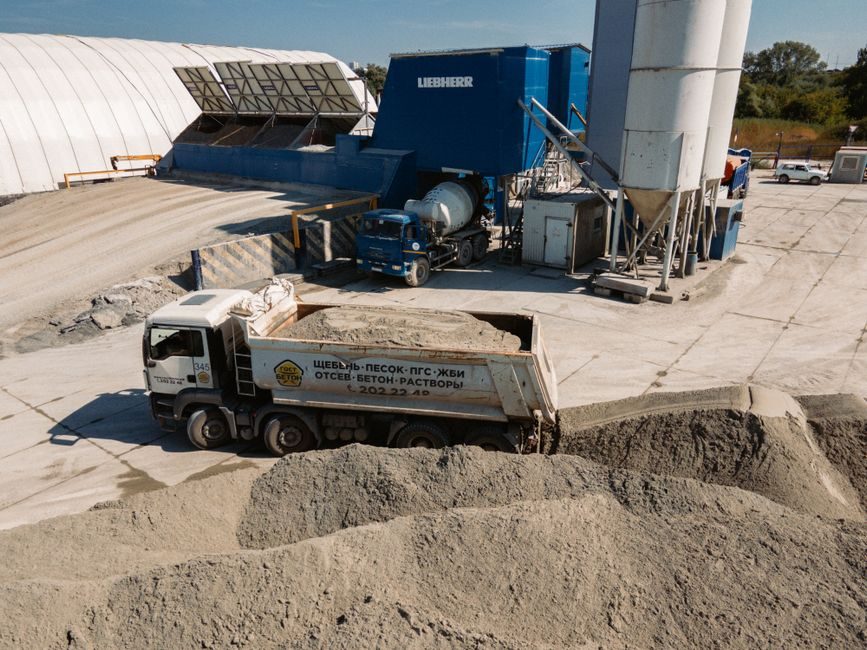
Buyers evaluating a concrete mixer truck in June 2026 face a market split between compact 6 m³ diesel agitors (211.89 ft³) used for mining and urban delivery, and 7-15 m³ hydraulic heavy-duty chassis for high-volume pours [S1][S2][S5]. Factory-gate pricing spans roughly US$30,000 for a 6 m³ Chinese-built agitor to well above US$100,000 for a 12-15 m³ European heavy-duty unit, with the gap driven by drum volume, mixer output rate, and chassis class rather than brand premium alone [S2].
The category overlaps heavily with the concrete mixer truck definition: a truck-mounted rotating drum that keeps the mix agitated between batch plant and pour, typically turning at 2-6 rpm to prevent premature set. For projects needing placement rather than transport, the truck-mounted concrete pump is the parallel machine, and a site engineer usually has to choose one or spec both — a decision the spec cut in Concrete Mixer Truck vs Concrete Pump Truck: 2026 Spec Cut for Site Engineers breaks down by reach versus volume.
Capacity bands and what they cost
The 6 m³ class dominates Chinese OEM catalogues in 2026, with Putzmeister's Mixkret 6 (diesel, 6 m³ / 211.89 ft³) and SANY's SY306C-8(R) (diesel, 6 m³ / 211.89 ft³) sitting at the standard urban/mining spec [S1][S5]. On the heavy side, CIFA's HD series spans 7-15 m³ (247.2-529.72 ft³) and SEMIX's SM9 covers 7-12 m³ (247.2-423.78 ft³), both with hydraulic drives and payload-rated frames for off-road pours [S2][S4].
Reference pricing from active listings: a Jidong concrete mixer truck from a Jiangsu manufacturer is listed at US$100,000 per set with MOQ 1 set and 500 sets/year capacity, indicative of the mid-tier Chinese export quote. Okorder's bulk concrete mixer truck page lists supply capability of 1,000 units/month from a China-main-port origin, with discharge residue rate under 0.5% and a 2 m³/min discharge benchmark that should be cross-checked against any quote. For buyers weighing volumetric output per trip, this 2 m³/min discharge rate versus a 5 m³/min output (176.6 ft³/min) claimed by the SANY SY306C-8(R) is one of the cleanest data points to compare agitor performance in a tender [S5].
Driveline: diesel vs hydraulic and the cost delta
Three of the five 2026 OEM product sheets in the research set are diesel, two are hydraulic [S1][S2][S3][S4][S5]. The diesel models — Putzmeister Mixkret 6, EMSUNTOUR WC6BJ (explosion-proof for underground coal mines), and SANY SY306C-8(R) — are sized at 6 m³ and aimed at road-legal urban haul or flameproof underground duty [S1][S3][S5]. Hydraulic-drive units from CIFA (HD series) and SEMIX (SM9) start at 7 m³ and run to 12-15 m³, with the CIFA HD delivering up to 560 l/min (147.9 us gal/min) hydraulic flow to the drum [S2][S4].
The driveline choice drives roughly 30-60% of the price gap between a 6 m³ diesel agitor and a 12-15 m³ hydraulic heavy-duty unit, with the rest split across chassis rating (single vs double rear rollers, bolted vs welded drum), mixer output rate, and country of assembly. CIFA explicitly markets the HD frame as "reinforced basic frame, wear-protected blades, single or double rollers with sling bar" for off-road reliability — these are the line items that move quotes above US$80,000 ex-works [S2].
MOQ, lead time and supply concentration
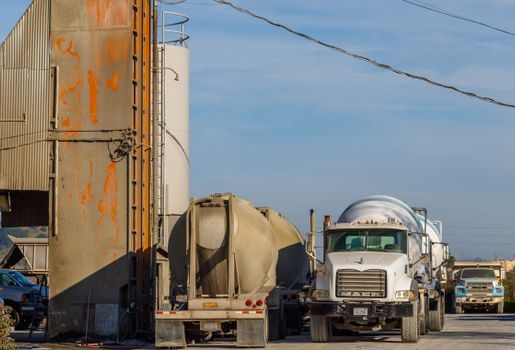
Supply-side concentration is high in Shandong and Jiangsu, China. Jinan Shanglong International Trade Co. lists concrete mixer trucks alongside Howo dump trucks, tractor units and truck cranes, with a minimum order of 1 piece and a supply ability of 200 pieces per month on the SINOTRUK platform [S6]. Okorder's bulk concrete mixer truck listing sets supply capability at 1,000 units/month with TT or LC payment terms and China main port loading.
For a procurement officer, the practical sourcing envelope in 2026 is: MOQ 1 unit, FOB China main port, TT or LC, 30-60 day production for stocked chassis and 90-120 days for custom hydraulic heavy-duty builds. Jidong's published 500 sets/year production capacity and 1-set MOQ is a useful baseline for tier-2 Chinese suppliers.
Spec gates to enforce before signing a PO
Spec checks for a concrete mixer truck include drum capacity in cubic metres (6 m³ on the PUTZMEISTER Mixkret 6, EMSUNTOUR WC6BJ, and SANY SY306C-8(R)), discharge output (0.7 m³/min on the EMSUNTOUR WC6BJ and 5 m³/min on the SANY SY306C-8(R)), drum rotation of 2-6 rpm to maintain workability, and explosion-proof diesel configuration for underground coal-mine duty as on the EMSUNTOUR WC6BJ [S1, S3, S5, S8].
Heavy-duty and lightweight are two distinct buying lanes. SEMIX's SM9 is explicitly marketed as "hydraulic lightweight" for 7-12 m³ payloads where truck-class road limits apply, while CIFA's HD series is the opposite — reinforced for off-road mining and dam pours at 7-15 m³ [S2][S4]. Spec'ing the wrong one is the single most common line-item dispute on Chinese export POs.
Where the price actually lives: chassis, hydraulics, drum
The 12-15 m³ hydraulic heavy-duty band flips this: the chassis is a heavier 8x4 or 10x4 rating, the drum and bolted blade set is 30-35% of cost, and the 560 l/min hydraulic subsystem is the single largest line item [S2].
Buyers comparing a US$35,000 FOB Qingdao 6 m³ unit against a US$110,000+ European-built 9-12 m³ hydraulic should not expect to recover the gap with options — the cost is structural, driven by the chassis class, the drum thickness, the hydraulic flow package, and the country of final assembly. A useful sanity check is the Jidong US$100,000 reference quote: at MOQ 1, that price point maps to a mid-volume 8-10 m³ heavy-duty agitor from a tier-2 Chinese supplier, not a 6 m³ urban truck.
Failure modes and warranty-driven adders
Three failure modes drive warranty exposure on concrete mixer trucks. First, drum carryover: residual concrete setting inside the drum after discharge, directly tied to the sub-0.5% discharge residue rate spec — exceeding it is the most common dispute on Chinese export contracts. Second, blade wear on abrasive mix designs: CIFA's HD series markets "wear-protected blades" and bolted (rather than welded) blade assemblies specifically to allow field replacement without cutting the drum [S2]. Third, brake thermal fade on heavy loads: SANY's SY306C-8(R) claims a 15% reduction in braking distance and 50% less brake lining wear via exhaust valve braking, a credible spec gate to require on any diesel agitor PO [S5].
For heavy-duty off-road units, the bolted double-roller sling bar option on the CIFA HD is a worthwhile adder — it is the difference between a 30-minute on-site roller swap and a full drum strip [S2]. Buyers who skip this line and then operate on a remote dam or mining site absorb the field-service cost in the first six months.
Standards, certifications and what to ask for
For underground coal-mine duty, insist on the explosion-proof engine and electrical certification on a model like the EMSUNTOUR WC6BJ — this is a Chinese MA (mining safety) certification, not a generic CE or EPA tier, and it must travel with the truck [S3]. For European road operation, the chassis homologation (typically a whole-vehicle WVTA or national type approval) is separate from the mixer body approval, and OEMs often quote mixer-only without the chassis homologation bundled in [S2][S4].
For buyers who intend to also place concrete via boom, the matching concrete pump truck and the linear guide-style slew bearing on the pump boom is a separate spec chain — there is no cross-saving by sourcing both machines from the same OEM. Where site logistics call for a stationary batch plant feeding truck-mounted agitators, the power mixer reference is a useful cross-check for the agitation duty cycle.
Trackable signals for the next quarter: tier-1 Chinese OEMs (SANY, SINOTRUK, SEMIX) are visibly moving the SM9-class 12 m³ lightweight hydraulic agitor into European and Middle East distributor pipelines, while European OEMs (Putzmeister, CIFA) are pushing the 6 m³ Mixkret and HD series into mining and tunnel segments where flameproof or heavy-duty frames command a price premium [S1][S2][S4]. Cross-check the next round of OEM data sheets for two numbers: discharge rate in m³/min and discharge residue rate as a percentage — those two specs, more than any marketing claim, will sort a usable quote from a rework.