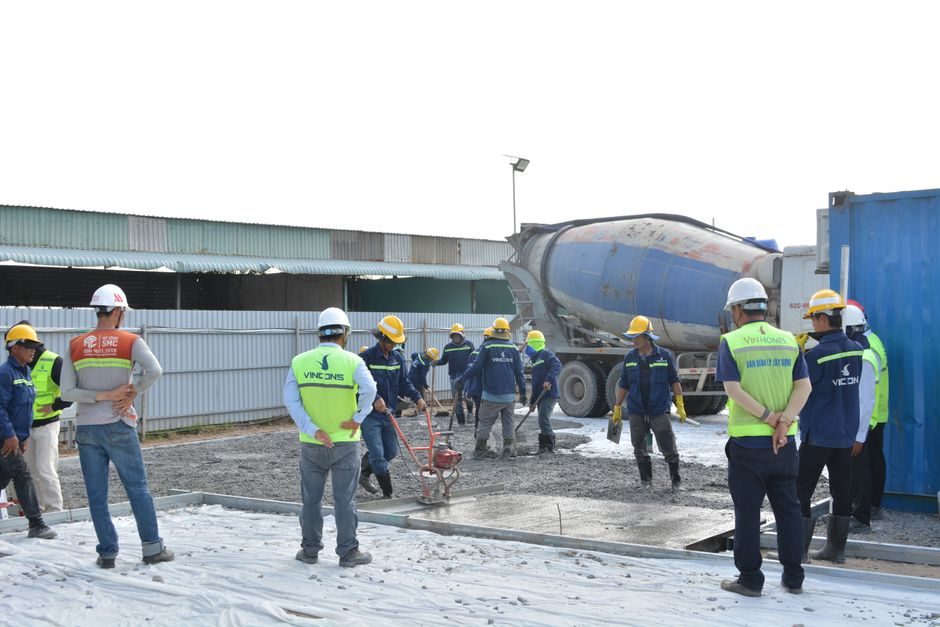
A concrete mixer truck is built around a rotating drum that keeps the mix plastic during transit, with hydraulic-drive CIFA HD units spanning 7–15 m³ (247.2–529.72 ft³) and 560 l/min (147.9 US gal/min) hydraulic output [S1].
A concrete pump truck is built around a high-pressure pumping circuit, a 30–70+ m multi-section boom, and outriggers, with truck-mounted concrete pumps priced from roughly US$3,250 for a 30 m³/h mini trailer unit to US$140,000 for a 43 m boom-class chassis from Zoomlion (model ZLJ5291THBKF 43X-5RZ) on the current Made-in-China marketplace [S4].
Drum vs Boom: Defining Geometry and Job
The mixer drum is a double-cone, helical-blade vessel mounted on a 4–6 axle chassis; its only mechanical job during transit is to turn slowly (typically 2–6 rpm charge, 8–12 rpm mix) so the mix stays above 50 mm slump and below the bleed-water threshold, with blade geometry taken as the controlled variable on heavy-duty designs [S1].
The pump truck adds a pumping kit to the truck: a hopper, an S-valve or rocker-valve transfer, two delivery cylinders, a diesel-driven hydraulic power pack, and a multi-section folding boom — the truck-mounted concrete pump format is the dominant mobile placing method on commercial high-rise and infrastructure decks because the boom places concrete exactly where the form says, no crane-and-bucket cycle required.
Capacity, Output and Reach: The Numbers That Decide the Bid
Mixer truck capacity is quoted in cubic metres of wet concrete carried per load, with CIFA's heavy-duty hydraulic series covering 7–15 m³ on a single chassis and Chinese suppliers such as Shijiazhuang Spring Machinery listing dedicated mixer-truck export lines alongside pump-truck lines [S1][S2].
Pump truck output is quoted in cubic metres per hour, with small trailer concrete pumps from Henan Spark Machinery quoted at 30–40 m³/h on diesel-electric drive, and boom-pump chassis on 5-axle carriers reaching 4-section vertical reach of 43 m on the ZLJ5291THBKF listing [S4]. Boom reach, not drum size, is the headline spec for any pump-truck RFQ — a 43 m vertical reach is roughly equivalent to placing concrete on the 14th-floor slab without re-rigging.
Chassis, Weight and Site Footprint
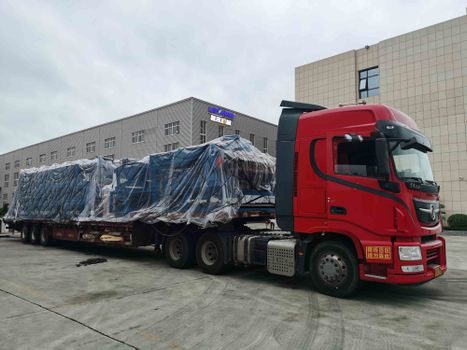
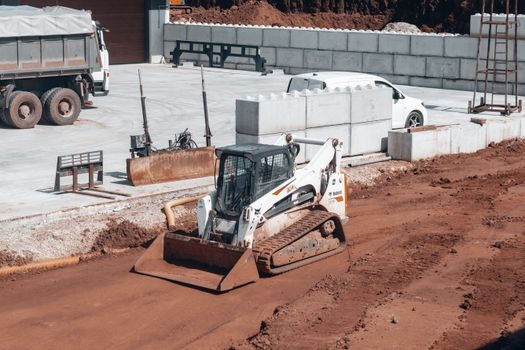
Mixer trucks on CIFA's HD running gear are designed for off-road site access with single or double rollers and a sling bar, wear-protected blades, and a bolted basic frame for on-site maintenance — the design priority is payload and rough-terrain mobility, not stabilisation [S1].
Pump trucks add 4 outrigger pads for level stabilisation before the boom is unfolded; the outrigger envelope is the only true site constraint, since the boom itself pivots over obstacles. A 43 m boom pump on a 5-axle carrier typically needs 9–11 m of outrigger spread on each side — a number that is not on the OEM price page but is enforced by the on-site safety officer. The 30 m³/h mini trailer pump from Spark Machinery is the low-footprint alternative for sites where a boom truck cannot be deployed [S4].
Power, Hydraulics and Maintenance Stack
Mixer trucks run a chassis PTO (power take-off) driving a hydraulic pump that turns the drum; SANF's 15-year aftermarket parts programme covers both mixer and pump wearing components, with the wear stack on a mixer dominated by blade sets, drum bearings, and the hydraulic motor, while a pump truck adds wear plates, cutting rings, S-valve seals, and delivery cylinder as the regular replacement items [S1][S5].
Pump-truck hydraulic circuits operate at 250–400 bar on the delivery side, with boom actuation typically 200–280 bar; rubber delivery hose and twin-wall heat-treated boom pipe in DN125 (5 in nominal) is the standardised wear path, and Made-in-China factory listings confirm DN125 3 m twin-wall pipe as the stocked replacement unit [S4]. Operators who run both fleets on the same yard benefit from consolidated parts supply — SANF, Zoomlion, XCMG, SANY, Putzmeister and Schwing components are all listed by the same aftermarket supplier [S5].
Cost, MOQ and 2026 Sourcing Snapshot
Mixer truck FOB price on Made-in-China sits in the US$7,360–50,000 band for self-loading 2–5.5 m³ units, with the Shandong Alin Machinery and Qingdao ZHS Machinery self-loader listings bracketing the lower-volume, site-mixer segment [S3]. Jidong's mixer-truck line, quoted from US$100,000/set with 500 sets/year capacity, sits at the higher end of the dedicated transit-mixer band [S3].
Pump-truck pricing splits sharply by reach: US$3,250–7,885 for a 30–40 m³/h mini trailer pump (1-piece MOQ) and US$112,000–140,000 for a 43 m chassis-mounted boom pump, with Henan Spark Machinery as the low-end trailer specialist and Zoomlion's 5-axle 43X-5RZ at the top of the 43 m band [S4]. Pump-pipe wear parts (DN125 twin-wall, 3 m, heat-treated) are listed at US$29/piece MOQ from Shandong factories, which sets the steady-state cost-per-cubic-metre on a high-cycle boom-pump job [S4].
Selection Criteria: Mixer, Pump, or Both
Use a concrete mixer truck when the job is road, low-rise, slab-on-grade, or any pour where a chute can reach the form; the truck is the most economical placement method per cubic metre because it requires no boom-certified operator, no outrigger pad survey, and no boom unfolding time. [S1]
Use a concrete pump truck when the pour is high-rise (over 4th floor), congested, in a tunnel, on a bridge deck, or across a wide slab where chute reach is insufficient; the boom substitutes a crane and skips the re-handling cycle that slows mixer-only placement. Use both on a large pour: a fleet of transit mixers feeds the pump's hopper continuously, since a 30–40 m³/h pump empties a 9 m³ mixer in under 15 minutes.
Three hard go/no-go gates for a pump truck: outrigger spread must clear the slab edge, boom vertical reach must clear the highest form plus 1–2 m of placement stand-off, and pump output in m³/h must match or exceed the truck-fleet delivery rate to the hopper — otherwise the pump waits on the mixer, not the other way around. For deeper fleet decisions on motor control and pump hydraulics, the engineering trade-offs in VFD vs Servo Drive: 2026 Spec Cut for Motor Control Engineers apply to the on-board hydraulic power pack as much as to factory drives. For surveyors setting out the pour footprint and outrigger pads, the comparison in Theodolite vs Laser Level: 2026 Site Spec Cut for Surveyors and Foremen is the right site-layout reference.
Limits and Failure Modes
Mixer trucks fail on long hauls when the mix design is sensitive — extended-mix or low-water concrete can lose workability in the drum, and a 7 m³ minimum-load constraint on CIFA HD chassis means partial loads are uneconomical on short hauls [S1]. Pump trucks fail on high-cycle jobs when the boom pipe wear path is not rotated, when the S-valve grout port is not flushed, or when the boom is unfolded out-of-level, which loads the slewing ring asymmetrically.
The dump truck remains the right tool for low-slump dry-mix deliveries to road-base and sub-base jobs, where neither a drum nor a pump is required; specifying a mixer truck for a dry-mix haul is wasted payload capacity. A consistent spec on Chinese-market pump-pipe replacement (DN125 3 m twin-wall, heat-treated) means the wear-stock holding cost per pump is calculable at roughly 1 boom-pipe section per 5,000–8,000 m³ pumped, depending on aggregate hardness [S4].
Trackable signals over the next procurement cycle: the spread between mixer-truck and pump-truck hourly operating cost on 2026 commercial pours, the on-site rollout of 50+ m 6-section booms on 6-axle carriers, and the consolidation of aftermarket parts supply across the Zoomlion/XCMG/SANY/Putzmeister/Schwing fleet, which SANF already lists as a single-source channel [S4][S5].