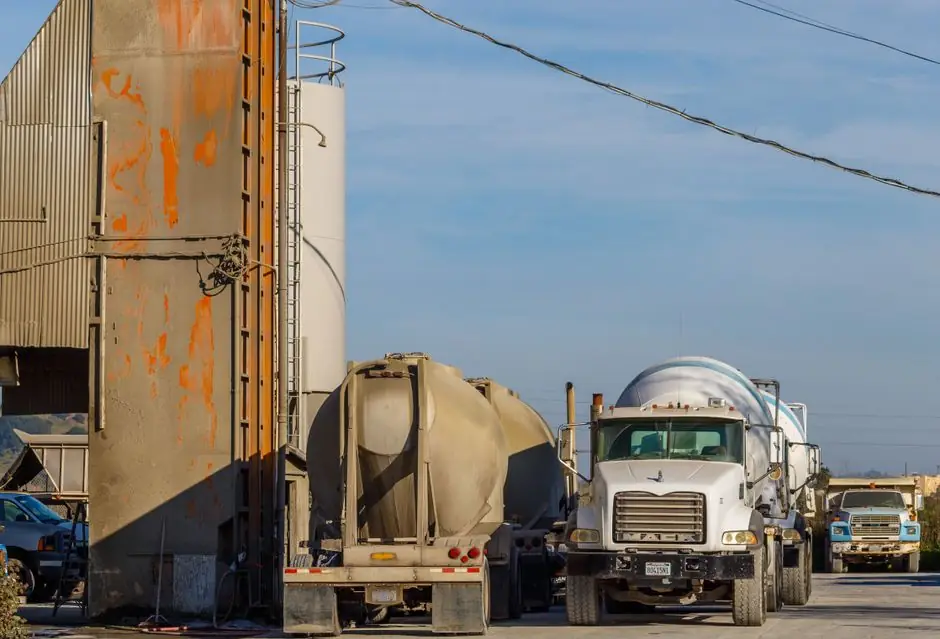
A 6.9–9.2 m³ (9–12 yd³) rear-discharge drum on a heavy-duty 6x4 chassis remains the default road-building configuration, with fully loaded weight sitting in the 72,000–74,000 lb band and front-discharge rigs topping out near 45 ft overall length [S2].
Drum volume in 2026 spec sheets rarely exceeds 12 m³ because gross-vehicle-weight law, not steel, is the binding constraint, and OEM 10 m³+ units are now routinely shipped with factory GPS for fleet monitoring and chute video [S1]. Self-loading and volumetric bodies fill the gap on remote, small-batch, or scattered pour schedules [S3][S5].
Drum Capacity vs. Axle-Weight Law
Modern drum sizes cluster between 6.9 m³ and 9.2 m³, with selected models reaching 10–12 m³, sized against gross-vehicle-weight rules rather than free-form throughput targets [S2]. Front-discharge units built on longer wheelbases push overall length to roughly 45 ft, while rear-discharge and semi-trailer variants keep the wheelbase tighter for tighter urban or bridge-approach pours [S2]. As Terex regional sales put it, “Once you know the weight laws, then we know which base product we need to talk about,” a line that captures how chassis selection drives drum sizing in real bids [S2].
Compared with the 2 yd³ units common in mid-century fleets, the shift to ~10 yd³ per load cuts truck-count per pour by roughly 5x, with a corresponding drop in fuel, driver-hours, and washout water per cubic yard placed [S4]. On long concrete-pavement runs, that ratio directly sets paver-feed continuity; if a concrete pump truck is fed downstream, drum-to-pump handoff time should be planned against the 90-min setting window, not against the average haul distance.
Rear-Discharge vs. Front-Discharge vs. Semi-Trailer
Rear-discharge mixers dominate road grading work because the operator controls chute direction from the cab, the turning radius is shorter, and the truck can back into lane-width pours without a spotter tractor. Front-discharge trucks, up to ~45 ft overall, allow the driver to pour while driving forward, which speeds work on wide median slabs where multiple lanes are poured in series [S2]. Semi-trailer mounted mixers carry the largest payloads per trip but demand higher-capacity approach roads and turning aprons, which restricts them to mainline highway pours rather than subdivision streets.
The 3-way comparison road contractors usually run is: drum size (m³), loaded GVW (lb), overall length (ft), and discharge-control location. On those axes, rear-discharge wins for urban and bridge work, front-discharge wins for high-throughput mainline paving, and semi-trailer wins where haul distance is long and approach roads are sound [S2].
Self-Loading Mixers for Remote and Small-Batch Pours
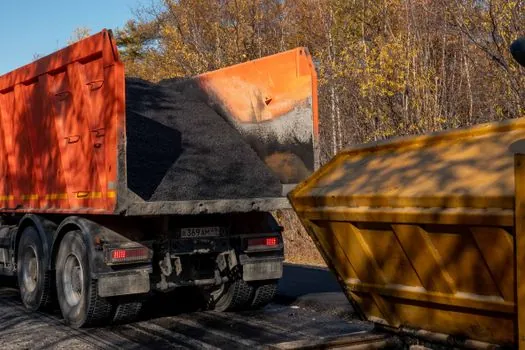
Self-loading concrete mixers integrate bucket loading, electronic weighing, on-board water tank, continuous drum mixing in transit, and a 270° rotating discharge into a single chassis, which removes the need for a separate wheel loader and transport truck on scattered pours [S5]. They are explicitly aimed at road construction, bridge construction, factory building, slope protection, and dam work, with the rotating discharge letting one unit pour into formwork on either side of the carrier [S5].
For a remote or rural road project, the savings come from removing the batching-plant delivery dependency: a single self-loading unit covers loading, weighing, mixing, and discharging on its own, which shortens the cycle on small-batch pours where a full ready-mix truck would arrive half-empty [S5]. On multi-shift paving days, that same unit can top up the feed of a truck-mounted concrete pump for short patches and shoulder pours, where dispatching a 10 m³ ready-mix truck would be uneconomic.
Volumetric Mixers: Pay-for-What-You-Pour
Volumetric (mobile-mix) concrete mixers carry separate bins of sand, stone, cement, and water and batch on site, so contractors pay for the volume actually poured rather than the volume ordered. Entry-level mechanical stationary mixers start around $120K, while top automated units on premium chassis can reach $500K or more as of 2026, putting the technology within reach of mid-size road contractors [S3].
The trade-off is unit cost against truck count: a single volumetric unit can replace several ready-mix drums on a pour-by-yard basis, but it still needs a competent operator and a calibrated bin-and-meter setup per mix design. On night-shift road repairs where slump drift and return-load rejection are costly, the volumetric option removes the risk of over-ordering and is often paired with a road roller to keep the patch, base, and finish sequence in one crew.
Selection Criteria for a 2026 Road Bid
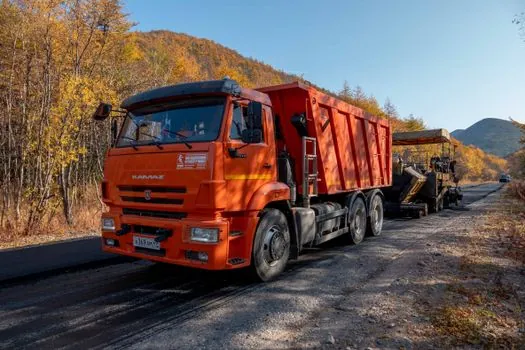
Five criteria drive a road-construction mixer buy: (1) maximum drum size that keeps loaded GVW under the local axle-weight law, typically 72,000–74,000 lb for the 9–12 yd³ class; (2) discharge configuration matched to pour width and access (rear for tight sites, front for wide pavements); (3) chassis and powertrain rated for the haul distance and grade profile; (4) on-board systems, including factory GPS and chute video on 10 m³+ OEM units, for fleet tracking and dispute documentation; (5) on-site production option (self-loading or volumetric) for remote, small-batch, or shoulder work [S1][S2][S5].
For most mainline paving, the default is a 9–12 yd³ rear-discharge drum on a 6x4 chassis, ordered against the axle-weight envelope, not against maximum nameplate drum volume. For rural roads, bridge approaches, and night-patches, the same fleet plan should reserve one self-loading or volumetric unit to keep the smaller pours off the critical path of any construction machinery and equipment schedule. Watch for two 2026 signals: GPS-equipped 10 m³+ OEM drums becoming the de-facto fleet default on Tier-1 contractors, and self-loading units expanding from rural road work into urban utility cuts where ready-mix delivery windows are tight [S1][S5].
For related coverage, see Total Station Spec Map for Tunnel Construction: 2026 Selection Guide.