
Shield machine selection for pipeline trenchless drives is decided in 2026 by four engineering axes: ground behaviour (cohesive vs non-cohesive, permeability, boulder content), face-pressure control method, muck-handling medium, and segmental-liner logistics. Ultra-large-diameter slurry shield machines are characterized by high mechanization, minimal excavation disturbance, and strong geological adaptability in published 2026 research [S2].
Selection intersects adjacent equipment families documented across the shield machine and construction machinery and equipment reference pages, and the choice cascades into upstream pipeline pump sizing and downstream corrosion-control decisions.
Ground conditions drive the EPB vs slurry decision
Cohesive soft soils with low permeability favour earth-pressure-balance (EPB) shields because the excavated muck itself forms a pressure-transmitting plug inside the working chamber, allowing face support without external fluid circuits [S2]. Non-cohesive, high-permeability, or water-bearing ground pushes the choice toward slurry shields, where pressurized bentonite suspension balances pore-water pressure and carries spoil through a hydraulic circuit to a separation plant [S2].
For ultra-large-diameter drives, 2026 research on chamber flow and rock-debris discharge confirms slurry designs are now the dominant architecture, with studies explicitly analysing debris transport in ultra-large-diameter slurry shield machines [S2]. Mixed-face conditions, where soft clay transitions to rock within one drive, still push many owners toward convertible or dual-mode machines, accepting a cost premium to avoid mid-drive conversions.
Pipeline alignment, depth, and open-cut alternatives
When a corridor is environmentally constrained, depth rules out open-cut before machine type is even considered. The 2026 San Antonio W9 sewer project upgraded 30 in. and 36 in. concrete pipes to 48 in. fiberglass-reinforced polymer mortar, with nearly half the 22,000 linear ft alignment driven as 78 in. diameter tunnels [S5]. Permitted open-face methods on that project included hand-mining, mechanical excavation with digger shields, and rotary tunnel-boring machines, plus hooded shields for the most sensitive reaches [S5].
Shallow utility alignment in urban corridors often tips the balance back toward open-cut if traffic, utility congestion, and ground contamination allow. The PHMSA 2026 construction guidance treats shielding (rock shield, padding machines) as a separate concern from the tunnel shield itself: rock shield protects the coating from backfill, while a tunnel shield protects the heading [S1]. Conflating those two roles is a common spec error, since rock-shield mesh is a passive coating-protection layer, not a ground-support system [S3].
Aperture, segmental lining, and annular grout
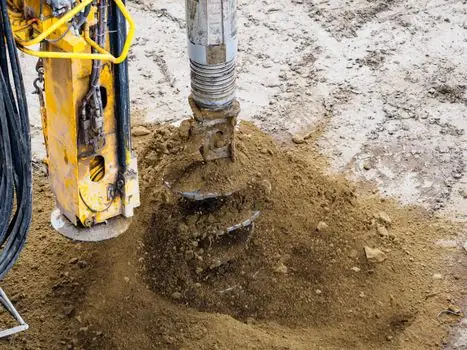
Segmental liner outside diameter is the second hard constraint after ground type. Precast concrete segments in standard widths of 1.0-1.5 m dominate utility drives, while steel-and-concrete composites appear on longer or deeper tunnels. Annular gap grouting must keep pace with the shove jacks, typically within 30-60 minutes of ring build, or surface settlement above the drive climbs outside the 10-20 mm band most urban owners now specify. [S5]
Working-chamber pressure control on EPB machines is closed-loop against pore-water pressure measured at the bulkhead; on slurry machines the equivalent control variable is the slurry feed-and-discharge pressure differential. The 2026 slurry-shield chamber study models flow and rock-debris discharge with the same pressure-balance framework, treating debris as a discrete phase inside the suspension [S2]. Skewed values of either variable are the leading root cause of face collapse and blow-outs on mixed-face drives, and they are also the variables operators most often misread when extrapolating EPB experience to slurry machines.
Backfill and coating protection on the open-cut side
Where the alignment goes open-cut, pipeline protection is a separate engineering problem. The PHMSA 2026 construction-issue list flags inadequate use of rock shield, padding machines, and stone-free backfill as a recurring inspection finding on new pipeline projects, with failure modes including coating damage from rock impact and girth-weld coating not fully bonded to the pipe [S1]. AEGIS Rockshield and similar products are HDPE/LDPE three-dimensional diamond-shaped plastic mesh engineered to absorb backfill impact, minimize coating abrasion during underground movement, and preserve cathodic-protection current flow [S3].
Typical applications for that mesh family include rocky-terrain backfill, underwater pipelines, concrete weight coating cushioning, and future-excavation protection, with a thickness range suited to varying backfill aggressiveness [S3]. The mesh is engineered to allow cathodic current to pass, so it does not substitute for a rockshield coating system; it sits between the coating and the backfill.
Surface installations: lightning and surge protection around valve stations
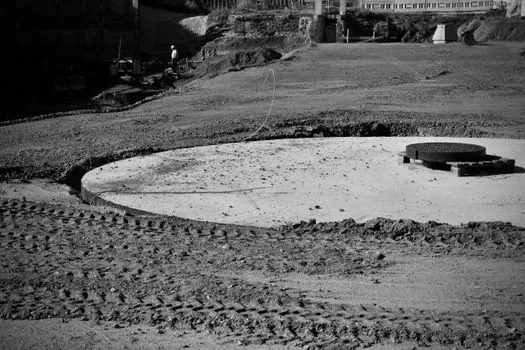
Shield selection ends at the shaft, but the pipeline's above-ground appurtenances continue into lightning and surge design. The 2026 grounding-and-arrestor guidance targets <5 ohms to earth for effective lightning dissipation, with 50 mm² copper or 70 mm² aluminum bonding conductors and a minimum 20 mm flat-copper braid to control inductance on long above-ground spans [S4]. Surge arrestors are split into three classes: Kirk Cells (DC-isolated, low sparkover, ICCP-compatible), pipeline arrestors (10-100 kA gas-discharge-tube types, PAA/PAS series), and solid-state arrestors for instrumentation and telemetry [S4].
Selection criteria in that guidance set a minimum 10 kA (8/20 μs) surge capacity for direct-burial arrestors and 50 kA+ for exposed above-ground sections in high-lightning zones [S4]. Primary instrumentation protection uses a Type 1 lightning current arrester at the field junction box, with a Type 2 SPD at the control panel, a two-stage cascade that is now standard on new pipeline SCADA panels. A useful side-by-side comparison for selection:
Construction-quality controls PHMSA inspectors flag in 2026
For US gas pipelines the protective-coating rules sit at 49 CFR §192.461 and for hazardous liquids at §195.559, and PHMSA inspectors treat coating cutback distance, surface preparation, application temperature, and holiday detection (Jeeping) as the recurring failure modes on new-build inspections [S1]. Field-coating defects frequently trace back to coating over mud or rust, application temperature out of window, water in the pipe during heating, and Jeeping at excessive speed or with a low-voltage setting on the holiday detector [S1]. A second spec pattern, girth-weld coating not fully bonded to the pipe, is the leading driver of post-burial hydrostatic-test failures, and the corrective action typically involves reblasting the cutback and reapplying the field-coat system [S1].
These coating defects are the leading cause of pre-commissioning inline-inspection (smart-pig) findings and are the same defect class that rock-shield mesh is intended to mitigate on the open-cut side, which is why the PHMSA and AEGIS documentation both place rock-shield padding on the same inspection checklist as coating application [S1][S3].
Karst, mixed face, and the convertible-machine option
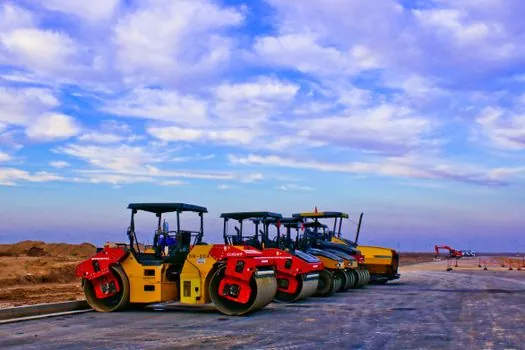
Where the alignment crosses soluble rock, face conditions can change inside a single ring. The 2026 San Antonio W9 case study documents an alignment traversing the Austin Chalk Aquifer, Buda Limestone, and the Edwards Aquifer, with karst features that are impractical to locate before excavation, requiring a geotechnical baseline report and a contractor selection process that prices the ground-condition risk explicitly [S5]. That project permitted hand-mining, digger shields, and rotary TBMs in different reaches, illustrating that mixed-ground corridors often need a portfolio of methods rather than a single shield type [S5].
For longer mixed-face drives, dual-mode or convertible shields (switchable between EPB and slurry modes from the operator's panel) are the most common 2026 answer, at a 10-20% capital premium over a single-mode machine of the same diameter. The trade-off is operational complexity: a convertible machine needs crews cross-trained on both pressure-balancing regimes, and a mid-drive mode switch typically costs 2-4 shifts of lost production.
Selection checklist for 2026 procurement
Use this sequence in a bid review. (1) Define the ground model first, including permeability, boulder content, and karst risk; do not let machine availability drive the geological model. (2) Set face-pressure control requirements against pore-water pressure, with a documented contingency for higher-than-expected inflows. (3) Size the separation plant for slurry drives against expected peak muck flow, not the average. (4) Confirm segmental-liner supply for the full drive plus a 10% overage for damage and station modifications. (5) Specify coating and rock-shield protection for any open-cut sections, with the rock-shield thickness matched to the documented backfill aggressiveness [S1][S3]. (6) Plan the above-ground surge and grounding design against the local lightning density, with Type 1 + Type 2 SPD cascades on SCADA inputs [S4].
Trackable signals for late-2026 procurement: PHMSA inspection findings on new pipeline construction projects (typically refreshed quarterly), and ASCE Case Studies / Civil Engineering Source case studies for mixed-face urban drives modeled on projects like the San Antonio W9 [S5]. For the cross-equipment perspective, see also the needle valve advantages and disadvantages spec map for isolation-valve pairing on the same alignment, and the forestry shield-machine selection spec map for the soft-tissue-vs-rigid-face trade-off in a related but lower-pressure equipment class.