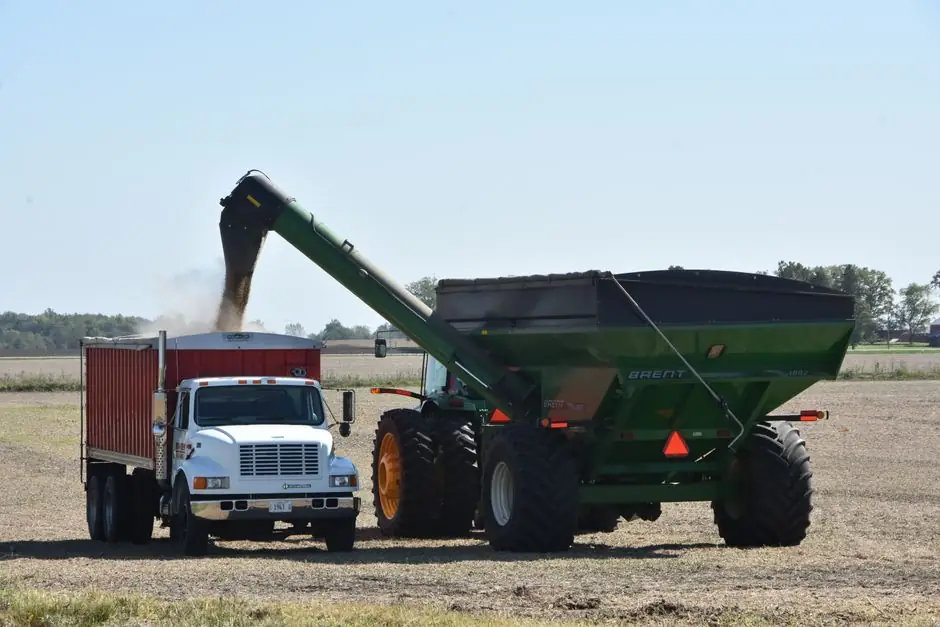
Concrete pump trucks are migrating from highway and high-rise jobsites into farm infrastructure: bunker silos, slurry lagoons, irrigation flumes, livestock barns, and grain-base foundations, with used SANY C8 and C10 boom-pump configurations now appearing in dealer stock alongside truck-mounted concrete pump inventory [S3].
Agricultural buyers face a narrower decision than construction fleet managers: typical pour volumes sit between 30 and 120 m³ per day, sites are unpaved with soft shoulders, and reach is rarely above 24 m, which reshapes how boom length, chassis, and pump output should be weighed [S3].
Why a Standard Truck-Mounted Boom Pump Often Misfits a Farm
Most agricultural concrete pours are low-volume, short-distance, and accessed by narrow lanes; a 38 to 56 m boom is wasted when the working reach is 12 to 20 m, and the extra weight of a long boom stresses soft field approaches [S3].
For farm-scale work, trailer-mounted line pumps paired with a concrete mixer truck typically deliver lower total cost of ownership, because the mixer handles the supply side and the line pump handles placement at lower pressure classes, in the 800 to 1,200+ PSI working-pressure band common to heavy-duty concrete pumping hose assemblies [S1][S3].
Pump Output and Pressure Envelope for Farm Duty
End-suction centrifugal pumps on concrete pump trucks are sized to a 4 to 1,200 m³/h flow band and 10 to 130 m total dynamic head in agricultural pump practice, a useful sanity check when sizing the hydraulic-driven side of a pump truck's water-system circuit [S2].
For the concrete side, field data points toward 60 to 90 m³/h theoretical output for small boom pumps and 120 to 170 m³/h for the larger 5-axle chassis; pressure-spike tolerance above 1,200 PSI in the delivery line should be confirmed before specifying any hose [S1][S3].
Chassis, Emission Stage, and Farm Access
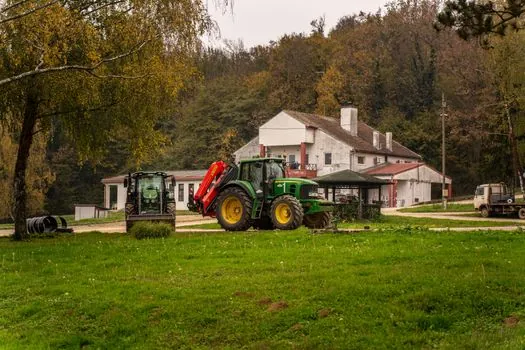
Dealer stock of used SANY concrete pump trucks in 2026 spans multiple emission standards and boom lengths, which lets an agriculture buyer trade emission compliance for reach without changing the truck class [S3].
Three practical gates: (1) 3-axle chassis at 25 to 30 t gross for soft-soil farm lanes; (2) 4-axle at 32 to 38 t when output exceeds 150 m³/h; (3) 5-axle at 42+ t only when both boom reach above 50 m and all-road transit are required, otherwise a dump truck plus separate pump is lighter on the field [S3].
Wear Parts, Hose Pressure, and Uptime on the Farm
Concrete pumping hose assemblies must handle severe internal abrasion from aggregate, working pressures above 1,200 PSI, and constant flexing on job sites, with abrasion-resistant inner tubes and high-tensile reinforcement listed as the key durability features [S1].
On farms, the dominant failure mode is hose wear at the boom tip, not engine or hydraulic failure; carrying a 5 m spare whip hose and inspecting outer covers for ozone cracking each season will outperform any premium-pump decision, and pairs naturally with the maintenance logic a farmer already applies to irrigation pumps [S1][S2].
Comparison: Boom Pump vs Trailer Line Pump vs Mixer-Pump Combo
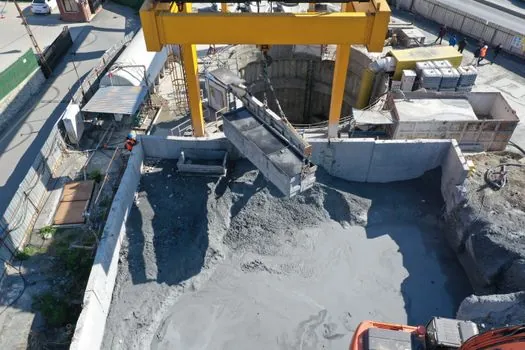
Three options line up against four decision criteria for agricultural duty: a truck-mounted boom pump offers 24 to 56 m reach and 60 to 170 m³/h output but at 25 to 60 t gross weight and the highest purchase cost; a trailer line pump drops weight below 8 t and price to roughly one-third, but needs a concrete mixer truck feeding it; a mixer-pump combo is the most agile on soft ground yet caps output near 45 m³/h and reach at the truck-mounted concrete pump chassis's own discharge boom [S1][S3].
For access under 4 m wide farm gates, soft ground, and daily pours under 80 m³, the trailer line pump wins on cost per cubic metre; for barn or silo pours needing 18 m+ vertical reach, a 3-axle short-boom truck-mounted concrete pump is the rational middle.
Service Training, Spare Parts, and Aftermarket Coverage
SANY and Putzmeister ran a joint concrete pump service training programme in 2026 covering electrical systems, hydraulic principles, circuit diagrams, and common fault diagnosis for dual-brand concrete pumps, which is a useful signal for farm buyers that aftermarket training is no longer brand-locked [S4].
That matters in rural service areas: dual-brand training widens the pool of technicians who can fault-diagnose a concrete pump truck on a farm visit, cutting mean-time-to-repair when the nearest dealer is several hours away [S4].
Selection Checklist Before Signing the PO

Confirm five numbers before purchase: theoretical output in m³/h, maximum vertical and horizontal reach, working-pressure rating of the delivery hose, chassis gross weight, and emission-standard tier; a dealer's pre-delivery inspection should be documented for the pumping mechanism, chassis stability, and boom articulation per current used-equipment protocols [S3].
For a related deep-dive on access-constrained boom geometry, the Tunnel Concrete Pump Truck Spec Map covers the pressure-mobility envelope in detail, and for water-side engineering on the same farm, the Sprinkler System Selection for Construction Sites field guide applies a comparable GPM/TDH method to irrigation layout [S2].