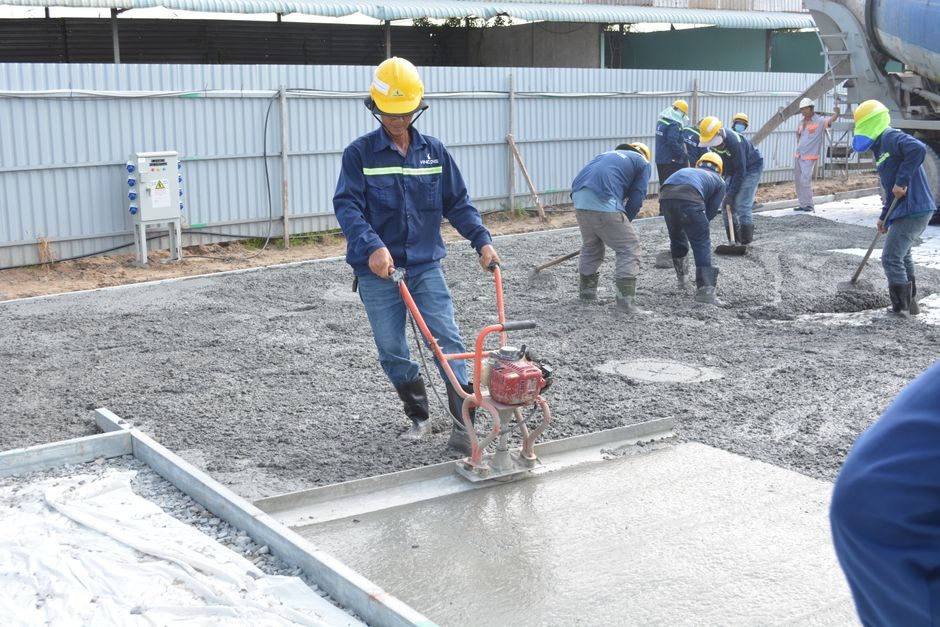
Installing a concrete mixer truck is not a single event but a five-gate acceptance process: chassis match, drum-drive alignment, water-system calibration, chute/hopper rigging, and pre-pour rotation test. The EMSUNTOUR WC6BJ underground diesel model carries a 6 m³ (211.89 ft³) drum with 0.7 m³/min (24.7 ft³/min) output and a rear-mounted engine kept clear of concrete contamination [S1]. The CIFA HD series hydraulic mixer spans 7-15 m³ (247.2-529.72 ft³) capacity, 560 l/min (147.9 us gal/min) hydraulic output, and a heavy-duty high-torque reducer designed for off-road roller support [S2]. Treat those two product classes as the bracketing cases when you write a site-specific installation procedure.
For an engineering buyer, the installation question is rarely "how do I bolt it on" but "what evidence proves the truck will deliver the specified slump at the chute after the drive-line, water meter, and drum geometry have been signed off." The answer below follows the same five-gate logic used in adjacent installation references such as Filling Machine Installation: Five-Gate Field Spec Map and Acceptance Criteria, and borrows TCO framing from Sand Mixer TCO: 10-Year Cost Stack, Driver Map, and Buying Specs where the cost driver is drum wear, not bearings.
Chassis and GVW match — the gate that decides everything downstream
Drum capacity dictates the chassis: the underground WC6BJ at 6 m³ uses a narrow-body mining chassis with front inlet/outlet and a rear engine to keep the operator clear of fresh concrete, while the CIFA HD7-HD15 at 7-15 m³ rides a three- or four-axle road chassis with polymer mono-axle mudguards and a zinc-coated ladder [S1][S2]. Mismatch the drum size to the chassis GVW and you overload either the front steer axle or the rear tag axle, which invalidates the rolling acceptance test on day one.
For a 9 m³ road mixer, a typical target is to keep the loaded rear-axle weight within the chassis maker's RAWR (rear axle weight rating) with at least 8% margin for chute-swing dynamic load, and to confirm the kingpin-to-rear-axle dimension against the turning template of any site the truck must enter. Underground diesel units add a non-negotiable constraint: the explosion-proof diesel package and methane-monitor interface must be certified for the mine's hazardous-area classification before the truck is allowed underground at all [S1]. If that paperwork is missing, the truck fails Gate 1 and should not be mobilised to the face regardless of how clean the drum looks.
Drum-drive alignment and reducer seating
The drum is driven either by a hydraulic motor coupled through a heavy-duty high-torque reducer (CIFA HD series) or by a mechanical PTO chain off the diesel engine (typical for compact mining mixers such as the WC6BJ) [S1][S2]. Either way, the alignment tolerance between motor output shaft and reducer input is the single largest determinant of seal life and bearing temperature during the first 500 hours. A reducer mounted with even 0.2 mm of angular offset will telegraph into reducer-housing temperatures 15-20 °C above the baseline within the first shift.
Field procedure, in order: (1) clean the mating flange faces with non-abrasive solvent, no Loctite on the register; (2) torque the reducer mounting bolts in a star pattern to the maker's spec (typically 220-280 N·m for M16 grade 10.9, but confirm against the truck's service manual); (3) verify the drum anti-rebound device on HD-series units is free to swing and not pinned against the counterframe [S2]; (4) hand-rotate the drum through one full revolution and confirm the wear-protected blades clear the drum shell without scraping — a scraping blade cuts drum life from a typical 8-10 years down to 3-4. If any of these fail, the drum is not accepted and the truck is barred from loaded running.
Water system, water meter and consistency manometer
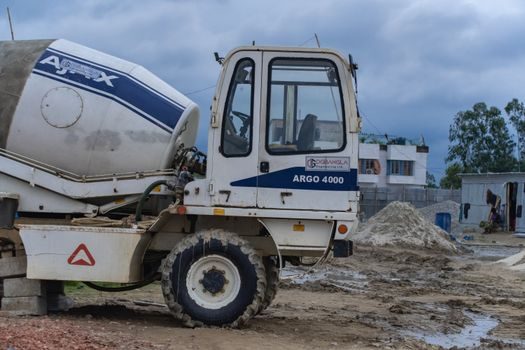
Both reference units ship with metered water systems: the CIFA HD series uses a water meter plus a manometer for concrete consistency, with two quick-joint water fillers on the front of the supporting frame and a water pump driven off the reducer [S2]. The underground WC6BJ uses the same front-fill quick-joint logic so the operator can top up without climbing over the drum [S1]. Tank volume scales with drum: 800 l for HD7-HD10 and 1,200 l for HD12+ and HD15, with two washing nozzles — one at ground level on quick joint, one on the ladder platform [S2].
Acceptance criteria: with the truck on level ground, fill the tank through the meter and verify the metered reading matches the dipstick within ±2%. A 5% meter error at 1,200 l is 60 l of free water, which is enough to push a 9 m³ load from a 100 mm slump to a 180 mm slump on a hot day. Then run the consistency manometer against a calibration block at three setpoints (typically low, mid, and high charge) and record the pressure-vs-slope line; a manometer that reads flat is a sign of a blocked line, not a "calibration issue." Do not skip the ground-level quick-joint leak test at 4 bar for 5 minutes — a weeping joint is the most common commissioning defect and is invisible once the truck leaves the yard.
Chute, hopper and rear support — the geometry that decides pour speed
Discharge geometry is what separates a truck that places 9 m³ in 12 minutes from one that places it in 25. The CIFA HD series uses a special-design charging hopper, a discharging hopper, wear plates on the discharging chute, and a manually cylinder-driven discharging chute, plus a two-armed swivel chute system to extend reach [S2]. All of these are bolted, not welded, so they can be re-shimmed during commissioning. The underground WC6BJ uses a front inlet/outlet layout so a single operator can charge and discharge without walking around the truck, which on a confined coal-mine roadway is a productivity and a safety win [S1].
Installation check: with the drum full of wash water, cycle the chute from full stow to full extension three times and confirm the manual cylinder holds position at every detent — a creeping chute on a 12 m³ pour will dump a cubic metre of concrete on the wrong side of the form. Verify the two zinc-coated additional chutes sit flat on their supports on the counterframe and the rubber mudflaps clear the tyres through full steering lock. Plastic rear-mudguard protection is a small detail but it tells you whether the maker designed for cleanout with a hose or with a pickaxe; the HD-series plastic guard is the former and is preferred [S2].
Pre-pour rotation test and acceptance thresholds
The final gate is a loaded rotation test against the maker's drum-speed window. For a 9 m³ standard road mixer the accepted charge speed is roughly 6-12 rpm and discharge speed 1-4 rpm; the underground WC6BJ's continuous rotation during transport is its headline efficiency claim, and the test must demonstrate that the drum turns at the rated speed with the truck stationary on a 1-in-20 gradient with the engine at idle [S1]. For the HD series, hydraulic output is 560 l/min which drives a heavy-duty oil cooler with an integrated oil tank; the test must run 30 minutes continuous at the rated discharge speed and the oil temperature must stabilise below 90 °C at an ambient of 25 °C [S2].
Document the manometer reading at start, mid and end of the test, plus the water-meter reading before and after. A truck that passes this gate is accepted for service; a truck that fails any one of the five gates goes back to the install bay. The economics of this discipline are visible in long-run references such as the Sand Mixer TCO: 10-Year Cost Stack, Driver Map, and Buying Specs and the bearing-level cost stack in Angular Contact Bearing TCO: 10-Year Cost Stack, Driver Map, and Sourcing Specs — early acceptance discipline is what keeps the 10-year drum-and-reducer cost on its expected curve.
Trackable next signals for the buyer: confirm at handover that the as-built drum capacity, water tank size and hydraulic flow match the nameplate, and request the OEM's commissioning sheet signed against the five gates above. For 2026-spec underground units, verify the explosion-proof diesel certificate scope before the unit is dispatched to the mine portal, and for 2026-spec HD-series road units, confirm the two-year reducer warranty registration is filed within 30 days of commissioning to avoid the typical 18-month service interval turning into a paid repair [S1][S2].
The underlying component specifications are covered under concrete mixer truck, concrete pump truck, and truck mounted concrete pump.