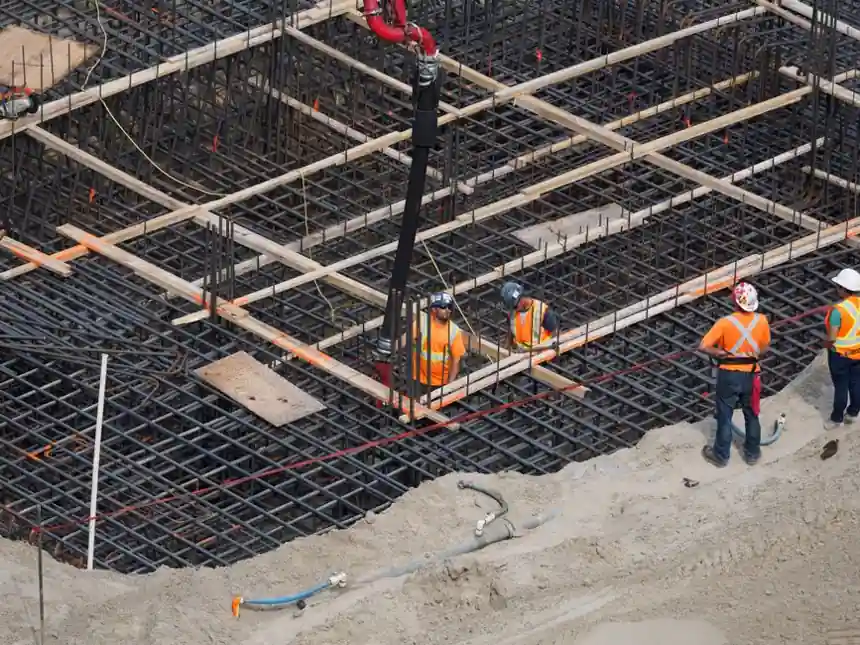
Internal electric concrete vibrators in the 1.25 to 3 HP range, paired with 1 to 2-1/2 in diameter shafts and 11,000 to 12,000 VPM heads, cover the bulk of residential and light-commercial landscaping pours, per rental-fleet listings from Herc Rentals (model 100-2120) and Sunbelt Rentals (3 HP, 120V, 20 A) [S4][S1].
The global concrete vibrator market is sized at USD 1.36 billion in 2026, with internal units commanding 52% of product share and building construction absorbing 58% of application share, per the Fact.MR market report dated 2026-05-20 [S3]. The same report flags India (5.4%) and China (4.7%) as the highest-growth geographies through 2036, while North American landscaping demand stays steady and skewed toward electric, low-noise, indoor-safe drives.
Electric Internal Vibrators: the Workhorse for Poured Landscaping
Sunbelt Rentals lists a 3 HP / 120V / 20 A electric concrete vibrator in shaft lengths of 5 ft, 6.5 ft, 7 ft, 10 ft, 12 ft, and 14 ft, which is the typical size ladder for stepping from small patio formwork through deeper footing and stem-wall pours [S1]. Herc Rentals' 2 HP electric head P100-2120 ships with a 2.75 in head / 1 in neck at 12 V / 15 A and a 10.9 lb drive unit, with a separate 12 lb head option, which keeps the operator-end weight under 25 lb combined [S4].
For smaller pours, Certified MTP's 1-1/4 HP, 9 A AC/DC drive delivers 11,000 to 12,000 VPM through a 1 in shaft in a 12 x 6 x 6 in housing, and that VPM band is the published sweet spot for consolidating 4 to 6 in landscape slabs without segregating the aggregate [S7]. Allen Engineering's FSVS 5 flexible shaft (5 ft) weighs 6 lb and is sold as the shaft-and-head replaceable end for matching drives, useful when a crew already owns the power unit [S9].
Selection Criteria Tied to Pour Geometry
Shaft diameter drives usable radius of action, and the 1 in / 1-1/4 in / 1-1/2 in / 2-1/2 in ladder maps cleanly to slab thickness: 1 in shafts suit 3 to 4 in patio overlays, 1-1/4 in shafts handle 4 to 6 in walks, 1-1/2 in shafts cover 6 to 10 in footings, and 2-1/2 in shafts (as on Up Equipment's 2.5 HP, 44.2 lb unit) are reserved for thicker walls and small column pours [S2][S7]. Head diameter and VPM jointly set the radius of influence: a 1-3/8 in head at 11,000 VPM typically consolidates a 6 to 8 in radius around the probe, which sets reinsertion spacing.
Field technique is well codified: each insertion should run at least 10 seconds, and the operator should withdraw at roughly 2 cm/s to avoid leaving a void cone, per a published technique guide from Canberra Diamond Blade [S6]. For landscaping crews, the practical rule of thumb is one insertion per 12 to 18 in of slab, with vertical overlap so the previous insertion's radius of influence is re-entered by the next.
Power Source and Drive Technology: Where the Market is Heading
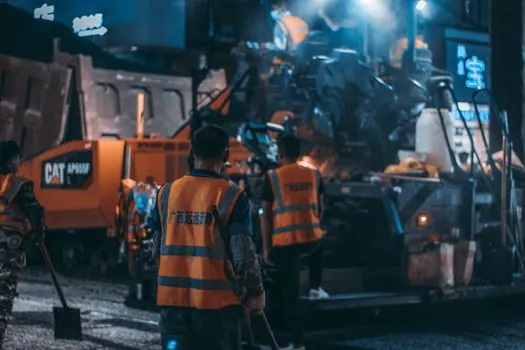
Fact.MR identifies electric drive as the leading technology segment, supported by variable-frequency control, lower noise, and zero exhaust on enclosed job sites [S3]. High-frequency electric systems (typically 200 Hz nominal) are the next adoption wave because they raise VPM without raising head mass, which extends the radius of action on the same shaft size and lets the same 1-1/4 in shaft consolidate a 6 in slab faster than a legacy 60 Hz head.
Gas and pneumatic drives still own outdoor and infrastructure work, and the Amazon best-seller list reflects that mix: a 6.5 HP / 196cc gas plate compactor (VEVOR) sits at 2,360 lbf centrifugal force on a 22.1 x 15.9 in plate at 5,600 VPM, and it is sold specifically for walkways, asphalt, pavers, and landscaping sub-base prep rather than concrete consolidation [S5]. Pencil-style cordless vibrators (DeWalt DCE531B 20V MAX, 150W, 12-speed) cover thin tile and grout consolidation on hardscape, with 9 to 24 V class batteries limiting run time to short overlay jobs.
Comparison: Electric Internal vs Gas Plate vs Cordless Pencil
Three configurations compete for the landscaping segment, and the right pick is a function of pour type, slab thickness, and noise constraint. Electric internal vibrators (1.25 to 3 HP, 11,000 to 12,000 VPM, 1 to 2-1/2 in shaft) are the right answer for consolidating poured concrete, since they displace aggregate and air pockets around rebar and wire mesh in a way that surface tampers cannot. [S3]
Gas plate compactors (6.5 HP, 5,600 VPM, 2,360 lbf on a 22.1 x 15.9 in plate) are the right answer for sub-base compaction before the pour: they densify crushed stone, decomposed granite, and paver bedding but do not consolidate the concrete itself [S5]. Cordless pencil vibrators (DeWalt 20V MAX, 150W) are the right answer for thin overlays, tile-bedding grout, and small repairs under 2 in thick, where a full internal vibrator would be overkill.
Cost, Lead Time, and Rental vs Purchase
Up Equipment lists a 2.5 HP electric concrete vibrator at USD 1,130.00 in stock as of 2026-09-11, with a 2-1/2 in shaft and 44.2 lb drive weight, which sits in the mid-range for new equipment [S2]. Contractors Direct stocks internal concrete vibrator motors, shafts, heads, and kits starting from USD 1,114.00, with replaceable-shaft architecture so a damaged shaft can be swapped without scrapping the drive [S8].
For landscaping contractors running intermittent pours, rental keeps capital off the books: daily or weekly rates on 2 to 3 HP electric units from national fleets typically land well below a one-time purchase, and rental also covers the long-shaft variants (10 ft, 12 ft, 14 ft) that a small crew would rarely buy outright [S1][S4]. Repair-and-replace math: a replacement 5 ft flexible shaft (Allen FSVS 5) at 6 lb is a fraction of a full drive replacement, which is the economic argument for the modular shaft-and-head format on landscaping jobs where abrasion damage is routine.
Limitations, Failure Modes, and What to Avoid
Internal vibrators do not replace plate compaction, and crews that try to consolidate sub-base with a poker leave voids that re-settle under foot traffic. The reverse mistake is using a plate compactor on poured concrete, which does not displace air trapped around rebar and mesh, and it surfaces a slick that the float crew then has to grind off. Match the tool to the layer: plate for sub-base, internal poker for the pour, pencil or hand-tamping for thin overlays. [S3]
Failure modes on the poker side are predictable: bent shafts from prying the head against formwork, burned-out drives from running the head out of concrete for too long, and seal failures from leaving a hot head in water. Withdraw at roughly 2 cm/s to keep the head submerged on the way out, and reinsert at 12 to 18 in spacing on slab work, which keeps consolidation continuous and avoids cold joints between insertion zones [S6].
Applicable Standards and Sourcing Notes
There is no single harmonized standard for landscaping-grade concrete vibrators, and the equipment is typically specified against project documents rather than a product code. ACI 309 (consolidation of concrete) and ACI 304 (measuring, mixing, transporting, placing) are the American Concrete Institute references most often cited for VPM, head spacing, and insertion timing, while the Canadian Diamond Blade technique guide referenced above codifies the 10-second insertion and 2 cm/s withdrawal rule [S6]. For the broader procurement and product-segment view, the Fact.MR 2026-05-20 market report remains the most current public source for the 1.36 B USD 2026 sizing and 52% internal-vibrator share figures cited here [S3].
Trackable signals for the next planning cycle: the 2026-09-11 stock and price snapshot at Up Equipment, the 2026-05-20 Fact.MR market sizing, and the 5,600 VPM / 2,360 lbf specification band on the VEVOR 6.5 HP plate compactor are the most current data points for budgeting and equipment selection through year-end 2026.
Detailed specification references: concrete vibrator, cement concrete, and concrete admixture.
For related coverage, see Warehouse warning tape: spec map for thickness, color, and traffic duty.