
A condition monitoring system is an online sensor-plus-software stack that watches vibration, temperature, and process variables on running equipment to flag degradation before failure, while a dynamic balancing machine is a workshop instrument that spins a rotor to measure and correct mass unbalance on a dedicated stand [S3][S4]. The two address different failure modes: CMS targets bearing wear, misalignment, looseness, and cavitation across a fleet; DBM targets a single rotor's mass asymmetry before it returns to service.
Selection hinges on whether the asset runs continuously in a plant (CMS) or passes through a balancing bay as a discrete part (DBM). A typical industrial catalogue now lists 23 manufacturers and 391 dynamic balancing machine models on offer, with rotor mass handling ranging from 200 g micro-rotor bench units up to 5,000,000 g turbine balancing rigs [S2].
Functional Scope: Online Surveillance vs Offline Correction
A condition monitoring system delivers on-line, real-time identification of structural conditions, structural element failure, and environmental conditions for assets that cannot easily be taken out of service [S3]. Vendor portfolios for online CMS cover proximity probes, accelerometers, and acoustic emission channels feeding continuous data streams into trend dashboards, with mission-critical industries (power generation, oil and gas, large pumps) as the primary adopters [S4].
A dynamic balancing machine instead performs a controlled, repeatable measurement of unbalance on a rotor supported on its own pedestals, then guides a milling or drilling correction step. The SCHENCK Pasio 15 series handles rotors up to 15 kg, the Pasio 50 covers up to 50 kg, and the HL series stretches from 200 g to 5,000,000 g at fixed discrete speeds of 2,180 / 1,340 / 1,130 / 960 rpm for turbine and compressor rotors built to SAE ARP 4048 [S2]. Smaller bench units such as the Balance Systems BMK8, BMK4A-B, and DMK6-AE sit at 2-3 kg rotor capacity for high-volume production of motor armatures and brushless motor rotors [S2].
Sensor and Measurement Comparison
Condition monitoring systems layer multiple sensing technologies to triangulate fault root cause: vibration (velocity, acceleration, demodulated envelope), thermography, lubrication oil debris, and acoustic emission are typical channels [S4]. A condition monitoring system deployed on a 4-pole induction motor typically samples accelerometer data at 10-25 kHz, with envelope demodulation applied to detect early-stage bearing race defects months before catastrophic failure.
Dynamic balancing machines rely on force or displacement transducers mounted in the rotor support pedestals, with the rotor driven by belt drive, universal joint shaft, or self-drive through the rotor's own shaft. The CEMB Z5-TC spans 70 rpm to 200,000 rpm rotational speed for small high-speed parts, while belt-drive models like the ZBS-TO2 cap at 3 kg rotor mass for electrofan group production [S2]. A dynamic balancing machine reduces residual unbalance to a grade defined by ISO 1940-1, with G2.5 typical for machine tool spindles and G6.3 typical for industrial fans and pumps.
Selection Criteria: When CMS, When DBM, When Both
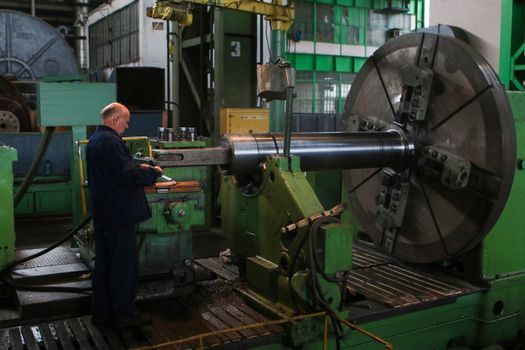
Specify a condition monitoring system when the asset cannot be taken offline without production loss, when the failure cost exceeds the cost of the monitoring hardware by an order of magnitude, and when trend data over months is needed to plan maintenance windows. Online CMS solutions from suppliers like Bently Nevada target mission-critical rotating equipment where unplanned downtime has direct revenue impact [S4].
Specify a dynamic balancing machine when rotors are produced, repaired, or reconditioned as discrete workpieces, when residual unbalance must be measured against an ISO 1940-1 grade, and when throughput justifies a dedicated test bench. The 23 manufacturers and 391 products indexed on the major B2B portal in mid-2026 cover the full envelope from 200 g micro-rotor units to 5,000,000 g turbine stands [S2].
Specify both when a plant builds or repairs its own rotating equipment: CMS watches the installed fleet continuously, while DBM validates any rotor that returns from the shop before it is reinstalled. Standalone DBM ownership makes sense for an E&M service shop with regular third-party work; standalone CMS makes sense for a process plant with 100+ monitored points and no in-house balancing bay.
Specification Comparison Across the Two Categories
Decision criteria differ sharply between the two equipment types. CMS specifications focus on sensor count, sampling rate, communication protocol (Ethernet, Modbus TCP, OPC UA), alarm threshold count, and historian retention in months or years. DBM specifications focus on rotor mass range, rotational speed range, achievable residual unbalance grade per ISO 1940-1, drive type, and number of correction planes (single-plane for discs, two-plane for shafts). [S2]
Cost and lifetime also diverge. A small bench-top DBM from Italian or Indian suppliers handling rotors up to 3 kg is typically procured as a capital item with a 10-15 year service life, while CMS is sold as a software-and-sensor subscription or one-time licence plus per-channel sensor hardware. Dynamic balancing service providers in markets such as India position both capital sales and per-job balancing services, indicating that the equipment pays back when utilisation exceeds a few rotors per week [S6].
Integration effort is a third axis: a CMS rollout requires vibration surveys, database configuration, and asset criticality ranking before the system produces useful alarms, while a DBM requires fixturing for each rotor family but produces a pass/fail result the first time a part is loaded. Plant-side teams often underestimate the CMS commissioning time and overestimate the DBM fixturing cost. A tachometer price 2026 cost drivers sensor comparison and lifecycle spend breakdown shows that speed-reference channels still need dedicated hardware, which ties CMS projects back into the same sensor supply chain as the balancing bench's drive system.
Standards, Tolerances, and Acceptance Criteria
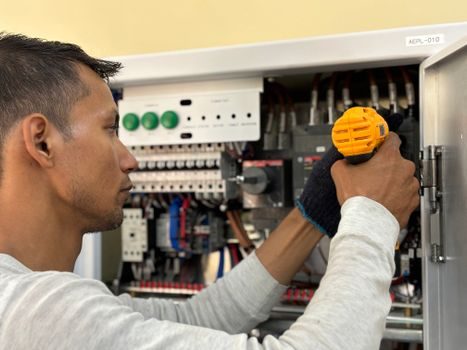
CMS acceptance is governed internally by alarm threshold methodology and trend stability, with ISO 20816-1 covering vibration severity zones for machine classes. Acceptance is usually a documentation exercise: alarm trip levels set in mm/s RMS or g RMS against baseline readings, with envelope demodulation thresholds set by bearing manufacturer defect frequencies. [S2]
DBM acceptance is governed by ISO 1940-1 balance quality grades, with the residual unbalance expressed in g·mm per kg of rotor mass. A G2.5 grade is the typical ceiling for machine tool spindles, G6.3 for industrial fans and pumps, and G16 for general machinery [S2]. Horizontal balancing machines for turbines and compressors built by SCHENCK comply with SAE ARP 4048 on rigid-machine rotor behaviour and minimum achievable residual unbalance [S2].
Limits, Failure Modes, and Sourcing Risks
CMS does not fix a faulty machine; it only reports degradation, and a poorly configured system can drown operators in nuisance alarms. The biggest commissioning risk is baseline setting on lightly loaded or cold machines, which produces artificially low vibration and hides real defects. Open-source and Windows-based condition monitoring software reviewed in mid-2026 remains a viable lower-cost path for plants with internal signal-processing expertise [S5].
DBM does not diagnose the cause of unbalance, and a perfectly balanced rotor can still vibrate due to misalignment, looseness, or resonance. The hardware limitation is rotor mass and length: a 200 g bench unit cannot validate a 5-tonne turbine rotor, and a 5-tonne stand cannot measure a micro-rotor. The Indian and European balancing service market positions capital-purchase-versus-service trade-offs, with 022-area code providers running mobile balancing crews for in-situ correction [S6].
Common sourcing pitfalls: under-specifying rotor mass envelope on a new DBM (leading to fixtures that block future part families), and over-specifying channel count on a new CMS (driving per-channel licence costs without a corresponding asset base to monitor). Buyers should match the rotor weight range to actual production, not to the largest theoretical rotor. Academic work on omnidirectional vibration monitoring using quaternion-based analysis points toward future CMS directions where multi-axis data fusion replaces single-axis accelerometers [S7].
Specification Comparison Table

Core specification axes: condition monitoring systems are evaluated on sensor count, sampling rate (typically 10-25 kHz for vibration), supported communication protocols, and historian retention, while dynamic balancing machines are evaluated on rotor mass range (200 g to 5,000,000 g across current offerings), rotational speed range (70 rpm to 200,000 rpm), achievable ISO 1940-1 grade, drive type, and number of correction planes [S2][S4].
Cost tier: small bench DBMs in the 2-3 kg class are the lowest entry cost, large horizontal DBMs for turbines are the highest capital cost, while CMS scales linearly with monitored point count. For plants running 24/7 rotating fleets with high criticality, CMS-only is rarely enough; for E&M service shops with no continuous process plant, DBM-only is usually enough.
Trackable signals for sourcing: monitor ISO 1940-1 grade availability on DBM datasheets, monitor per-channel CMS licence cost in 2026-07 vendor quotes, and confirm whether the CMS software stack supports OPC UA for plant-level data exchange. For rotating-equipment programs that already balance rotors in-house, a shrink wrapping machine throughput cost and spec trade offs reference is a useful reminder that packaging-line and balancing-line decisions run on similar TCO math when utilisation is the binding constraint.
Detailed specification references: power monitoring system.