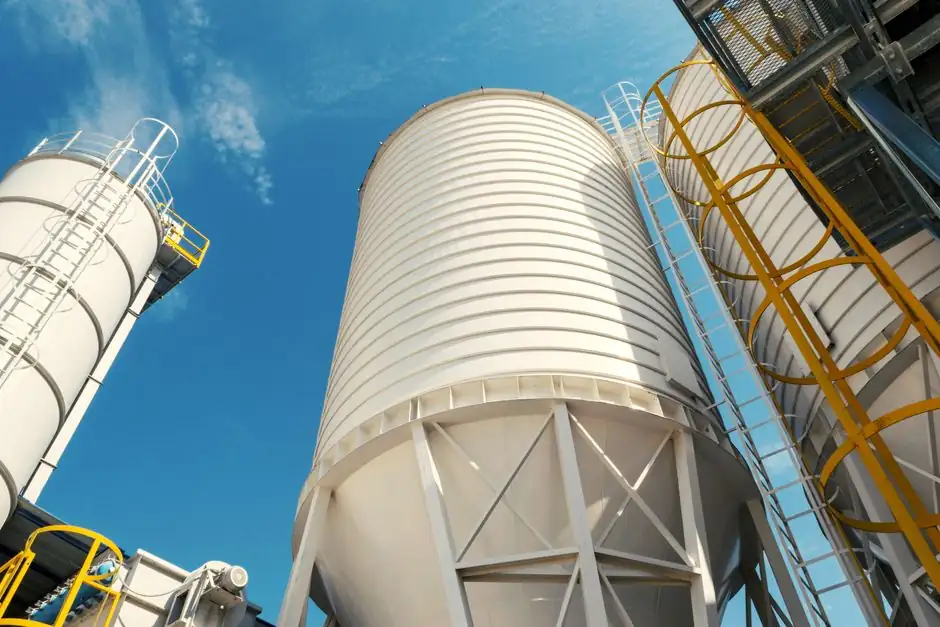
Centrifugal-discharge bucket elevators typically run at 225–300 fpm and scoop material straight from the boot, then fling it out of the head pulley by centrifugal force, which is the configuration for high-throughput lines handling free-flowing granular solids such as sand, gravel, crushed ore, cement clinker, and grain [S3][S1].
Continuous-discharge units run at lower belt speed, load via an inclined feed chute (with partial scooping), and pour material from the back of each bucket onto the inside curve of the preceding bucket, which then tips it into the discharge spout by gravity [S1][S2]. That gentle action matters for fragile, friable, light, fluffy, or highly abrasive products where high-speed impact would generate fines, dust, or hood wear [S1][S2].
Selection Criteria: What Forces the Choice
Material characteristics drive the first decision: free-flowing, durable, non-degrading granular solids route to centrifugal; fragile, friable, oversized lumpy, highly abrasive, light, or fluffy products route to continuous, because the centrifugal “throw” will crush pellets, aerate powders, and accelerate bucket, belt, and head-pulley wear [S1][S2][S3].
Capacity and throughput come second: centrifugal designs deliver higher capacity at a given bucket size because the high belt speed and aggressive scoop load each bucket close to its strike volume, while continuous designs of the same envelope run at lower tonnage per hour and are explicitly a higher-cost option for a given through-rate [S7][S1]. Drive type (belt vs chain) is a third filter: both styles accept belt or chain, but chain is generally preferred for continuous units handling heavy or abrasive lumps, and for high-temperature service where a rubber belt would be rated out [S1][S2][S4].
Side-by-Side Comparison on the Criteria That Matter
On belt speed, centrifugal units run 225–300 fpm (the KWS-cited range) while continuous units run markedly slower, which is the root cause of the capacity and wear differences downstream [S3][S2]. On discharge mechanism, centrifugal “flings” via the head pulley’s radial acceleration, whereas continuous uses the overlap of bucket lips plus gravity pour into the spout, and the Renold/World Cement reference describes the centrifugal boot-scoop-plus-throw sequence as the defining feature of that geometry [S8][S2].
On bucket style, centrifugal elevators typically use AC-style or similarly deep, reinforced-lip buckets designed to dig and launch material, while continuous units can use fabricated steel buckets, nylon buckets, or polyurethane buckets to cushion the product and resist abrasion in slow-speed service [S1][S2]. On cost and footprint, continuous units lose on a capacity-per-bucketed-dollar basis; for the same hourly tonnage you generally need a larger continuous elevator, which is why a plant picking continuous for a delicate product accepts a higher capital cost and a larger head-house [S7].
Use Cases: Where Each Type Earns Its Place
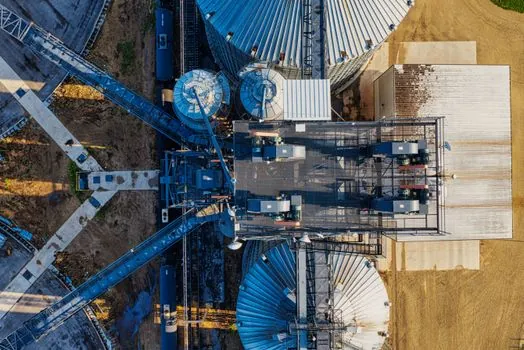
Centrifugal bucket elevators dominate grain terminals, sand and gravel plants, cement plants, ore-handling terminals, and shipping transfer points where the product is granular, free-flowing, durable, and where high throughput and small footprint matter more than gentle handling [S1][S4]. A typical belt-driven centrifugal unit moves grain from a receiving pit up to a conveyor feeding storage silos, where high belt speed and the throw action let the bucket discharge cleanly over the head pulley into a short chute [S4].
Continuous-discharge bucket elevators are the fit for fertilizers (especially potash and prilled urea), food-grade powders, plastic pellets, wood chips, cement raw mix with high abrasive silica content, and any fluffy or aeration-sensitive product where you cannot tolerate dust generation or particle breakdown [S1][S2][S5]. The same NACE/abrasion logic applies: a continuous design is also specified when the material is large-lump or highly abrasive, because throwing those lumps centrifugally into a steel hood erodes the hood and the chute quickly [S2]. For a wider view of how belt-and-bucket selection interacts with adjacent conveyor decisions, see this bucket elevator design reference.
Failure Modes and Operational Constraints
Specifying the wrong type fails in four predictable ways: product degradation (centrifugal crushing friable product into fines and dust), excessive wear (centrifugal accelerating bucket, belt, and head-pulley wear on abrasive material), reduced efficiency (continuous bottlenecking a high-throughput line), and unnecessary maintenance (either type run outside its optimal envelope pushing unplanned downtime) [S1]. Centrifugal units also tolerate higher temperatures and dust-laden atmospheres more easily because the throw action self-clears the bucket, but they pay for it in bucket-lip wear and head-pulley lagging wear.
Continuous units need careful boot geometry: the inclined feed chute and the “pour onto the previous bucket” discharge require proper bucket spacing and overlap; if buckets are spaced too far apart the pour path breaks and product falls back into the boot, a classic field failure [S1][S2]. Chain-driven continuous units, while mechanically robust, add sprocket and chain wear items that belt-driven centrifugal units avoid, and the chain selection must match the lump size and the abrasive index of the handled material. For plants already running centrifugal pumps on abrasive slurry service, the same wear-rate logic applies to bucket, hood, and chute materials.
Decision Matrix: Pick by Application
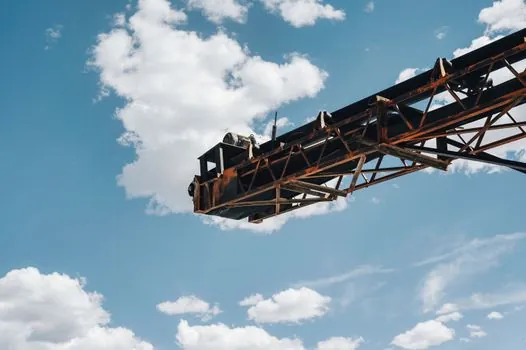
For free-flowing granular solids under 1/4 in. (6 mm), durable, with no dust or fines concern, high throughput required: pick centrifugal, belt-driven, AC-style buckets, 225–300 fpm target speed [S3][S1]. For free-flowing solids with larger lump size or high-temperature service: pick centrifugal, chain-driven, deep-reinforced buckets, and verify the chain rating against the lump dimension [S4]. For fragile pellets, food-grade powder, fertilizer, fluffy or aeration-sensitive material: pick continuous-discharge, belt or chain per temperature, nylon/polyurethane bucket option if abrasion is moderate, steel buckets if abrasive [S1][S2].
For highly abrasive heavy lumps (e.g. clinker, sinter, coarse ore) where hood and chute wear is the dominant cost: pick continuous-discharge, chain-driven, fabricated steel buckets, slow belt speed; accept the higher capital cost and larger head-section to cut hood replacement frequency [S1][S2][S7]. Avoid continuous-discharge for high-throughput free-flowing granular service; the throughput penalty per unit of head-house footprint will erode the project economics, and a properly sized centrifugal unit will deliver lower total cost of ownership in that duty [S7][S1].
Sourcing and Standards Discipline
Most published bucket-elevator selection guidance comes from OEM engineering teams (FEECO, KWS, Kase, MHE, Gough, Renold) and references CEMA-type design practice rather than a single ISO or ASME standard for the centrifugal-vs-continuous selection itself; the cited speed range of 225–300 fpm for centrifugal units comes from KWS engineering guidance, not a published ISO belt speed class [S3][S1]. Bucket and belt selection does intersect with CEMA B105.1, and explosion protection on grain-handling elevators typically invokes NFPA 61 in North American service, but the discharge-mechanism choice (centrifugal vs continuous) is engineering judgment driven by the material’s flowability, friability, lump size, and abrasiveness, not a single code mandate [S4].
Trackable signals for a 2026 specification: OEM design sheets now routinely quote the 225–300 fpm centrifugal band as a hard spec, with continuous units specified one or two frame sizes up to compensate for the lower speed [S3][S7]. Plant operators handling potash, urea, or food-grade powders continue to migrate from centrifugal to continuous when dust and degradation complaints hit the maintenance log, even at the higher capital cost [S1][S5]. For an adjacent decision where the same gentler-handling logic shows up, see this industrial valve seat-material selection map, which follows a similar “match material behavior to process condition” approach.
Background reading: Dry Barrel vs Wet Barrel Fire Hydrants: Freeze-Protection Decision Map.