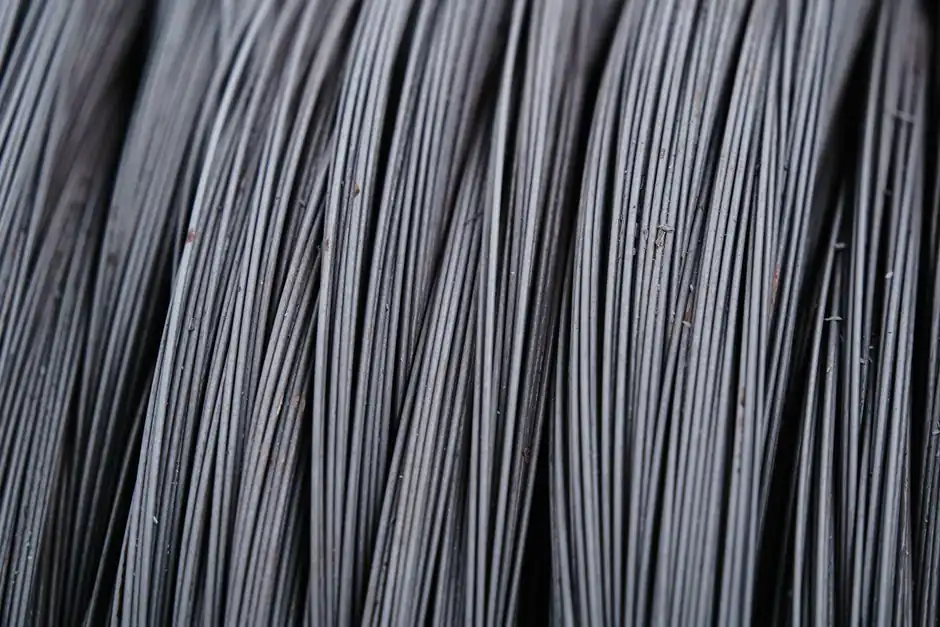
Copper alone can represent 30-70% of total cable cost, making commodity-linked pricing and futures-based hedging the single largest cost lever in any 2026 cable procurement plan [S4].
The procurement scope spans LV/MV/HV power cable, fiber, Ethernet data cable, aluminium CC (copper-clad) variants, and specialty cable and wire constructions used in construction machinery harnesses, with demand for grid-related cable projected to triple by 2030 per the IEA [S4].
Why a Structured Cable Procurement Strategy Now
Copper prices rose 23% in 2024 on the London Metal Exchange, and copper demand is forecast to double by 2035 driven by EV and grid expansion, exposing any unhedged cable buyer to instant margin compression [S4]. The global wire and cable market is sized to reach $354 billion by 2032 at a 5.7% CAGR, so volume alone is not the risk: volatility is [S4].
For OEM buyers ordering wire harnesses for construction machinery and equipment, the typical exposure is multiplied by long bill-of-materials runs, fluctuating steel and PVC inputs, and 6-12 week lead times on MV 33kV XLPE that must be pre-booked for renewable energy sites [S4]. A 2026 framework treats cable as a strategic, not transactional, purchase category.
Core Levers: Demand Analysis, Supplier Tiers, and Price Risk
Step one is a comprehensive demand analysis: cable type, length and gauge, environmental conditions (UV, oil, temperature class), project timeline, and the safety/compliance code that governs the install (IEC 60502 for power, TIA standards for Ethernet, IEEE/IEC for utility interconnect) [S3][S4]. Step two is a four-tier supplier map: Tier 1 OEM manufacturers for long-term volume, Tier 2 regional distributors for short-lead flexibility, Tier 3 niche/custom builders, Tier 4 stocking wholesalers for emergency call-offs [S4].
Step three is material price risk management. Per McKinsey, commodity-linked pricing can reduce procurement cost variance by up to 40% versus spot buying, which is why leading cable buyers layer futures contracts, price indexing, early-buy programs, and vendor-managed inventory (VMI) on top of each other [S4]. For an Ethernet-only project, this is lower-stakes; for an MV cable package worth eight figures, it is the difference between a margin and a loss. Comparable playbooks for adjacent categories, such as pump procurement strategy, follow the same three-pillar structure of spec, source, and survive.
Bulk Procurement: When Volume Discounts Beat Just-in-Time
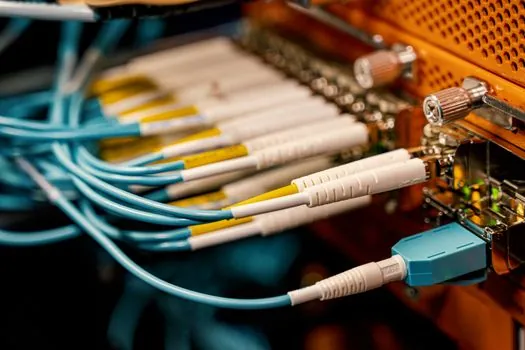
Bulk cable and wire procurement cuts per-unit cost, secures inventory against stockouts, and simplifies logistics by collapsing multiple purchase orders into fewer, larger deliveries [S2]. The trade-off is forecasting accuracy: overshoot inflates carrying cost and ties up working capital, undershoot stalls production lines.
The mitigation is a single-source one-stop-shop supplier with scalable capacity, stringent quality control, and documented compliance to industry standards, paired with vendor-managed inventory to keep buffer stock lean [S2]. Industrial buyers following the same logic for safety fence selection for electrical work face the same just-in-time-versus-bulk tension and lean on standardized SKUs to keep the balance sheet clean. Centralized procurement and standardized SKUs are explicitly named in 2025 inventory-optimization guidance as the first lever to pull on wire and cable lead times [S9].
Ethernet Cable Sourcing: Spec Discipline Over Box-Logo Trust
For Ethernet cable, the procurement failure mode is spec drift, not price. Specify solid bare copper conductors; reject copper-clad aluminium (CCA) outright, since it fails TIA DC resistance tests and cannot reliably carry Po++ loads [S3]. Verify UL or ETL listings against the UL Online Directory by listing number: a logo on the box is not verification [S3].
On shielded versus unshielded: S/FTP shielded twisted pair typically adds $30-50 per drop versus UTP, a premium that is insurance in any plant environment with motors, VFDs, or power cable runs, and trivial against the cost of a single re-pull [S3]. Termination must follow T568A or T568B to standard, with both ends matched, and the lamps and lighting circuits running in parallel trays should be physically separated from data runs to keep EMI in spec [S3].
Standards, Compliance, and Localization Levers
Mandatory standards to anchor any 2026 cable specification include IEC 60502 for power cables, TIA-568 for Ethernet, IEEE/IEC for utility interconnect, and UL or ETL for North American listings, each pinning conductor sizing, insulation, fire performance, and test methods [S3][S4]. Aluminium CC (copper-clad) wire has its own procurement profile: lighter, cheaper, but with different termination crimps and ampacity derating that buyers must call out in the technical spec, not assume the supplier will police [S8].
Localization rules are tightening. The U.S. Infrastructure Investment and Jobs Act prioritizes Build America, Buy America (BABA) compliance for federally funded projects, so domestic or BABA-eligible suppliers are a hard filter, not a preference, on those bids [S4]. Sustainability clauses (carbon footprint, recyclability, end-of-life recovery) are now a standard line item in EMEA RFQs and a tie-breaker on multi-criteria awards. The same dual-pressure pattern shows up in sourcing pneumatic systems from China in 2026, where spec and gate documentation are the deciding factors, not headline price.
Decision Matrix: Bulk vs Spot, Single vs Multi-Source
Two-axis call. Axis 1: cable value and lead time. If a cable line is high value and long-lead (MV/HV XLPE, subsea, fibre), bulk-buy on a Tier 1 OEM contract with hedging: volume discount + price stability + supply security [S2][S4]. Axis 2: risk profile. If the line is low value, short lead, and substitutable (instrumentation wire, Cat6 patch), pull from a Tier 2/3 regional distributor and skip the hedge overhead [S4].
Single-source wins for spec stability, QC uniformity, and admin simplicity; multi-source wins for supply-chain resilience and price-leverage, but doubles the supplier-qualification cost [S2]. For projects under BABA or with strict fire-performance code (LSZH, CPR Euroclass), the answer is forced: the qualifying supplier list is short, so a primary OEM plus one audited backup is the practical pattern [S4].
Failure Modes and Trackable Signals
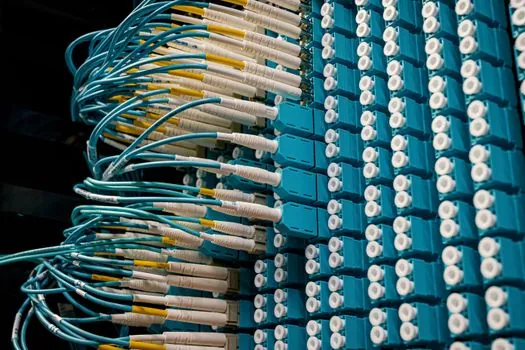
Top three procurement failure modes: (1) copper price spike eroding fixed-price contract margin (mitigation: indexing or hedge ratio above 50%); (2) long-lead cable slipping the project critical path (mitigation: Q-12 month pre-book on MV/HV); (3) counterfeit or sub-spec cable slipping past goods-in inspection (mitigation: type-test reports, batch traceability, third-party witness testing on first article) [S2][S4].
Trackable signals to watch through 2026: LME copper and aluminium spot pricing versus the hedge strike, average supplier on-time-delivery score across Tier 1/2, and the count of BABA- or CPR-compliant SKU alternates qualified per cable family. A drop in the qualified-alternate count below two per family is the early warning that single-source exposure is rebuilding, and procurement should re-open RFQs before the next PO cycle.