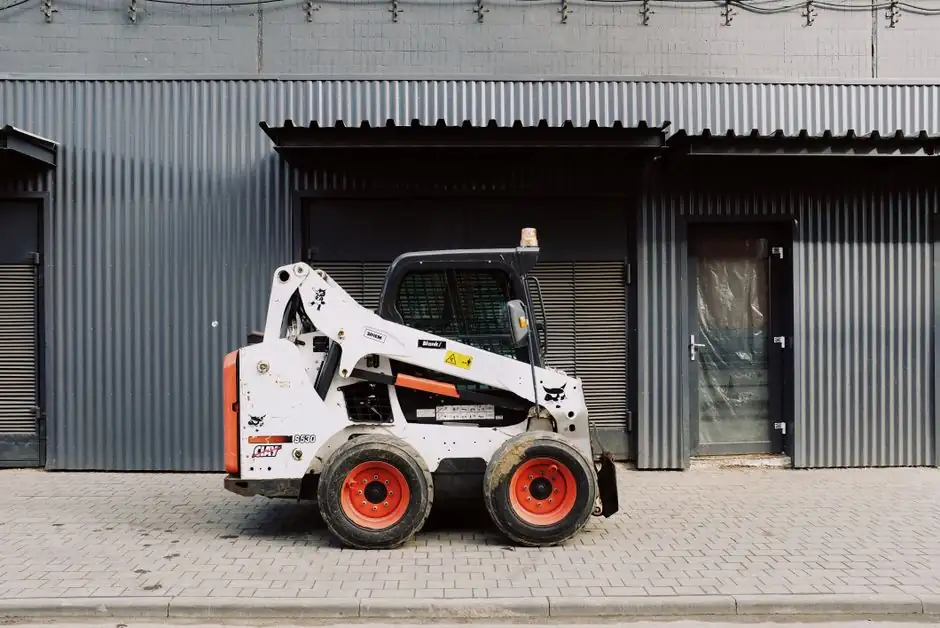
A growing contractor should compare a loan against a $1-buyout lease for long-term assets, and against a fair-market-value lease when predictable fleet turnover matters.
Both structures spread equipment acquisition over time, but ownership, upfront cash, tax treatment, payment flexibility, maintenance responsibility, and end-of-term control differ materially.
Lease and Loan Mechanics for Construction Machines
An equipment loan finances the purchase price, generally requires a down payment, and uses fixed payments over a defined term. The lender holds a lien until final payment, after which ownership is free and clear [S2]. Ownership transfers from the start of the financed purchase, although the lender retains security interest in the machine [S1].
An equipment lease grants the right to use a machine for a set term while the lessor retains title. Common end-of-term options include return, renewal, purchase at market value, purchase at a fixed price, or ownership following a nominal $1 buyout [S2]. A $1-buyout lease functions economically like a loan because the contractor owns the equipment after the final payment, while a true or FMV lease permits return or market-value purchase [S1].
The practical distinction is ownership control: a loan is designed to create equity in the machine, whereas a lease is primarily an agreement to use equipment under stated end-of-term conditions [S7]. For a growing fleet, classify each machine by expected holding period rather than applying one financing policy to every asset.
Decision Criteria: Cash, Control, Tax, and Operating Cost
Leasing generally minimizes upfront cash because equipment leases can require little or no down payment and normally produce a lower monthly payment than financing the full purchase price [S1][S10]. This structure is suitable when payroll, a second crew, or a down payment on another machine takes priority over immediate tax deductions.
A loan generally requires more cash upfront but transfers ownership, releases the lien after repayment, and allows the contractor to retain asset equity [S2]. Loan payments are normally fixed over the agreement, while some leases also offer fixed or seasonal payment schedules; availability of flexible schedules must be confirmed in the proposal [S5].
Tax treatment requires professional review because the structure and accounting classification matter. A business that wants a large current deduction may favor a loan because the equipment usually qualifies for full Section 179 and bonus depreciation treatment in the year it is placed in service.
Which Structure Fits Each Fleet Decision

A loan is the stronger choice when the contractor has available down-payment capital, expects to retain the equipment for the long term, considers the machine critical to daily operations, and wants to build equity rather than accept an end-of-term purchase decision [S2]. It also avoids a future FMV purchase price that cannot be fixed today.
A $1-buyout lease is the stronger growth-period compromise when cash must be preserved for fleet expansion but the machine is expected to remain in the fleet. The lessor owns the equipment during the lease, yet the contractor can acquire it for $1 at completion, subject to the agreement and payment of all obligations [S1][S2]. This is closer to ownership than a true operating lease and is not equivalent to renting because the payments build toward a defined acquisition outcome.
An FMV lease allows the contractor to use the equipment for a set term and then return, renew, or purchase it at its then-current market value. At expiry, the contractor can return the machine, renew, or purchase it at its then-current market value [S1][S2]. The end-of-term options do not automatically transfer ownership to the contractor.
The structure is not suitable for every need. Renting is usually more logical for isolated short-duration demand where utilization does not justify committed finance [S2]. A lease with vendor maintenance may fit a contractor without workshop capacity, while loan buyers normally remain responsible for insurance, maintenance, and depreciation [S2].
Maintenance, Upgrades, and Technology Risk
A lease can reduce the need for a large initial cash outlay by allowing the contractor to pay for the equipment over time. That service scope must be defined because routine wear from construction duty can still fall outside the agreement. A loan buyer normally carries maintenance, insurance, and depreciation responsibility from the beginning [S2].
A lease allows the contractor to use equipment for a set term and then return or purchase it at the end of the term. They also allow planned replacement without committing to a fixed purchase at the beginning, but they trade ownership certainty for flexibility [S5].
Equipment selection still governs financing performance. Excavators, loaders, skid steers, dozers, and compact track loaders have different utilization, maintenance, resale, and obsolescence profiles. A broader equipment reference for construction machinery and equipment should be used to assess service capacity and replacement cycles before fixing the payment budget.
Cost Evaluation Using Total Cost of Ownership
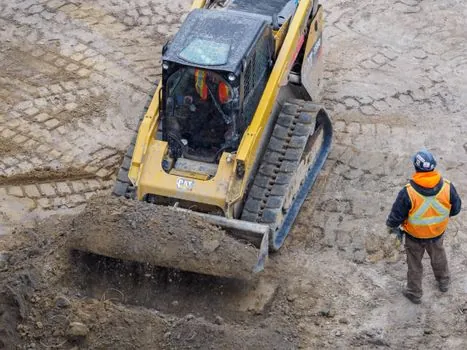
Compare the two quotes on total cash required over the same planning period, including down payment, monthly payment, interest or implicit financing cost, fees, taxes, maintenance, insurance, and end-of-term purchase or disposal value [S2][S9]. A lower lease payment does not automatically produce a lower lifetime cost, and a higher loan payment can still be economical when it creates equity in an asset retained beyond the financing term.
Use three measurable tests. First, calculate available cash after the transaction: a lease requiring no down payment preserves more cash than a loan with an upfront contribution. Second, test payment capacity against cash-flow volatility, including whether seasonal or flexible lease payments are contractually available. Third, compare the machine's expected retention period with the lease term and buyout structure.
The cash-flow test determines affordability, while ownership and total-cost tests determine whether the structure is efficient. For a fleet expansion involving several machines, apply the same criteria to each asset rather than blending excavator, loader, and skid-steer economics into one aggregate payment decision.
Contract Controls Before Fleet Approval
The finance agreement, not the sales pitch, must specify the payment schedule, term, interest treatment, taxes, insurance, maintenance, service response, damage allocation, purchase option, return conditions, and early-termination charges [S2][S9]. A $1 buyout is meaningful only if all scheduled payments and other contractual requirements are satisfied, so the lessor's lien-release and title-transfer process should be documented.
Compare title and lien treatment as well as payment size. A loan normally releases the lender's lien after full repayment, while a lease retains title with the lessor until the agreed purchase or return process is completed [S2]. Confirm whether early termination requires a stated payoff figure, whether payments can be skipped or deferred, and what happens after a default.
Growth decisions should be reviewed on a rolling 12-month utilization and replacement basis. Track actual hours per month, scheduled operating days, maintenance cost per operating hour, fleet growth, and the planned sale year for each machine. These 5 operating measures connect financing term to real asset use and allow the contractor to revise the mix between loans, $1-buyout leases, FMV leases, and rental before the next acquisition.
For a growing fleet, use loans for long-term core assets, $1-buyout leases for long-lived acquisitions where liquidity has priority, and FMV leases for planned fleet turnover. Track hours, downtime, maintenance cost per hour, target retention year, and total cash outlay before approving each structure.