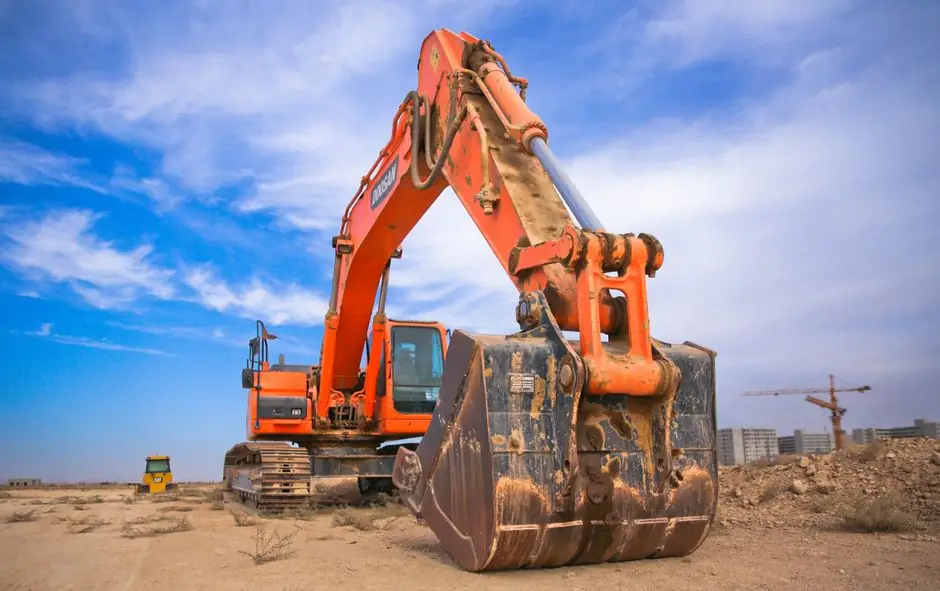
Stage V limits particulate matter to 0.015 g/kWh, compared with 0.025 g/kWh under Tier 4 Final, and adds a particle-number limit [S3][S4].
Both regimes regulate non-road diesel construction engines, but their legal market, engine boundaries and after-treatment implications differ, so certification must follow the machine and destination rather than a generic equivalence claim [S2][S4].
Regulatory scope and market fit
U.S. EPA Tier 4 Final applies to new off-highway diesel engines in the United States, while EU Stage V applies to non-road mobile machinery in Europe [S2][S4]. Stage V is Regulation (EU) 2016/1628; it entered implementation in stages from January 2019, with the final power bands phased in through 2020 [S4]. Tier 4 Final was introduced in stages between 2008 and 2015, with deadlines varying by engine power category [S4].
Stage V took full effect across essentially the entire power range in 2019 and 2020, closing the longstanding gap that had left smaller engines under 56 kW and larger engines above 560 kW less tightly controlled [S5]. Tier 4 Final does not cover every small engine, and engines below 24 hp fall outside its framework in the cited purchasing guidance [S4]. Marine engines, locomotives and underground mining equipment follow separate rules, so a construction-equipment comparison should not be applied to them [S4].
Limits and after-treatment comparison
For the cited engine category below 560 kW, Tier 4 Final and Stage V both use a 0.4 g/kWh NOx limit, but Stage V reduces particulate matter from 0.025 to 0.015 g/kWh [S3]. Stage V also introduces a particle-number cap, which counts ultrafine particles rather than measuring particulate mass alone [S2][S4][S5]. This is the principal technical distinction for compact loaders and similar machinery [S2].
The after-treatment decision follows from the limits: Tier 4 Final above roughly 25 hp uses SCR and, in many configurations, a DPF, while Stage V's particle-number threshold effectively forces DPF use on most categories [S4][S5].
Choosing for the intended work site
Use Tier 4 Final when the machine is registered for U.S. off-road operation, the local certificate of conformity is the governing requirement, and the supplier has verified the applicable power band and after-treatment configuration [S2][S4]. Use Stage V when the machine must be imported, registered or operated under EU non-road machinery rules, especially where particle-number compliance is part of the local acceptance decision [S2][S4].
Stage V is the stronger choice where EU certification is mandatory, because a Tier 4 Final certificate alone does not establish Stage V compliance [S4]. Tier 4 Final is sufficient where U.S. compliance governs, but it is not a substitute for European approval. Dual-certified engines are commonly built on shared platforms to satisfy both markets, making them useful for multinational fleets [S1].
Both standards are inappropriate as stand-alone substitutes for local registration checks. Operators buying a compact loader, crawler excavator, wheel loader, dozer or mobile generator should verify the engine family, rated power, emission certificate and after-treatment layout against the destination market [S1][S2][S4].
Ownership cost and operating implications
Tier 4 Final and Stage V machines have broadly similar maintenance burdens because their principal hardware overlaps: DPF, DOC and SCR systems require compatible diesel exhaust fluid quality, defined service intervals and disciplined regeneration management [S1][S5]. Stage V does not automatically deliver the fuel-consumption advantage sometimes claimed in secondary comparisons, because rated power, calibration, machine design and duty cycle also determine fuel use [S3].
The cost comparison should include diesel exhaust fluid, DPF maintenance, regeneration interruptions and operator training, not purchase price alone [S1][S5]. Poor after-treatment condition can trigger warning escalation and derating, which converts a nominally compliant engine into a productivity problem [S5]. Stage V's tighter PM and particle-number limits also make filter condition and regeneration behavior more relevant to field performance than engine nameplate power alone [S2][S4].
For fleet accounting, treat Tier 4 Final and Stage V equipment as separate compliance assets. Record the governing certificate, engine serial or family, DPF presence, SCR presence, DEF specification and regeneration procedure for each unit [S1][S5]. That avoids assuming a visually similar excavator can be registered or serviced interchangeably across the U.S. and EU.
Used equipment and procurement checks
A used machine should be accepted on its emission documentation and physical configuration, not on the seller's statement that it is "Tier 4 or Stage V" [S8][S9]. Confirm whether the DPF and SCR are present, whether the engine is rated below 24 hp or above 560 kW, and which market certificate accompanies the machine [S4]. A missing or replaced after-treatment component can make a modified machine noncompliant regardless of the original engine family [S2].
Importer screening should happen before shipment because certification mismatch can create customs, registration or service-entry problems [S4]. The engine model and power category must be checked against the certificate, and machines intended for Europe should receive Stage V approval rather than assuming U.S. Tier 4 Final certification transfers automatically [S2][S4]. Stage V covers non-road mobile machinery, including generators, but the supplied excerpts do not establish the scope for mobile rental units or any exclusion for permanently installed emergency generator sets [S4][S5].
Equipment categories and intended users
This comparison is for purchasers and fleet managers selecting off-road diesel construction machinery for North American or European operation. It is also relevant to importers, rental companies and service contractors who maintain DPF and SCR systems, particularly within the broader category of construction machinery and equipment. [S2]
It is not the right basis for sizing lifting equipment, because emission certification says nothing about lifting capacity, boom geometry or inspection intervals. It also should not be used to compare electric or naturally aspirated industrial engines without checking their separate certification and duty requirements.
For a concrete purchase decision, request three documents from the supplier: the certificate of conformity, the engine-family and rated-power listing, and the after-treatment maintenance schedule. Cross-check all three before accepting the machine. This sequence is especially important for fleet expansion because the machine's destination, engine category and filter arrangement determine legal operation more reliably than the marketing label on the specification sheet [S1][S2][S4].