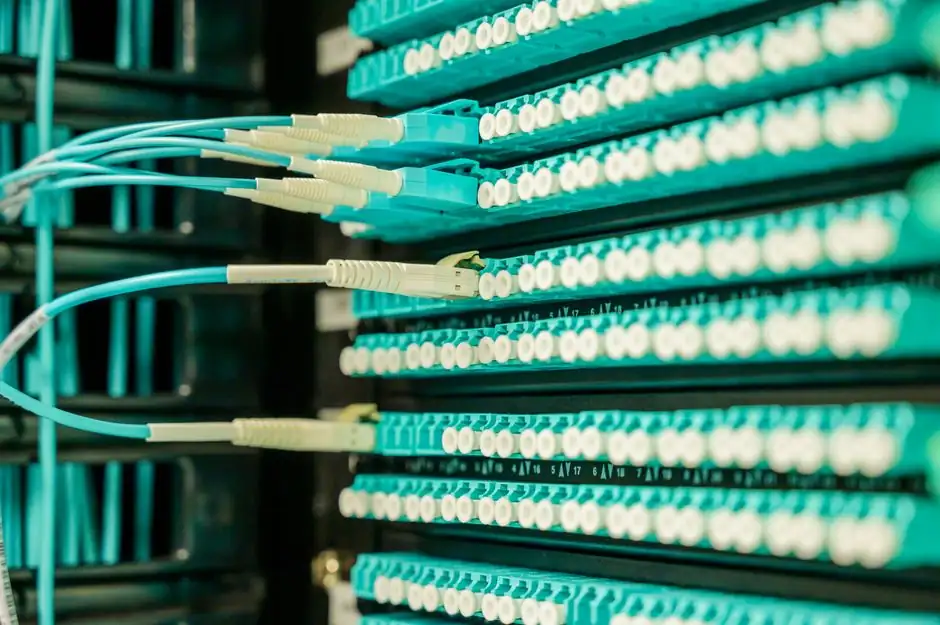
Screened control cables support industrial signal transmission and are described as resistant to oil, chemicals, abrasion, and heat while retaining flexibility [S3].
They suit aircraft controls, PLC connections, sensors, motor control, and process instrumentation, provided routing, shielding, chemical exposure, and tension are addressed in the design [S1][S2][S3].
What control cables do and where they fit
Control cables transmit commands or measurement signals between an operator, controller, sensor, actuator, or mechanical linkage. Mechanically actuated aircraft cable systems are used for engine controls, landing gear, and flight-control functions, where the cable transfers force through a mechanical path rather than carrying a fluid or a digital command [S2].
In industrial facilities, the same cable family supports programmable controllers, variable-frequency drives, servo motors, measurement instruments, remote switches, and sensitive process equipment [S3].
The useful distinction is function, not the word “control.” A mechanical control cable moves or transmits force, while an instrument or communication cable carries an electrical signal. Specification must therefore begin with the load or signal, the route, the environment, and the required connection method.
Principal advantages
Control cables are strong, lightweight, and flexible, making them practical for routing through tight spaces and sharp turns where a rigid linkage would be difficult to install [S1]. Their mechanical efficiency also makes them effective for direct control applications without the fluid-conversion hardware required by a hydraulic system [S1][S2].
Flexibility does not remove the need for correct installation. Adequate bend radius, supported routing, suitable terminations, and avoidance of loading at the cable ends remain necessary because bending, tension, and environmental exposure affect service life. A cable that can turn sharply during installation may not tolerate repeated flexing during operation.
Screened versions add an electrical advantage where interference can corrupt low-level signals. Shielding supports signal integrity for PLCs, sensors, servo systems, and other noise-sensitive equipment, while resistant sheaths help protect the cable against oil, chemicals, abrasion, and heat in process plants [S3].
Main disadvantages and failure modes
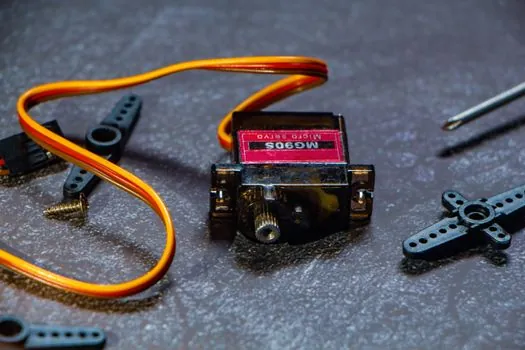
Temperature changes and stretching can alter mechanical-cable tension, requiring periodic adjustment of the system [S2]. This maintenance dependency is the clearest contrast with an electrical fly-by-wire command path, where a controller processes the pilot’s input and sends signals to an actuator [S2].
Electrical control cables have their own failure modes. A damaged screen or poor grounding arrangement can increase electromagnetic interference, while an open conductor, broken shield connection, or incompatible termination can interrupt a PLC or sensor circuit [S3]. For mechanically actuated systems, chafing, inadequate tension, sharp bends, and installation damage can reduce control accuracy or prevent movement [S1][S2].
Screening should not be treated as a substitute for correct routing. Shielded control cables must still be installed so their electrical characteristics are not undermined by installation defects or unsuitable terminations. Buyers should verify shield continuity, conductor identification, bend allowance, gland compatibility, and the environmental requirements of each connection rather than relying on the cable designation alone.
Comparing cable, hydraulic, and electronic control
Mechanical cable control is lightweight and strong, provides efficient and accurate control, is flexible enough to route through sharp turns, and requires frequent tension adjustment because of temperature changes and stretching [S1][S2]. Hydraulic control responds quickly and transmits force through pressurized fluid, but the system needs pumps, plumbing, actuators, and fluid management, adding weight and exposure to fluid-related corrosion concerns [S2].
Fly-by-wire is a form of aircraft control system [S2]. The selection criterion is not simply “cable versus no cable”; it is mechanical simplicity and maintainability versus hydraulic force density or electronic automation capability.
For industrial automation, the same trade-off appears at a smaller scale. Unshielded multicore cable may suit a straightforward low-interference circuit, while screened cable is preferable around sensitive electronics and noisy VFD or power equipment. Flexible conduit, cable trays, and glands then determine whether the selected cable can be installed and maintained without damaging its performance.
Selection criteria for industrial control cable
Voltage is the first electrical screen.
Conductor size and core count must match load current, voltage drop, control-device inputs, and connection limits. The cited range from 2 × 0.75 mm² to 60G2.5 mm² demonstrates product breadth, but it does not establish suitability for every core count or current level [S3]. Mechanical installation requirements, including routing, bend radius, tensile loading, and whether the cable is static or subject to repeated movement, must be checked against the manufacturer’s data.
Environmental selection should identify oil, chemicals, heat, moisture, abrasion, and electromagnetic exposure separately. Control and screened cables with oil-, chemical-, heat-, and abrasion-resistant construction are intended for demanding industrial environments [S3]. Shielding must match the noise problem, while the outer sheath and any armor or conduit must match the physical hazards.
Installation, maintenance, and related system choices
Mechanical control systems need inspection of tension, wear, attachment points, and routing. The need for frequent tension adjustment after temperature changes or stretching is an operating requirement, not a minor detail [S2]. Industrial electrical systems instead need inspection of terminations, screen continuity, conductor damage, and gland integrity [S3].
Route planning determines the practical serviceability of the installation. Supporting the cable at suitable intervals, maintaining the manufacturer-defined bend radius, and avoiding tension at terminations reduces avoidable damage. Engineers comparing cable management methods can also review the installation constraints covered in Cable Tray Advantages, Disadvantages, and Selection Criteria.
Protection at cable entries also matters because a cable specification does not define the complete installed system. A compatible cable gland supports mechanical retention and environmental sealing at enclosure entries, while control cable provides a focused reference on the cable itself. Both selections should be checked against the enclosure, conductor diameter, cable type, and installation environment.
Standards, sourcing, and purchase checks
The research material identifies H05VV-F, H05VV5-F, VV-K, and LiYCY VC4V-K as common control-cable constructions, but it does not provide enough detail to assign every cable in that family to one universal international standard [S3]. Procurement documents should therefore request the exact construction, conductor standard, voltage class, temperature rating, core configuration, screen arrangement, outer-sheath material, and applicable regional approval.
For industrial service, the cable’s claimed chemical, oil, and abrasion resistance should be supported by a datasheet or declaration tied to the actual exposure. The published 300–600 V range, −40 °C to +70 °C temperature range, and 2 × 0.75 mm² to 60G2.5 mm² conductor-size span are useful screening values, not substitutes for a project-specific datasheet [S3].
The decision should be recorded against four measurable criteria: electrical rating, environmental range, mechanical installation, and signal or control function. A tracked revision should also cover shield continuity, bend radius, gland type, and any required tension adjustment, because those details determine whether the installation preserves the cable’s stated advantages.