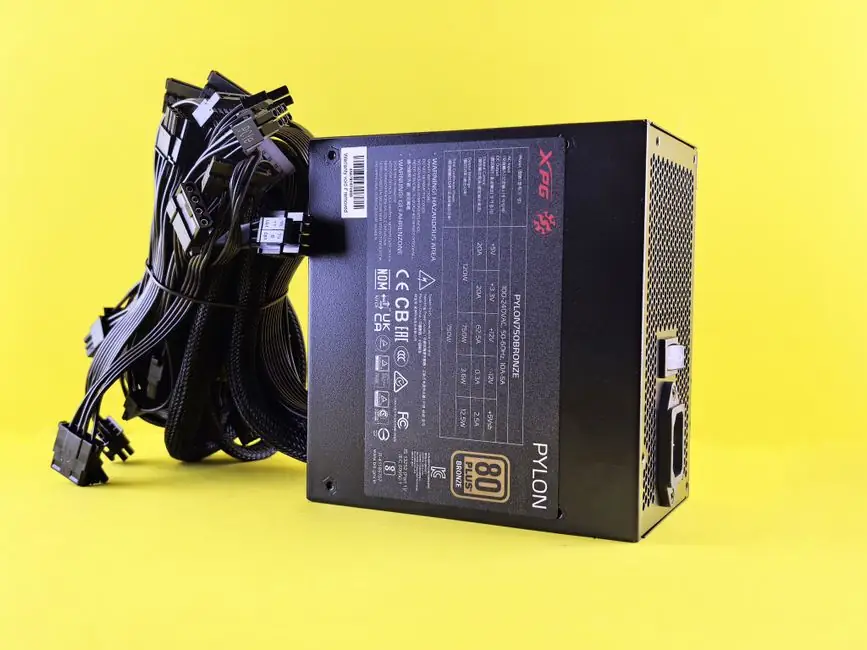
Power cables serve voltage classes from 1 to 500 kV and above, delivering electricity through underground urban grids, power-station outlet lines, industrial and mining supplies, and underwater routes [S1].
The principal trade-off is clear: cable circuits resist lightning, wind and bird damage, occupy little visible space and transmit reliably, but they carry high initial cost, difficult branching and complex joint construction [S1].
What Power Cables Deliver in Electrical Networks
Power cables transmit and distribute electrical energy, and their structure can be tailored for voltage, current, conductor material, insulation and installation conditions [S2]. Unlike a detachable power cord with molded connectors, a fixed power cable is normally installed as part of a larger distribution or transmission system [S3].
Underground cables reduce exposure to lightning, wind, ice, rain, snow and bird damage, which improves supply reliability compared with overhead lines [S1][S5]. Their compact insulated geometry reduces land occupation, and underground routes preserve the visible urban environment [S1][S5].
Electrical characteristics also matter. Power cable capacitance can improve line power factor, while the cable arrangement provides low radio-wave interference [S1][S5]. These are system-level benefits, but they depend on the selected voltage class, circuit design and network operating conditions, not on conductor size alone.
Reliability, Safety and Environmental Resistance
Power cables are designed to withstand temperature changes, humidity, moisture and chemical exposure when their insulation and sheathing materials match the installation environment [S4]. Copper conductors provide high conductivity and flexibility, while aluminum offers lower weight and lower cost at the expense of conductivity [S3].
Rubber compounds support flexibility and wear resistance, whereas PVC is used where general environmental resistance is required [S3]. These material choices should be treated as a system: the conductor determines electrical and mechanical behavior, the insulation controls dielectric performance, and the sheath protects the assembly from moisture and mechanical exposure.
Buried circuits also improve public safety because an accidental cable event generally has less direct effect on people than a comparable overhead incident [S1]. The route can cross dense urban areas without the visual impact of towers and conductors, which is a decisive benefit for underground networks, railways, buildings and industrial sites [S1][S5].
Cost, Branching and Repair Constraints
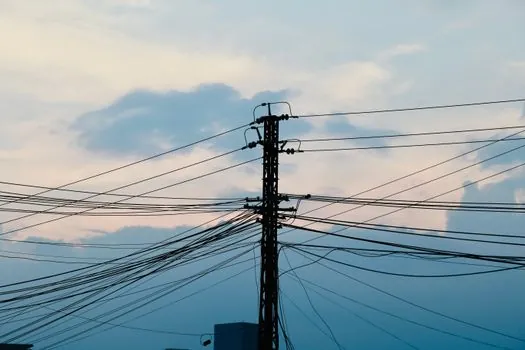
Power cables have high costs and require substantial one-time construction investment [S1].
Cable routes are difficult to branch or change after installation [S1][S5]. Fault locations are also hard to identify, and damaged sections can be inconvenient to isolate and replace, requiring personnel with specialized skills [S1][S5].
These constraints make early route planning more valuable than late design changes. A branch that looks trivial on a one-line diagram can require additional joints, terminations, switchgear and cable-distribution equipment. The power cable lifecycle cost decision framework is useful for comparing those intervention points rather than judging a circuit by installation cost alone.
Overhead Line Versus Underground Cable
Overhead lines have the simpler structure, easier installation, lower initial investment, better heat dissipation and more convenient maintenance [S5]. Underground cables provide higher reliability against weather and pollution, smaller land occupation, reduced radio-wave interference and lower voltage drop than overhead systems [S1][S5][S6].
Decision criteria separate the two options cleanly. Overhead lines win on initial installation cost, ease of field maintenance and heat dissipation, while underground cables win on environmental immunity, urban land use, appearance, safety and voltage-drop performance [S1][S5][S6]. Neither option wins on route flexibility or fault accessibility, because cable circuits are harder to branch and repair than accessible overhead circuits [S1][S5].
The practical choice therefore depends on route density, available trench space, voltage level, outage consequences and maintenance capability. Power cables are strongest where continuity, visual clearance and dense routing matter; overhead lines remain defensible where low capital cost and accessible maintenance dominate.
Selecting the Correct Cable System
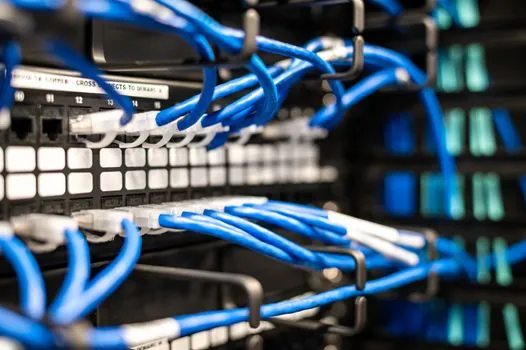
Selection starts with the source voltage, connected load current and required conductor cross-section [S3]. A cable must also match the installation method, thermal conditions, mechanical movement, moisture exposure and chemical environment, rather than being chosen from voltage rating alone [S2][S4].
For fixed industrial distribution, the power cable must integrate with the power transformer, power distribution box, termination points and protection system. Voltage and current ratings must be compatible with the source and load, while incorrect ratings can cause overheating, degraded performance and safety hazards [S3].
Termination and entry details deserve equal attention. Where cables pass through an enclosure or panel, the cable gland must suit the cable construction and enclosure requirement. Fire-resistant, flame-retardant, armoured, low-voltage and flexible power cables serve different design envelopes, so environmental resistance and installation flexibility must be matched to the actual route [S2][S4].
Best-Fit Applications and Exclusions
Power cables fit urban underground grids, power-station outlet circuits, industrial and mining internal supplies, underwater crossings and infrastructure where weather exposure or visual impact makes overhead lines unsuitable [S1][S5]. Flexible power cable also serves equipment requiring repeated movement or bending, with resistance to wear depending on the insulation and sheath selected [S3][S4].
They are a poor fit where the route must branch repeatedly, where installation budgets cannot support the civil work and joints, or where the operating organization lacks fault-finding and cable-repair capability [S1][S5]. They are also a poor fit where accessible overhead maintenance and unrestricted heat dissipation outweigh reliability, land-use, voltage-drop and appearance benefits [S5][S6].
Before purchase, verify at least 3 application values: system voltage, design current and required cable length. Add conductor material, insulation or sheath type, installation method, fire performance, mechanical duty and any armoring requirement. For equipment interconnection, confirm both voltage and current ratings against the connected load, and verify connector or gland compatibility [S2][S3].
The first engineering checkpoint should be the comparison between installation cost and lifecycle exposure, including joint count, branch needs, outage cost, repair access and environmental loading. The second is a documented route and termination review, with every cable entry, transition and joint treated as part of the electrical system rather than as an accessory.