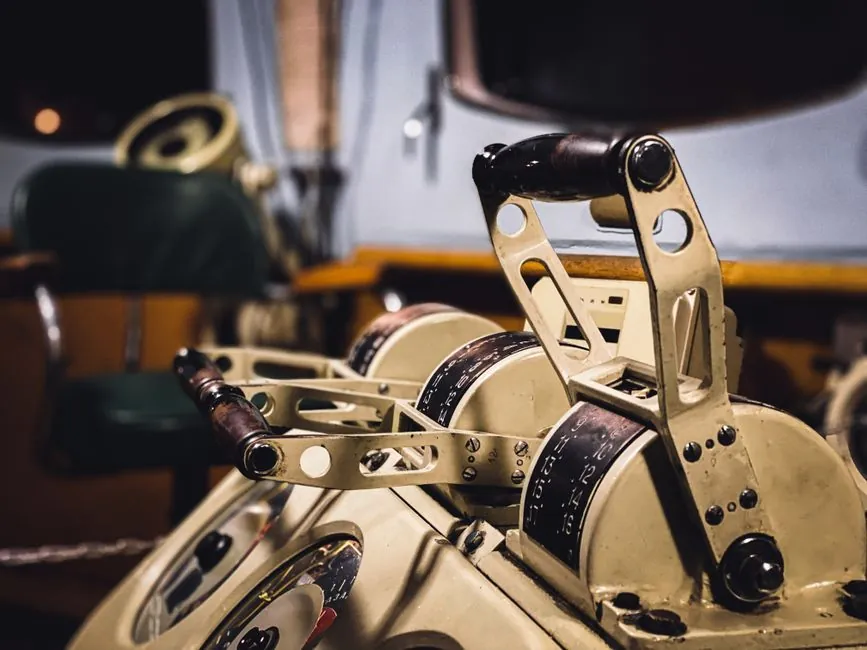
A motor control center centralizes motor starting, protection and distribution in one bus-connected assembly, with withdrawable starter units serving motors below 200 hp [S2].
The case for an MCC depends on motor count, serviceability, automation requirements and the condition of the installed cabinet, bus and protective devices.
What an MCC Includes and How It Works
An MCC is an electrically enclosed assembly of sections connected by a common horizontal power bus. Each vertical section contains motor starter units, also called buckets, connected to vertical busbars; each bucket typically includes a breaker or fuse, contactor and overload relay for short-circuit, overload and phase-failure protection [S2].
A motor starter unit contains a breaker or fuse, a contactor, and an overload relay, and its components are electrically rated based on load information such as voltage, current, frequency, and horsepower.
Conventional starters remain only one option. Full-voltage magnetic starters connect the motor directly to the line, reversible starters use mechanical-electrical interlocking, and electronic soft starters reduce motor voltage, torque and starting current through a voltage ramp [S5].
Advantages for Multi-Motor Plants
The main operational advantage is withdrawable service: MCC starter units for applications below 200 hp can be removed for maintenance, troubleshooting or repair, while the surrounding distribution structure remains in service [S2]. Individual motor circuits can also be isolated for maintenance without de-energizing unrelated loads, although the line side of the associated switch or breaker may remain energized [S3].
Centralization moves starters away from hazardous operating locations and gives maintenance personnel one controlled access point for multiple motor circuits [S5]. The power distribution and motor-control equipment are housed together, reducing the number of separate locations for incoming power and outgoing power and control cables [S5].
Disadvantages: Space, Cost and Outages
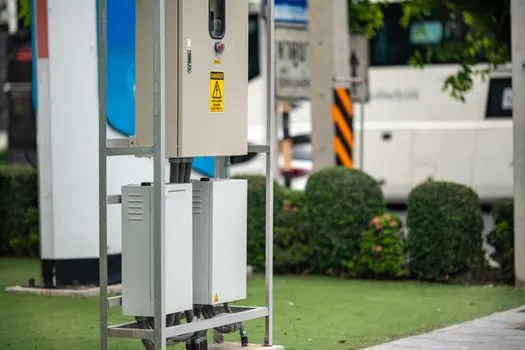
MCCs occupy more floor space than distributed panels because each starter bucket requires a defined vertical section. One published example indicates that six 1 hp motors could consume a complete MCC section, while the same starters on DIN rail with power-distribution blocks could require only a few feet [S3].
Initial cost can also exceed that of a tailored control panel, particularly where many small motors do not justify full MCC sections [S3]. The enclosure, common bus, withdrawable hardware, short-circuit ratings and documentation create more scope than a simple starter panel assembled for a limited load list.
The detailed commissioning sequence is covered in the motor control center installation and commissioning guide.
MCC Versus Local Panel or Partial Upgrade
The comparison is driven by fleet size, service method, expansion path and installation impact rather than by a universal preference for one enclosure type. A dedicated panel can be cheaper and smaller for a small group of motors, while an MCC offers bus-fed distribution, individual lockable switching and withdrawable service across a larger installation [S3].
Automation is another differentiator. With starters grouped in one panel, start and stop feedback can be wired directly to the PLC; distributed MCC sections may require interface relays and coordinated Hand-Off-Auto logic. A Hand setting can also cause a motor such as a 200 hp fan to restart after power restoration, so the control philosophy must be engineered rather than inherited as a default [S3].
Upgrade or Replace the Existing MCC
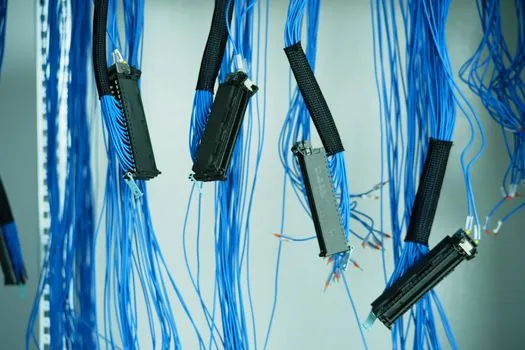
An upgrade normally retains the steel cabinetry and bus system while replacing buckets and obsolete operating components. This route offers lower cost, faster equipment delivery, quicker installation and shorter outages when the retained enclosure and bus remain in good condition and spare parts are readily available [S1].
The qualification matters: a partial upgrade can reduce embodied waste, but it does not prove that the existing bus, protection coordination or enclosure remains suitable.
Full replacement becomes attractive when the cabinetry, bus or support infrastructure is damaged, incompatible with current components, or no longer supported. Aging MCC installations may include designs approximately 60 years old, and obsolete circuit breakers, contactors and control devices can make maintenance increasingly difficult as used or unused replacement inventories diminish [S1].
Safety, Standards and Lifecycle Limits
Maintenance near energized MCC equipment requires electrically safe work conditions, with NFPA 70E, CSA Z462 and IEEE 1683 identified as relevant safety references [S2]. Equipment suitability and installation must address examination, mechanical strength, electrical insulation, heating, arcing effects and system classification under OSHA 1926 Subpart K and 1926.403 [S4].
Service life depends on professional installation, maintenance to manufacturer guidance and operation within the equipment's intended design [S4]. The MCC should therefore be evaluated as a complete system: cabinet, busbar, starters, protective relays, software, communications and field wiring. Replacing an obsolete bucket does not remove the need to assess the retained infrastructure.
Intelligent functions also create a cybersecurity and configuration responsibility. Network-connected starters require disciplined access control, protocol configuration, firmware management and testing of local, remote and automatic operating modes [S2][S6].
Application Decision

An MCC is most defensible when multiple medium-sized or larger motors need coordinated protection, withdrawable maintenance and future expansion. It is less defensible for a handful of small motors, tight installations or projects where a compact panel can deliver the required PLC interface at lower cost and fewer commissioning activities [S2][S3].
For an existing installation, the decision is straightforward: retain the cabinet and bus if they are structurally sound and support compatible replacement equipment; otherwise replace the MCC rather than spending capital on a partial repair that preserves an obsolete system [S1].
Before approval, track three measurable items: the condition and short-circuit rating of the existing bus, the percentage of motor starters requiring replacement, and the planned outage duration for withdrawal, testing and re-energization [S1][S2].