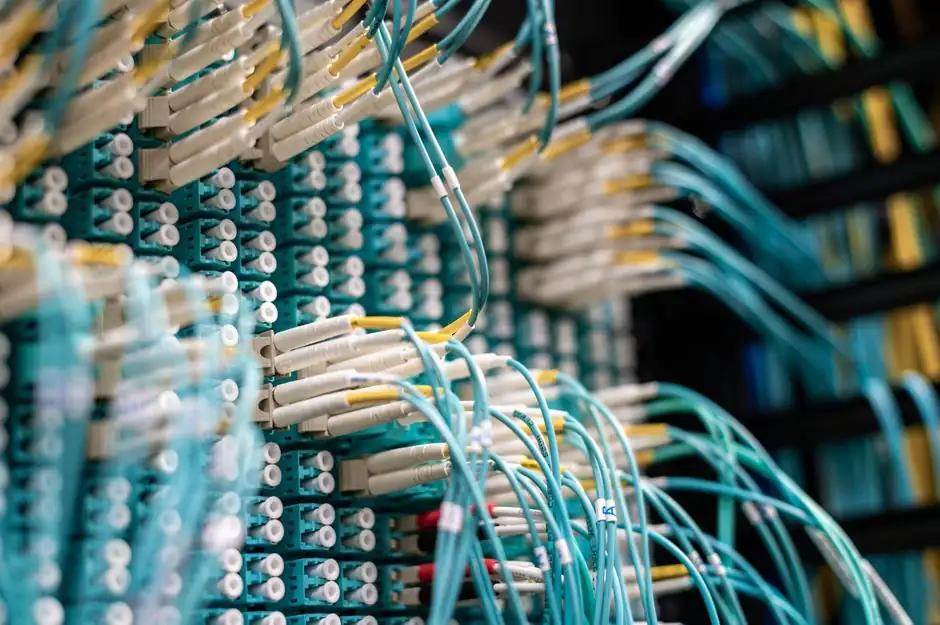
Control cable total cost of ownership analysis evaluates direct and indirect costs across acquisition, installation, operation, maintenance, downtime, upgrade, and end-of-life stages [S1][S3].
The calculation applies to industrial control cable used for instrumentation, signals, actuators, and process connections, with cable construction, installation method, routing, environment, and service horizon defining the comparison [S1][S5].
What Control Cable TCO Includes
Control cable TCO is the complete financial footprint of a cable system across its life cycle, not the cable purchase price alone. Procurement, operation, maintenance, replacement, upgrade, and end-of-life costs all belong in the model [S1][S3].
The model should include material cost, labor cost, production downtime, and measurable cost savings for the application being compared. This approach is more useful than comparing cable prices without the installation and interruption consequences of the selected design [S2].
A practical worksheet separates costs into five groups: cable and accessories, engineering and installation, commissioning, operating and maintenance, and end-of-life disposal or replacement. A structured TCO analysis can provide a comprehensive understanding of the costs and benefits of various operating models and help firms design an operating model suited to their growth goals [S5].
TCO provides a consistent framework for comparing alternatives and tracking costs over time, while lifecycle cost analysis and full cost accounting use related accounting logic for energy, building, program, and environmental decisions [S1]. For control cable, the important output is a documented cost trajectory for each cable option under the same operating assumptions.
Cost Drivers Behind Control Cable Pricing
Material construction is the first price driver. The model must price the specified conductor size, core count, insulation, sheath, screening, armor, and any required fire-resistant, oil-resistant, or chemical-resistant construction. The cost of control cable is driven by these specified materials and dimensions, so a price comparison that omits construction differences is invalid. [S2]
Second, certification and testing add cost when the cable is required for a defined operating environment or safety function. The procurement record should identify the required standards, verification tests, documentation, and cable markings instead of treating all products with similar conductor sizes as interchangeable.
Third, volume and delivery terms influence commercial pricing. A project buying one engineered run is not equivalent to a repeat program with standardized lengths, accessories, and documentation. Longer project horizons should also distinguish material price from escalation, labor rates, engineering effort, and planned replacement timing [S5].
The strongest business comparison holds the functional scope constant. Compare like-for-like cable constructions over the same route length, core count, installation method, environmental duty, test package, and service period. If one option changes both the cable and the installation architecture, the result becomes a system comparison rather than a cable-only TCO.
Installation Labor and Route Decisions
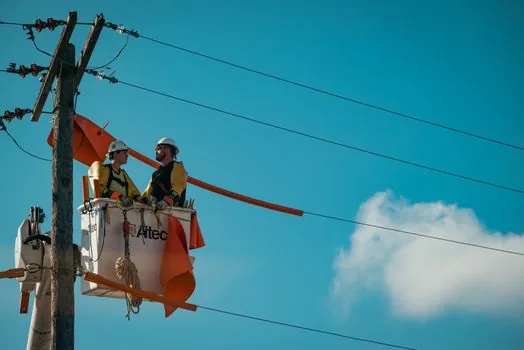
A wire and cable TCO computation can include material costs, labor costs, production downtime, and overall cost savings [S2], while TCO analysis more generally includes purchasing and operating costs as well as costs related to replacement or upgrades at the end of the life cycle [S3].
The cable gland and termination assembly are part of this installation boundary. Their compatibility, assembly sequence, and rework risk affect labor and commissioning time, so accessory selection cannot be excluded from the TCO model.
Routing also determines installed cost. A cable tray or alternative support system changes the cable length, bend geometry, separation requirements, and labor hours required for support and cable installation. The analysis should record actual route quantities rather than assume that a linear route equals the installed cable length.
Where flexible movement is required, a drag chain cable introduces different material and installation criteria from fixed control cable. Flex-fatigue performance, cycle exposure, bend radius, connector load, and replacement timing belong in the same lifecycle cost model. A low purchase price does not compensate for accelerated replacement if the cable is underspecified for the movement duty.
Compare Main Control Cable Options
The comparison should rank each option against installation labor, environmental resistance, maintainability, and replacement exposure. For fixed process applications, multicore control cable may reduce the number of separate runs and termination sets, while individually routed cables can simplify fault isolation but multiply installation effort. [S3]
This comparison shows why cable price alone is not a valid ranking. Multicore construction can reduce installation volume, but its failure consequence and testing burden may differ. Separately routed cable can improve maintainability at higher labor cost. Drag-chain cable addresses movement but requires cycle-life and inspection criteria that fixed cable does not [S1][S5].
Downtime, Maintenance, and Energy Effects
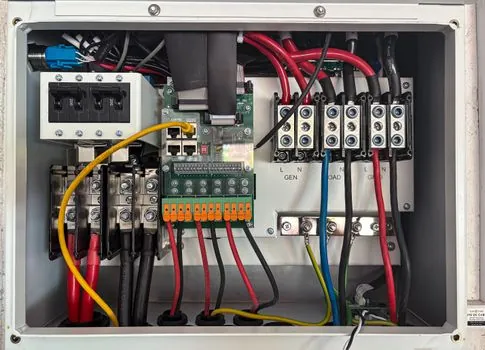
Production downtime is a direct TCO line because a failed cable can stop sensing, alarms, interlocks, actuators, or an entire process train. A credible estimate assigns an outage duration, affected production value, restoration labor, emergency material cost, and restart contribution for each failure scenario [S2].
Reliability evidence should be converted into expected annual cost rather than treated as a qualitative preference. If annual cable failures are estimated as 0.2 events and each event causes 4 hours of downtime with a production value of $5,000 per hour, the simple expected downtime cost is $4,000 per year. These figures are an illustrative calculation, not a benchmark for a specific installation.
Maintenance includes inspection, termination checks, retermination, consumable replacement, and planned work. Planned replacement can be less expensive than emergency replacement because labor and spare material can be scheduled, although it still creates an outage. The model must distinguish corrective maintenance, preventive replacement, and failure-driven replacement rather than combine them into one annual allowance.
Control cable usually has no direct energy load, but auxiliary energy and operating cost can still matter. The control cable may support powered field devices whose loss causes backup systems, cooling, lighting, or other utilities to operate for longer periods. Include that energy only where a defensible operating sequence links the cable outage to measurable consumption.
Limits of the Analysis
The model is limited by the quality and consistency of its assumptions. TCO can organize explicit and hidden costs, but it cannot turn uncertain failure rates, future labor rates, or production values into facts. Each scenario needs a documented source, owner, and update date, with sensitivity testing on the variables capable of changing the ranking [S5].
Scope errors are a second constraint. Including corporate overhead or unrelated facility costs can make one option appear artificially favorable, while excluding installation labor or downtime understates the cost of a field-intensive design. The horizon must be identical across alternatives and consistent with the facility plan or investment plan [S3][S5].
Discounting, taxes, inflation, salvage value, and environmental disposal should be handled according to the organization’s financial policy. The EPA model distinguishes direct and indirect lifecycle costs and notes that TCO, life-cycle cost analysis, and full cost accounting overlap while serving different analytical purposes [S1].
Hidden costs require particular discipline. Process-change budgets, personnel acquisition, onboarding, administrative work, and training are identified TCO categories in operating-model analysis, but they should enter a cable model only through a traceable operational link [S5]. Unrelated corporate allocations do not improve the cable decision.
Standards, Evidence, and Procurement Records
The procurement file should capture the exact cable designation, construction, core count, conductor cross-section, voltage or rating, temperature rating, chemical and moisture exposure, fire performance, installation method, and test requirements. Without these fields, two quotations may describe different technical products while appearing comparable on a spreadsheet [S2][S3].
Applicable standards must be selected for the actual application and environment, not attached generically to every cable. A cable intended for hazardous-area use requires evidence tied to the certified equipment and installation, while a cable for a moving machine requires evidence tied to flex-cycle and mechanical requirements. The research does not establish one universal standard for every control-cable application.
Use three evidence layers in the TCO file: the bill of material, the installation and failure-cost assumptions, and the manufacturer or test records supporting the technical specification. The EPA framework describes TCO as a systematic accounting tool that includes acquisition and procurement, operations and maintenance, and end-of-life management [S1].
For organization-wide purchasing, a facilities TCO framework can track operation and lifecycle costs for budgeting and vendor selection. Chaffey College applies TCO to facilities and technology acquisitions, reviews technology proposals against standards and regulatory requirements, and considers lower life-cycle cost when evaluating vendors [S3].
Track the analysis through 2 to 3 measurable signals: quoted price per installed route, estimated labor hours per termination, and expected annual downtime cost. If no cable proposal changes any of these figures, the TCO exercise has not produced an engineering or commercial decision. The same structure can be applied beyond cables through the cable tray TCO framework.