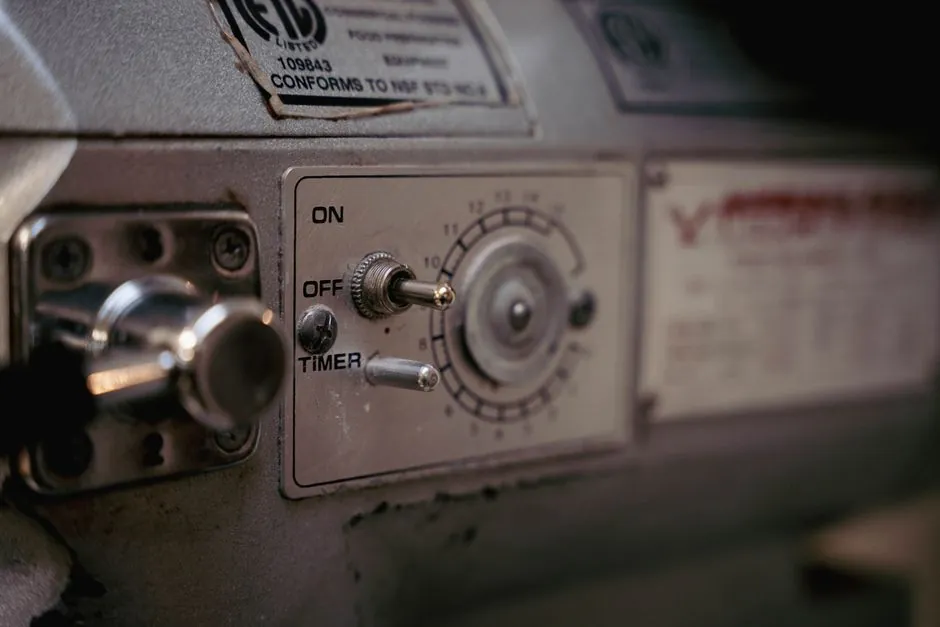
Aluminum gravity die casting normally uses a 200–300°C die temperature and a 650–750°C molten-metal temperature, with the combined thermal condition controlling fill, solidification, and casting quality [S3].
The process fills a reusable steel or cast-iron die under gravity, rather than injecting metal under high pressure, so thermal control extends beyond furnace setpoint to include die preheat, pouring practice, coatings, runners, cooling, and solidification design [S1].
Define the thermal control envelope
For aluminum gravity die casting, the practical starting envelope is 200–300°C for the preheated die and 650–750°C for the molten aluminum [S3]. These are process ranges, not universal acceptance limits. The selected values must be validated against alloy composition, casting mass, wall thickness, die material, and the required fill and solidification behavior [S4].
Die temperature affects more than metal flow. Research on Al-Si-Mg gravity castings found that increasing the die preheat temperature reduced solidification time, while increasing the melt pouring temperature increased it [S4]. The die therefore sets the initial thermal condition, and the pour temperature changes the heat available during filling and freezing.
This equipment belongs to the gravity die casting machine class, but the control requirement extends beyond the machine itself. A usable production system must coordinate the holding furnace, pouring equipment, die heating or cooling circuits, pyrometers, pouring basin, coating process, and inspection plan [S1][S3].
Choose the filling method around temperature control
Gravity die casting fills the mold with molten metal under gravity alone.
Pouring-system design must be coordinated with the die casting die.
Set targets by alloy and casting risk

Al-Si-Mg alloy behavior requires a specific trial rather than a single furnace value, because alloy composition, degasification, and pouring temperature all affect fluidity [S4]. The liquid metal's behavior and freezing are critical factors in determining whether the cast shape forms properly and remains free from defects.
A structured comparison helps separate the controllable variables. Die preheat determines the starting mold condition; pour temperature controls the metal’s available heat; bottom filling limits turbulence; and die cooling plus riser design controls local solidification. In the gravity die casting of Al-Si-Mg alloys, solidification time in the die increases with die preheat and decreases with pouring temperature.
For a die-specific starting plan, the related article Set Gravity Die Preheat by Alloy and Casting Risk addresses die preheat selection as a separate risk decision. Pour temperature and die preheat should still be optimized together because both affect solidification time [S4].
Build instrumentation around the measured process
The 650–750°C and 200–300°C figures provide initial trial bands, while production limits should come from measured casting results [S3].
Measurement locations are part of the instrument specification. A furnace reading does not establish the temperature actually entering the cavity after transfer, and one die reading does not represent the thermal condition of an entire casting. Calibrated temperature measurement should therefore be linked to time, cavity or cycle identification, pouring quantity, coating condition, and downstream defect records.
Control intervals also matter because molten aluminum is not a uniform material. Alloy composition, degasification, oxidation, holding time, and furnace configuration can alter thermal and flow behavior [S4]. The process data should therefore connect pour temperature to fill length, elapsed fill time, casting weight, venting, inclusion observations, shrinkage, and cracking, rather than treating a single thermocouple as proof of process control.
Match the process to load and production requirements
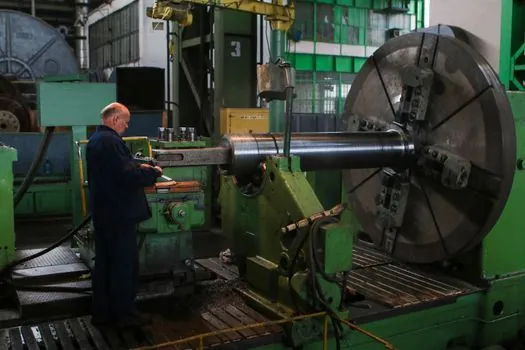
Aluminum gravity die casting is suited to permanent-mould parts that require durable castings, dimensional accuracy, or post-T6 load performance, particularly where the run size does not justify a high-pressure die [S6]. The process can produce castings from 0.1 kg to 100 kg, with wall thicknesses of 3–20 mm and dimensional tolerances of ±0.3–0.5 mm [S3].
These capabilities make the process relevant to automotive and other engineered components, but not every aluminum component is a suitable candidate. Gravity filling is a poor fit where minimum wall thickness, cycle time, or cavity filling requirements depend on high-pressure injection. High-pressure die casting injects metal at approximately 7–350 MPa, whereas gravity die casting relies on gravity alone [S1][S2].
Annual quantities from 250 to 50,000 units are identified as a potential gravity-casting range, making production volume a central selection criterion rather than an afterthought [S3]. Low-volume products may justify the process where tooling, finish, and mechanical performance justify the permanent die, while higher-volume products may require a different casting route if cycle time becomes the governing constraint.
Avoid common thermal and filling failures
Pouring above the qualified temperature band can reduce fluidity-related misruns but increases the heat that must be removed and extends solidification time [S4]. It can also intensify shrinkage where risers and feeders are not correctly sized. The correct response is not an automatic furnace reduction, because a low pour temperature can produce incomplete filling or misruns; it is a controlled trial across a narrow band with defect and mechanical-property review.
Insufficient die preheat can promote thermal shock and erratic filling, while excessive preheat can extend solidification time [S3][S4]. Runners filled with poorly controlled metal can contribute to oxide inclusions, and permanent dies require adequate venting because the impermeable cavity traps gases during pouring [S1]. If the casting contains complex internal cores, such as cylinder-head passages, permanent steel cores or preassembled core packages may be used to preserve cycle speed and dimensional control [S1].
Alloy-specific risks remain after the thermal setpoint is fixed. Magnesium can form inclusions and intermetallic particles that reduce fluidity and adversely affect mechanical properties; iron is detrimental and should be kept as low as economically practical; zinc can increase hot-tearing tendency; and manganese can improve high-temperature properties, fatigue resistance, and solidification shrinkage [S4]. These composition effects explain why a temperature window valid for one alloy should not be copied blindly to another.
Validate the control plan with castings
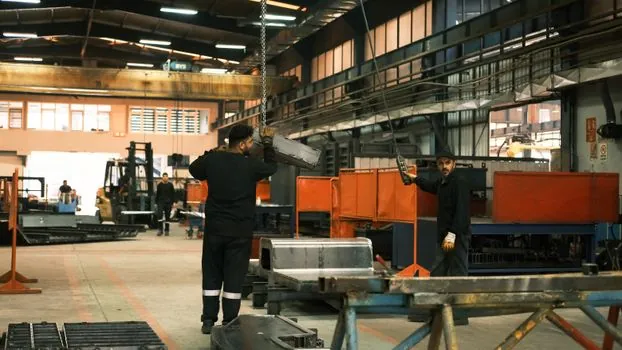
The most defensible acceptance plan compares at least 3 controlled temperature conditions around the selected setpoint, records die and melt temperatures at defined locations, and evaluates fill completeness, oxide content, shrinkage, cracking, dimensional accuracy, and mechanical properties. A statistically structured Taguchi study is one documented method for evaluating Al-Si-Mg gravity die casting parameters [S4].
Production release should require more than an average pour-temperature reading. The control plan should include alloy limits, oxide or inclusion control, die-coating condition, runner-system cleanliness, riser and feeder placement, cooling-circuit condition, pouring quantity, cycle time, and a defined response for thermocouple or pyrometer failure [S1][S3][S4].
The next trackable signals are cycle-level drift in metal or die temperature and the incidence of misruns, oxide inclusions, shrinkage, or cracking. If those variables move together, the die and melt controls should be adjusted before furnace setpoints are changed. This separates a heat-delivery problem from a design or process problem.