Gravity die casting fills a reusable metal die using only the pressure head of molten metal, so machine selection depends primarily on pour weight, die dimensions, tilt load, thermal control, and handling requirements [S1][S3].
Decorative hardware commonly involves aluminum, zinc, or brass-family alloys, each with different melting temperature, fluidity, oxidation, and tooling implications; the final choice must be validated against the drawing, alloy, annual volume, and required finish [S4][S5].
Process Scope and Machine Duties
Gravity die casting, also called permanent mold casting, pours molten metal from above through a sprue into a permanent metal mold, with gravity providing the entire filling force [S1][S3]. The die is closed, the cavity is filled, metal solidifies, the die opens, and the casting is removed before gates, runners, and flash are trimmed [S4].
This machine class is not a pressure die casting system with the injection unit removed. A gravity machine must control the metal dose, pouring height and rate, mold temperature, solidification time, die opening, extraction, and repeatable transfer between stations [S2][S3]. A tilting machine can rotate the mold during filling, while robot pouring can synchronize the ladle motion with mold movement to support precise filling [S3].
The process can produce dense, fine-grained castings with improved mechanical properties because the permanent metal mold conducts heat away from the solidifying melt [S3]. For decorative parts, those properties are useful, but the governing requirements are usually visual quality, repeatability, coating adhesion, and resistance to visible porosity rather than a pressure-injection specification.
Selection Criteria That Control the Decision
The first criterion is net metal weight, including the intended casting plus the pouring basin, sprue, runner system, and feeder risers. A high-pressure aluminum die casting machine may also be assessed during process screening, but its shot capacity and injection pressure do not substitute for gravity pouring and solidification capacity [S4][S7].
The second criterion is die size and mass. Request the machine's permitted mold dimensions, die-weight limit, clamping arrangement, opening stroke, and tilt-axis load in the vendor quotation. A machine that can carry the metal but cannot safely support the die under off-center loading is unsuitable.
The third criterion is thermal control. For aluminum gravity casting, preheat the die and coat it with a refractory release layer before casting [S4]. This range is specific to the aluminum process described, not a universal setting for zinc, brass, or bronze. For decorative hardware, verify that the control system logs die temperature, pour temperature, cycle time, and faults rather than relying only on an operator-set recipe.
Cycle planning must include fill, solidification, die opening, extraction, trimming, and inspection. The cooling rate increases with permanent-mold thermal conductivity, but solidification remains a variable process governed by section thickness, alloy, mold temperature, and local heat transfer [S3][S4]. Do not select capacity from metal mass alone.
Comparison of Gravity, Low-Pressure, and High-Pressure Routes
Alloy and Decorative-Finish Fit
These values are alloy and temper properties, not guaranteed properties of every decorative hardware component; wall geometry, cooling, and casting quality still require validation.
For brass and bronze hardware, pouring temperature, melt chemistry, oxidation, and dross control become more prominent selection issues. The related gravity die casting machine selection for bronze and brass provides a focused alloy comparison, while the general gravity die casting machine reference covers permanent-mold machine configurations.
Decorative finishes magnify small process defects. Gas porosity can become visible after polishing or plating, while cold shuts, inclusions, and incomplete fills interrupt a continuous coating. Slow pouring and controlled solidification can reduce porosity, but the equipment must also protect the melt from contamination and provide repeatable ladle dosing [S5].
A casting standard does not automatically establish decorative appearance, coating thickness, corrosion resistance, or project-specific dimensional tolerances.
Automation, Tilt, and Layout Requirements
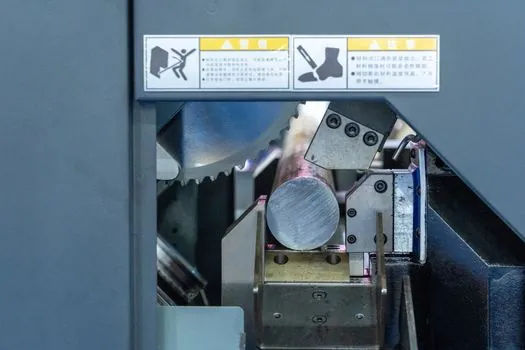
Servo-driven single- and double-tilt machines provide positional control and can operate in linear cells or with casting carousels [S3]. Robot pouring can synchronize metal transfer with the machine tilt, and full mechanization is possible for gravity die casting [S3]. These features are useful when decorative hardware must be scraped, trimmed, shot-blasted, coated, or inspected repeatedly without operator variation.
The automation decision should follow the required output rather than the largest available machine. Record the target cycle, number of pour stations, number of cooling or consolidation stations, extraction method, and downstream transfer layout. A line with insufficient cooling dwell will serialize quality even if the nominal cycle is fast.
Robot and machine controls should coordinate at least 4 process variables: pour position, pour rate, tilt angle, and tilt sequence. The cited KUKA architecture uses KRC ROBOTstar to synchronize robot pouring with casting-machine tilt [S3]. Vendor-specific software should not be treated as a universal standard, but functional commissioning must demonstrate repeatable synchronization and safe recovery after an interrupted pour.
Where Gravity Casting Is the Wrong Choice
Do not choose gravity die casting for a very thin, high-volume component whose economics and tolerances require high-pressure die casting, unless a process comparison proves the gravity route can meet the output and wall-section requirements [S4][S5]. Gravity filling does not reproduce the high injection pressure used in high-pressure die casting [S2].
Do not select it when the component cannot be poured cleanly because of trapped geometry, unavailable cores, or gating that would create excessive turbulence. The design must provide an accessible basin, sprue path, venting, adequate feeder placement, and a repeatable way to remove the casting without damaging decorative surfaces [S4].
Do not use the aluminum preheat range of 200–300 °C as a production setting for another alloy without process validation [S4]. Overheated tools can accelerate die wear, while insufficiently preheated tools can cause premature freezing or poor fill. The article on gravity die preheat by alloy and casting risk extends this control logic.
Low-volume orders may also be poor candidates because the reusable die is a sunk engineering cost [S4]. Compare the required total quantity with tooling cost, expected die life, rework allowance, finishing cost, and per-part metal cost rather than comparing the quoted piece price alone.
Tooling, Defects, and Production Validation
Before releasing the die, review the drawing for wall-thickness variation, fill direction, sprue and basin placement, feeder position, parting line, vent locations, and ejection access. For aluminum gravity castings, the die is preheated to 200–300 °C and coated with a refractory release layer before the pour [S4]. Gate and riser placement control where shrinkage is fed and where the casting can pull toward a wall [S4].
Use a tooling trial to verify metal temperature, die temperature, pour duration, total metal charge, cycle time, fill weight, and ejectability. Inspect the first castings for cold shuts, shrinkage porosity, gas porosity, inclusions, flash, mismatch, cracking, and incomplete fill. Decorative hardware should receive a visual standard under the intended polishing, brushing, anodizing, plating, or powder-coating condition.
Then validate dimensions at defined characteristic features rather than accepting a generic dimensional claim. Gravity die casting can support precision measurements and CNC finishing, but it does not automatically match the tolerance capability of high-pressure die casting [S5]. Specify critical datums, warpage limits, coating allowance, and machining locations before the die design is frozen.
For the procurement record, require machine model or configuration, rated pour or holding capacity, die dimensions, die-weight limit, tilt load and angle, heating control range, station count, cycle-time basis, safety controls, and warranty scope. These fields turn a general machine offer into a technically auditable selection for the hardware casting.
The shortlist logic is straightforward: choose a servo-controlled gravity machine with adequate pour, die, tilt, and thermal capacity when annual volume supports permanent tooling and the part can be poured cleanly; otherwise compare low-pressure or high-pressure routes. Lock the decision only after a tooling trial demonstrates fill, solidification, surface quality, ejection, and repeatable cosmetic results.