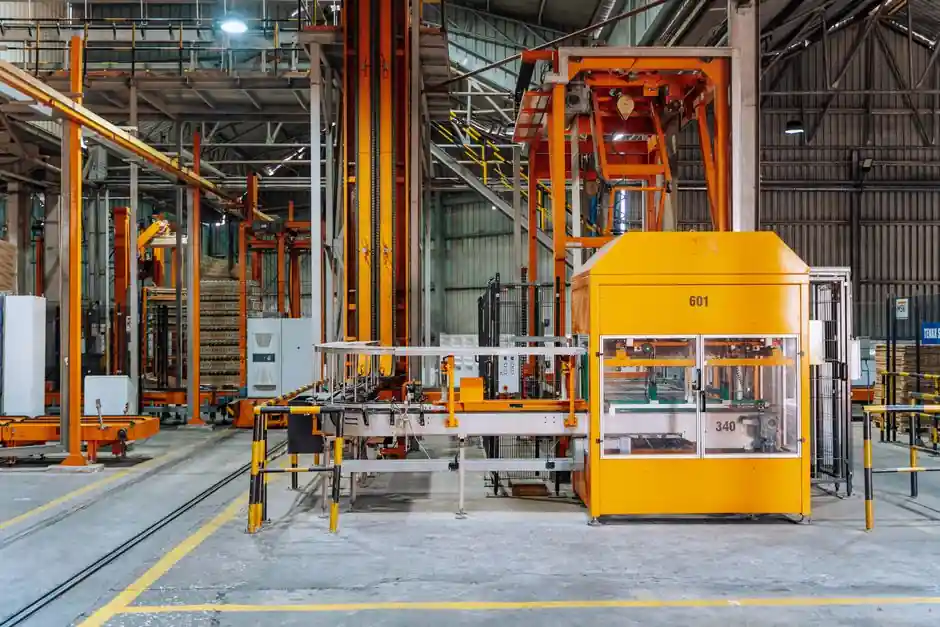
Gravity die casting fills a reusable metal die under gravity, making machine selection a joint check of molten-metal charge, die geometry, working pressure, ejection and production rate.
Bronze or brass parts with repeatable geometry, moderate-to-high production demand, and controlled solidification can suit gravity permanent-mold casting, provided the alloy, wall thickness, draft and tooling economics are reviewed before ordering equipment.
Define the gravity die casting scope
Gravity die casting, also called permanent-mold casting, fills a die with molten metal through gravity and then permits the casting to solidify before ejection [S5]. It is distinct from pressure die casting, which injects metal under pressure and can provide faster cycles, thinner sections and greater automation [S5].
The process suits repeatable, openable shapes at sustained volume, while alloy compatibility, cooling, ejection and die life remain the primary tooling checks [S4]. A gravity die casting machine should therefore be treated as the production system around a specific die, not as a general-purpose machine selected only from a metal tonnage rating.
For copper alloys, the exact material designation matters. Bronze is a family name covering copper-tin and other copper alloys with additions such as aluminum, nickel, manganese or silicon, while brass is principally copper-zinc [S3][S4]. The drawing and purchase specification should identify the exact grade rather than relying on broad labels such as “bronze” or “brass.”
Match the process to the production duty
Gravity die casting is appropriate for medium-to-high production of suitable shapes, whereas pressure die casting becomes more attractive when rapid cycling, intricate thin walls or high automation justify the added process complexity [S5][S7]. Gravity casting generally produces less turbulence and less trapped gas because metal is not forced into the cavity at high pressure [S5].
Typical gravity-die applications include repeat-order components where stable density and accurate dimensions matter more than minimal cycle time. For bronze specifically, the process remains an option when the component has compatible geometry, an accessible die layout, controllable solidification and an alloy that can be poured into the chosen die material [S4].
The process is a poor fit for very thin, deeply recessed or poorly vented geometries unless a trial confirms adequate filling. Gravity fill cannot deliver the same penetration as high-pressure injection, so cavity geometry must be developed rather than transferred directly from a pressure-die design [S5]. Low-volume or one-off parts normally deserve a separate economic review because the reusable die carries an initial cost [S4].
Build the selection inputs from the drawing
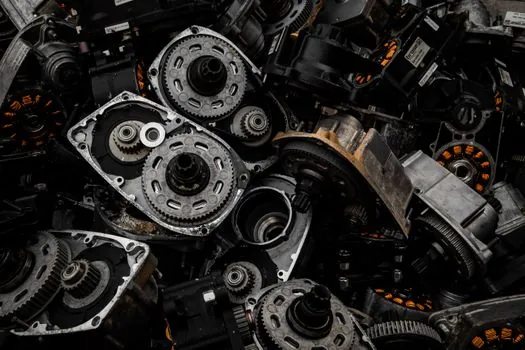
Start with the component drawing, alloy, die dimensions, finished-part weight and production target, then list the required die movements [S6]. The useful machine inputs are not limited to nominal clamping capacity: molten-metal volume, estimated net casting weight, cycle target, die dimensions, tie-bar space, working-stroke limits and ejection requirements all affect the decision.
Machine suppliers commonly describe a die casting machine by clamping force, but the part governs the final selection [S8]. For gravity die casting, compare the calculated charge with the machine holding capacity, then verify that the die opens through its full working stroke and that the moving platen can accept the die and guard dimensions [S6][S8].
Brass tends to offer excellent machinability and lower material cost, while bronze generally provides higher wear resistance and better corrosion performance, particularly in seawater [S3]. Those material differences affect gating, feed, solidification, tooling life and required mechanical operations. A brass fitting intended for machining and a seawater bronze valve body should not receive the same alloy, die and acceptance assumptions merely because both are copper-based.
Compare the realistic casting options
The main decision is not simply gravity versus pressure; it is the production geometry and density requirement against cycle time, tooling complexity and unit cost. Use the following criteria-based comparison for the first process screen. [S1]
These differences are process-level, not a claim that every casting can be moved between routes. Pressure die casting can cast brass and other non-ferrous alloys, but alloy compatibility still governs equipment and die selection [S5]. For a detailed machine family comparison, a die casting machine reference helps distinguish hot-chamber and cold-chamber configurations, while the component drawing remains the controlling document.
Decide between brass and bronze
Choose brass when the part needs good machinability, lower material cost, high thermal or electrical conductivity, a smooth casting surface or an architectural finish [S3]. Brass commonly appears in pipe fittings, plumbing valves, electrical connectors, decorative hardware, instrument components and low-pressure industrial fittings [S3].
Choose bronze when wear resistance, fatigue strength, load capacity or corrosion resistance governs service. Typical bronze applications include pump impellers, valve bodies, marine propellers, bearings, bushings, worm gears, wear plates and petrochemical components [S3]. Marine and offshore exposure makes the material distinction more consequential because brass is generally less resistant to seawater corrosion and abrasive wear than bronze [S3].
Do not select the mainstream brass option for a continuously abraded seawater joint, heavy-load bearing or corrosion-critical valve without testing the proposed grade. Conversely, do not impose a bronze grade merely for perceived strength if the part is a lightly loaded fitting whose main requirements are machinability and cost. Obtain the exact alloy specification, mechanical-property requirements and corrosion environment before finalizing the die and machine purchase.
Control the die, alloy and production risks
Alloy and die compatibility must be confirmed before production because molten copper alloy attacks incompatible die surfaces and can shorten tooling life [S4]. The material review should also define whether the casting needs heat treatment, pressure testing, plating, machining or final dimensional inspection [S4].
Design review should separate features formed in the die from features requiring machining. Sealing faces, threaded bosses, bearing seats and concentric interfaces commonly need dedicated machining, while rough external contours may remain as-cast [S4]. Applying tight tolerances to the entire component increases cost when only a few interfaces determine assembly fit.
Common casting risks include incomplete filling, turbulence, trapped gas, shrinkage, hot tearing, dimensional distortion and die wear. In gravity filling, slower metal entry reduces folding and trapped air, but cooling and ejection still control dimensional repeatability [S5]. The die layout must therefore address venting, feed and cooling, while production planning must account for die maintenance, bronze bushing or graphite-impregnated wear components, and eventual replacement intervals [S2].
For a production estimate, measure the complete repeatable cycle rather than counting only mold fill. The dry cycle time calculation is a useful method for including closure, metal handling, solidification, ejection and reset in output assumptions.
Specify the machine before the supplier quotes
A quotation-ready package should contain the component drawing with revision, exact alloy grade, estimated finished-part mass, casting volume, annual and batch demand, cycle target, required die movements, loading method, ejection direction, machining allowances, inspection plan and facility constraints [S1][S6]. The machine candidate should then be checked against die size, tie-bar and platen clearance, stroke, charge capacity, holding force, hydraulic or electric power demand, guarding, cooling and maintenance access [S6][S8].
The final selection should be demonstrated through a tooling review and, where justified, a sample cast using the actual alloy and die geometry. Review filling, solidification, ejection, surface condition, dimensions and leakage or pressure-test requirements before committing to repeat production. Record the die temperature, pouring temperature, cycle time, charge mass and inspection results, because those values are more useful for capacity and output validation than the machine’s headline tonnage alone.
Proceed when the alloy is specified, the die can fill and eject without an unresolved feature, the charge and working stroke fit the selected machine, and the validated cycle meets the required output. If the part is extremely thin, highly intricate, very heavy or low volume, evaluate low-pressure die casting, pressure die casting or a non-die casting route before releasing the equipment order.