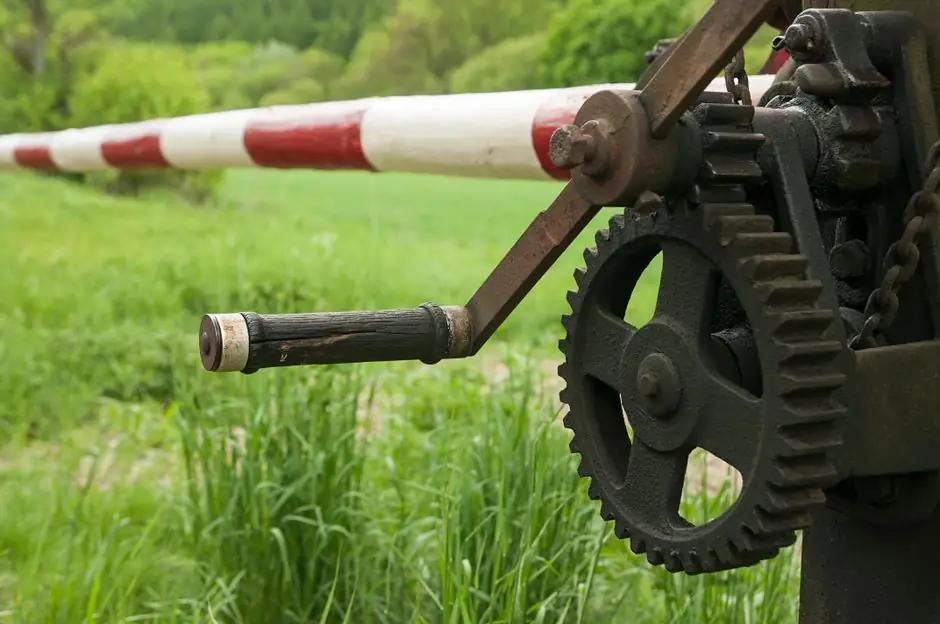
A gravity die casting machine should match the aluminum part’s projected area, shot mass, mold dimensions, and 2–10 minute cycle rather than be selected by clamping tonnage alone.
For low-volume aluminum work, a permanent steel or iron mold, controlled pouring temperature, and mechanical or hydraulic tilting can provide repeatable parts with lower filling turbulence and no high-pressure injection system.
Gravity die casting selection limits and process window
Aluminum gravity die casting fills a reusable steel or iron die using only the head of metal in the pouring basin, whereas high-pressure die casting injects molten metal at hundreds of bar. The process uses a 200–300 °C preheated mold, a refractory release coating, a top basin, a riser for shrinkage, and subsequent trimming, cleaning, and heat treatment [S1].
The method should be used for relatively simple shapes with sufficient section thickness, not for a thin-wall, high-cavity-count product whose economics depend on automated high-pressure production [S2][S4]. A gravity die casting die still requires a durable permanent mold, cores, risers, coating control, and controlled thermal cycles.
Machine criteria that control the decision
Machine selection should begin with the part mass and projected mold area, not a generic tonnage rule. The casting supplier should confirm the molten-metal shot or ladle requirement, maximum mold dimensions, mold weight, opening stroke, ejector force, and the hydraulic or mechanical force needed to open and close the die. [S3]
Pouring basin capacity must be sufficient for the required metal charge, while the mold working temperature should remain within the 200–300 °C preheat range cited for aluminum gravity dies [S1]. Filling must be controlled by pour height and gate design rather than by a fixed injection cycle, so a machine with repeatable tilt, ladle positioning, and pour-rate control is more useful than excess press capacity [S1].
Cycle planning must include solidification and ejection, not only the time to fill. A 3-minute theoretical pour interval will not deliver three parts per hour if the casting requires a longer cooling dwell, riser solidification, die opening, ejection, trimming, and surface cleaning. Obtain the supplier’s demonstrated cycle for a comparable part rather than converting the nominal cycle range directly into production output.
Compare gravity, low pressure, and high pressure
The main process comparison is straightforward: gravity casting prioritizes metallurgical control and heat-treatable structural performance, low pressure adds a pressurized riser, and high pressure prioritizes cycle time, dimensional accuracy, and thin-wall complexity [S1][S2][S4].
These are process-selection values, not a guarantee that every production part will meet them. For a low-volume structural aluminum part requiring T6, the internal soundness and heat-treatment response can outweigh the cycle advantage of pressure casting [S1][S2].
Alloy, strength, and heat-treatment requirements
A356 is the baseline material for structural gravity castings when the part must carry load after T6 treatment. These figures apply to the specified test-bar condition and must not be substituted for properties measured on the actual casting geometry.
A319 is an alternative where some hot-cracking sensitivity is acceptable, while 6061 is associated with weldability considerations in gravity casting [S1]. The material decision should therefore reflect load, ductility, weld repair, corrosion, and heat-treatment requirements rather than alloy familiarity alone.
Gravity fill is not automatic insurance against porosity. The process still requires controlled pouring, gate and riser design, adequate melt temperature, and sound preheating. T6 treatment after casting can magnify trapped-gas defects, so the gravity die casting machine should support repeatable pour temperature, pouring rate, and mold-temperature control. For detailed parameter work, the related procedure for control pour temperature in aluminum gravity die casting provides a focused next step.
Design for filling, solidification, and ejection
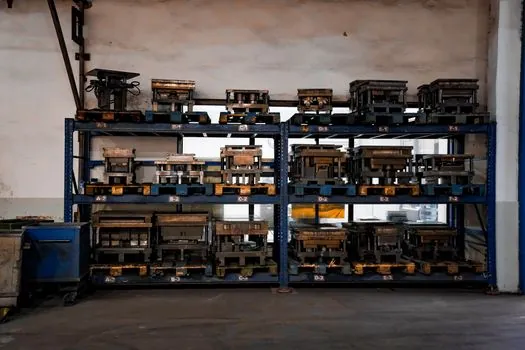
The most consequential machine decisions originate in the casting drawing. Gate and riser placement determine whether solidification shrinkage is fed toward the feeder or toward the casting wall, so DFM review should precede die cutting [S1]. Uniform sections and adequate feeder geometry reduce the risk of isolated shrinkage zones, while abrupt changes in section thickness complicate directional solidification.
Tilt pouring is preferable where the mold geometry permits it because rotation from horizontal toward vertical introduces metal with less turbulence and supports more consistent directional solidification [S1]. The machine must then be able to hold the mold at the required fill angles and return it safely for opening and ejection. Pouring basin capacity, basin position, splash control, and operator access should be reviewed as one system.
Cores and inserts must seat predictably under gravity flow and pouring pressure. Undercuts, draft, internal bosses, and trapped-gas pockets determine whether a mechanically opened die can release the part without damage. Ejector force and stroke should be checked against the casting mass and attachment to the core, not simply against mold dimensions.
Low-volume users and unsuitable applications
Low-volume structural aluminum parts benefit from gravity casting when load-bearing performance after T6 matters, section thickness is generally 3–10 mm, and production does not require the 10–60 second cycle of pressure die casting [S1][S2]. Prototype and design-validation programs can also use a permanent mold when enough repeat shots justify the tooling rather than paying for a full production die [S5].
Do not select a gravity machine for a thin-wall housing that requires walls below 3 mm, fine surface finish, or hundreds of parts per hour unless a casting trial proves the geometry fills and releases correctly [S2][S4]. Do not select it for a geometrically complex casting whose core pull, thin features, or turbulence-sensitive surfaces cannot be accommodated without excessive part weight or scrap.
A low-pressure die casting machine is the more relevant alternative when controlled filling, lower turbulence, or pressurized feeding is needed without full high-pressure injection. A high-pressure die casting machine becomes preferable when volume rises enough to amortize durable steel tooling and automated production. The research does not establish a universal low-volume break-even quantity, so the buyer should obtain quotations that separate tooling, samples, heat treatment, trimming, machining, and scrap.
Supplier qualification and acceptance criteria
The shortlist should require the supplier to show that its machine can accept the proposed die envelope, mold weight, shot mass, pouring basin, operating temperature, and ejection load. For a production release, request sample dimensional inspection, radiographic or metallographic porosity assessment where risk warrants it, tensile data for the selected heat-treatment condition, and documented pour and solidification parameters [S1][S2].
Acceptance criteria should include fill consistency, no shrinkage at critical sections, acceptable porosity for the service condition, stable ejection, repeatable parting-line location, and compliance with the drawing after T6 or T5 treatment. The supplier should also state the cycle breakdown and expected scrap rate rather than quoting only machine availability.
The practical recommendation is a gravity machine with a matched permanent mold, controlled 200–300 °C die preheat, controlled metal delivery, and tilting when the part geometry supports it. Validate the selected configuration with production-intent samples, then lock the purchase around measured cycle, cast mass, quality, and scrap rather than a general machine tonnage number.