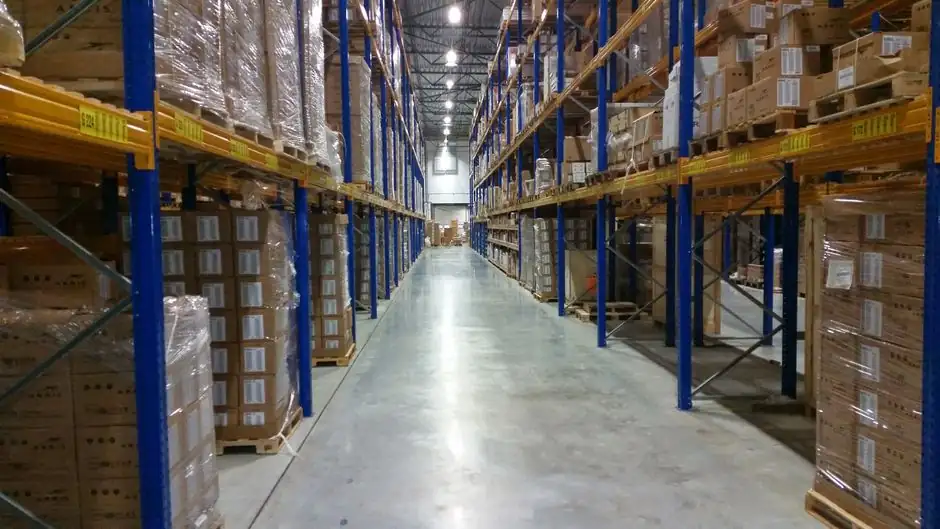
A conveyor sorting line is the stronger choice for a continuous pallet stream with fixed destinations, while a shuttle system decouples storage from transport and supports independent task assignment [S2][S5].
The decision depends on peak pallets per hour, SKU mix, pallet geometry, storage depth, building height, required buffering, and the number of destinations, not automation preference alone [S5].
Decision Criteria for Pallet Sortation
A conveyor sorting line moves pallets continuously along a defined path and identifies each load by barcode, RFID, or vision before routing it toward a designated station or destination [S2][S3]. A shuttle system performs horizontal movement within a storage structure and uses vertical lift equipment to transfer loads between rack levels and a picking or conveyor level [S5].
The fixed transport model supports repeatable waves, but it requires a buffer whenever inbound pallet arrivals exceed the downstream dispatch rate. A shuttle architecture adds storage and movement functions in one structure, allowing inbound and outbound tasks to be scheduled independently so one slow task does not block an urgent task [S5].
Use peak throughput, not average throughput, as the sizing basis. The engineering brief should also define peak-day surge, SKU mix, pallet type, building height, and the required buffer between receiving and shipping. Column spacing, floor flatness, usable height, and future expansion space are equally important because a simulated design can degrade under real operating conditions [S5].
Conveyor Sorting Line: Best-Fit Operating Profile
A conveyor sorting line fits operations with a stable pallet flow, a limited number of repeatable routes, and a requirement for continuous movement from receiving through dispatch. Conveyors can transport goods, totes, and pallets between locations while relieving bottlenecks, creating buffers, and increasing throughput [S4].
The line can use gravity conveyors for lightweight cartons, trays, or totes moved over short distances, but pallets normally require powered movement. Motorized Driven Roller conveyors use multiple low-voltage motors to support smooth accumulation and high throughput, while vertical reciprocating conveyors move loads between mezzanines, pick modules, and other multi-level environments [S2].
For pallet-level routing, a shoe or slat sorter can handle standardized loads including boxes, totes, pallets, containers, and crates. Its raised shoe pushes the load laterally into a divert, and the cited configuration supports approximately 300 pieces per minute depending on the application [S4]. Cross-belt sorters are documented at around 500 parts per minute, although that figure describes a parts-handling configuration rather than a guaranteed pallet-line rate [S4].
The architecture is not ideal when destinations change faster than the line can be reconfigured, when loads require random retrieval from dense storage, or when vertical buffering is the primary requirement. A conveyor route remains physically committed to its path, so expansion usually means adding or modifying diverts rather than creating independently accessible storage positions [S3][S4].
Shuttle System: Best-Fit Operating Profile
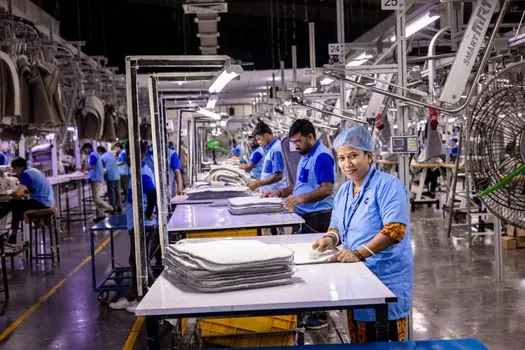
A shuttle system fits pallet operations requiring dense buffering, vertical transfer, and independent movement of stored loads. The cited R-bot four-way shuttle operates inside rack lanes, moves in four horizontal directions, supports pallet formats from 1200 × 800 mm to 1400 mm depending on model, and carries up to 1.5 tonnes in standard configurations, with heavy-duty models reaching 2 tonnes [S5].
Its compact 125 mm body height supports dense pallet positioning, while the H-bot provides vertical bidirectional shuttle movement between the shuttle level and the picking or conveyor level.
This architecture is the stronger fit for e-commerce consolidation, retail distribution, and production-adjacent buffer and dispatch because it separates queue storage from the transport process [S5]. It also suits facilities where floor area is constrained and vertical space is available. A shuttle system is less attractive when the operation has a simple one-direction flow, few destinations, limited building height, and no requirement for distributed storage depth.
The trade-off is greater system complexity. Independent task assignment does not remove the need to coordinate shuttles, lifts, storage locations, conveyor transfers, and the control layer. The project must define the software architecture, buffer depth, rack geometry, and number of shuttles and lifts before equipment selection [S5].
Throughput, Density, and Integration Comparison
Compare the systems on four decision criteria: transport continuity, storage density, routing flexibility, and integration effort. Conveyor sortation offers continuous movement and a comparatively direct path from induction to divert. A pallet shoe sorter is cited at about 300 pieces per minute, but actual pallet throughput depends on load geometry, accumulation behavior, divert design, and application [S4].
Shuttle systems provide greater storage depth and independent task scheduling, but the applicable shuttle count and lift count depend on the selected model and facility geometry rather than one universal rate. The cited shuttle supports 1.5 tonnes in standard configurations and 2 tonnes in heavy-duty configurations, while its 125 mm body permits dense positioning [S5].
Conveyor integration effort is concentrated around transport sections, accumulation zones, diverts, PLC control, and WMS or WCS data exchange. The PLC can direct loads to a designated station or destination, and optional WCS or WMS integration supports operational coordination [S3]. Shuttle integration adds rack, lift, shuttle-control, and storage-location logic, but it can replace a separate buffer concept by making queued pallets directly retrievable [S5].
For a stable stream with more than one destination, select a conveyor sorting line when the process is transport-first. Select a shuttle system when the process is storage-first. If both requirements are substantial, use conveyor lines for controlled movement at receiving, picking, or dispatch interfaces and reserve the shuttle structure for dense buffering and vertical access.
Recognition, Routing, and Control Architecture
Pallet identity must be captured before the routing decision is executed. Conveyor systems can use barcode scanners, RFID tags, or vision systems to obtain SKU and destination data, then direct the load into a lane, chute, station, or dock area [S2][S3]. The same identification principle applies to shuttle storage, but the destination becomes a storage location or lift task rather than a physical divert line.
Conveyor divert technology must match the load and rate. Pop-up wheel diverters suit low- to medium-rate operations, while slat or shoe sorters support high-speed handling of varied item sizes and weights [S3]. For standard pallets and crates, a shoe sorter can redirect loads laterally, but its cycle must be checked against pallet spacing, speed, stopping distance, and the receiving conveyor at each divert.
Shuttle controls require a task scheduler that coordinates horizontal shuttle movements with vertical lift availability. The cited architecture can assign each shuttle and lift independently, but that independence does not remove contention at shared lifts, transfer points, or charge cycles. Integration should therefore test task queues, reserve lift capacity, and preserve an escape path for failed or misplaced loads [S5].
Controls architecture should also account for order consolidation and dispatch sequence. A pallet program involving repeatable outbound waves generally suits conveyor movement, while variable order profiles and random storage retrieval favor a shuttle or autonomous mobile robot approach, as discussed in AMR Sortation vs Conveyor Sorter Throughput: 2026 Decision Guide.
Failure Modes and Engineering Constraints
The most common conveyor failure mode is a capacity mismatch at accumulation, induction, or the divert itself. A line can meet its nominal transport rate and still miss the required discharge rate if loads cannot be separated cleanly or the destination lane backs up. For pallet equipment, verify pallet overhang, footprint stability, permitted acceleration, and transfer alignment rather than relying on package-handling assumptions. [S2]
Shuttle failure modes concentrate around a smaller number of high-value shared resources. A blocked lift, unavailable shuttle, incorrect storage location, or failed pallet transfer can interrupt retrieval even when other shuttles remain operational. Maintenance access, changeover procedures, and recovery paths must be designed around those shared assets, not only around average utilization [S5].
Both architectures require safety review of conveyors, shuttles, lifts, and the interface between them. Automated sorting systems combining driverless vehicles, shuttles, and fixed conveying equipment should be verified against the applicable machinery-safety requirements for driverless industrial trucks and rail-dependent storage and retrieval equipment [S5]. The final selection should record pallet dimensions, pallet weight, load overhang, peak and surge rates, storage depth, building height, destination count, and maintenance access in the design basis.
Procurement and Acceptance Criteria
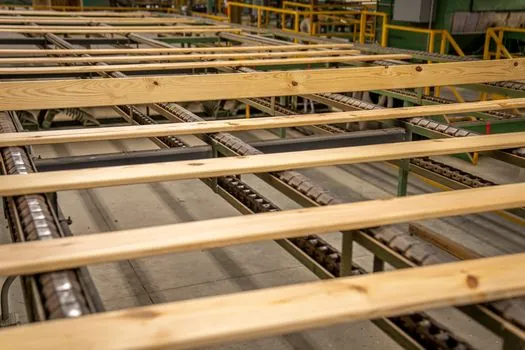
Specify the conveyor line by measurable acceptance criteria: pallets per hour at the required surge rate, maximum and minimum load dimensions, maximum pallet weight, divert sequence, accumulation behavior, and destination accuracy. The published sortation supplier states that its conveyor solutions can achieve upwards of 98% accuracy, but this is a supplier claim rather than a universal standard, so acceptance testing must define the measured conditions and destinations [S3].
Specify the shuttle system by model and operating envelope: pallet footprint range, rated load, rack level height, shuttle body clearance, lift travel, task allocation method, charge strategy, and recovery behavior. The cited equipment envelope includes 1200 × 800 mm through 1400 mm pallet formats, 1.5-tonne standard capacity, 2-tonne heavy-duty capacity, and a 125 mm shuttle body height, but final suitability depends on the selected model [S5].
Vendor evaluation should request a demonstrated process with the intended pallet mix rather than isolated peak figures. For conveyors, verify sustained pallet flow, accumulation release, divert occupancy, and stoppage recovery. For shuttles, verify simultaneous lift and shuttle activity, buffer release under peak conditions, fault isolation, and recovery after a load becomes unavailable. Compare proposals on life-cycle operating effort rather than installation price alone.
Recommended Selection by Use Case
Choose a conveyor sorting line for receiving-to-dispatch flows with stable pallet dimensions, predictable destinations, high continuity, and limited need for random storage retrieval. Choose a shuttle system for high-density buffering, multiple rack levels, independently scheduled retrievals, and operations where space and vertical access determine the layout [S4][S5].
Do not choose a shuttle solely to automate movement when the real requirement is a continuous transport line, and do not choose a fixed conveyor line when the real requirement is a large, addressable pallet buffer. The decisive question is whether the process is transport-first or storage-first. Once classified, validate the choice against peak pallets per hour, surge behavior, pallet formats, load weights, destination count, usable height, and buffer requirements [S5].
Before purchase, build one integrated simulation or scaled test using the expected pallet mix. Measure queue growth at receiving, retrieval or divert service, dispatch release, fault recovery, and energy use across normal and peak loads. For additional conveyor design variables, compare Chain Conveyor Speed Limits for Pallet Stability before fixing the transport speed.