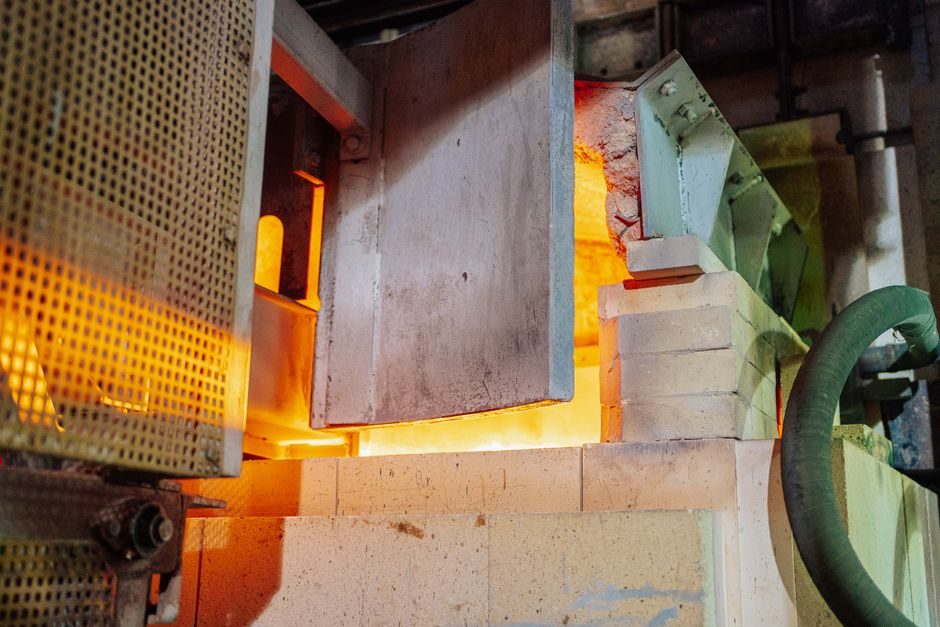
Commercial copper cathode is the 99.99% Cu product used as the feedstock for wire rod, billet, cake and ingot, and is produced today by two well-defined routes that branch at the ore type: sulfide-ore pyrometallurgy with electrolytic refining, and oxide-ore hydrometallurgy with solvent extraction and electrowinning [S1][S3][S7].
USGS frames copper as the third-most-consumed metal after iron and aluminum, with electrical uses — power transmission, building wiring, telecoms, electronics — accounting for roughly three quarters of total demand, and recycled scrap making a material contribution to supply [S1]. That demand mix is what sets the purity bar at the cathode stage: downstream wire drawing and copper tube production cannot tolerate the sulfur, iron, nickel or precious-metal residues that survive the smelter.
Route Selection: Pyrometallurgy vs Hydrometallurgy
The two routes are not interchangeable — the ore mineralogy decides the path, not the operator's preference [S3][S7]. Sulfide concentrates (chalcopyrite, bornite) must go through pyrometallurgy because the sulfur is bound up in the matrix and is best removed as SO₂ in a smelter, then captured; oxide ores (malachite, azurite, chrysocolla) are amenable to acid leaching because the copper is already in an oxidised, water-soluble form [S3][S7].
Pyrometallurgy delivers blister copper at 97–99% purity, which is then cast into anodes and electrolytically refined; hydrometallurgy bypasses the smelter and instead uses solvent extraction (SX) to upgrade a dilute leach liquor before electrowinning (EW) plates copper directly onto stainless-steel or copper starter sheets [S3][S6][S7]. A growing share of new cathode output globally is now coming from acid leaching of oxide ores and from SX-EW plants, according to USGS [S1].
Pyrometallurgical Flow: Concentrate to Blister
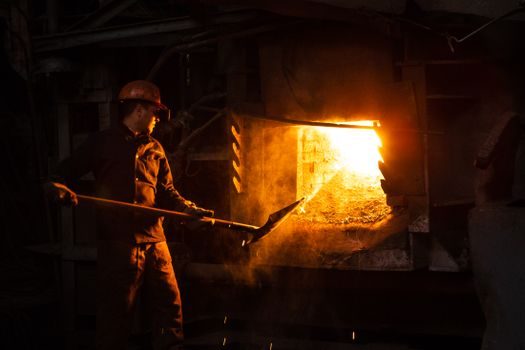
The pyrometallurgical chain starts with comminution: run-of-mine ore is crushed to walnut-sized lumps, then ball- or rod-milled to a fine powder, and floated to a concentrate slurry at roughly 15% Cu [S3]. The concentrate is fed to a smelter where it is dried, melted, and converted: iron sulfide and remaining sulfur are oxidised off as FeO/SiO₂ slag and SO₂ gas, leaving blister copper at 97–99% Cu — the name coming from the SO₂ blisters that break the surface [S6].
Two smelter configurations dominate modern practice: the Outotec/flash-smelting type reactor, which reacts concentrate with oxygen in a suspended smelt, and the reverberatory/Peirce-Smith converter chain used in older plants. Both end at the same anode-casting step: liquid blister is fire-refined to control oxygen and residual sulfur, then cast into 350–400 kg anode plates that go to the tankhouse [S3][S6].
Electrolytic Refining: From Anode to LME-Grade Cathode
In the tankhouse, anodes and starter-sheet cathodes (or permanent stainless-steel cathode plates in ISA/Kidd processes) are suspended in cells filled with copper sulfate–sulfuric acid electrolyte at roughly 40–50 g/L Cu and 150–200 g/L H₂SO₄, run at 200–300 A/m² and a cell voltage of 0.2–0.3 V [S4][S6]. Copper ions migrate from anode to cathode over a 7–14 day cycle, while impurities — Fe, Ni, As, Sb, Bi, Se, Te plus Ag, Au, PGMs — drop to the anode slime and become a precious-metal by-product stream [S6][S7].
Finished cathode plates meet LME Grade A at 99.99% Cu, with maximum impurity ceilings of 0.0025% S, 0.001% O, and tight limits on Pb, Zn, Fe, Ni and As; the cathodes are stripped, washed, flattened, and bundled in 1–4 tonne packs with steel strapping [S3]. Plate dimensions are typically 0.5–1 m² and 3–20 mm thick, with or without hanging "ears" depending on whether a permanent-cathode (no ears, ISA Process™) or starter-sheet (with ears) route is used [S3].
Hydrometallurgical Flow: Oxide Ore to Cathode Without a Smelter
For oxide and mixed ores, the flow goes crushing → ball milling → flotation (when sulfide gangue is present) → acid leach (sulfuric acid for oxide, sometimes ammonia for carbonate gangue) → solid/liquid separation → solvent extraction with oxime reagents (LIX-series or equivalent) → electrowinning [S3][S7]. The SX step is the value-raiser: a pregnant leach solution of 1–5 g/L Cu is upgraded to a concentrated electrolyte of 40–50 g/L Cu with controlled Fe, Mn, Cl and other impurities, which is then fed directly to EW cells.
EW cells are similar in geometry to refining cells but use insoluble lead-alloy anodes (Pb-Sb or Pb-Ca-Sn) rather than consumable copper anodes, and deposit copper onto stainless-steel or titanium starter blanks at current densities around 200–250 A/m² [S3][S4]. Energy intensity is higher than refining (roughly 1.8–2.5 MWh per tonne of cathode for EW, against 0.25–0.4 MWh/t for refining from anode) because the cell has to drive the full Cu²⁺ → Cu⁰ reduction, but the route avoids smelter capex and SO₂ capture, and produces the same 99.99% Cu specification [S3].
Process Options Lined Up Against Decision Criteria
For a new greenfield cathode plant, the four main flowsheet choices can be compared on five criteria: feedstock (sulfide vs oxide), product purity, energy per tonne cathode, water/acid demand, and byproduct revenue: [S1]
Pyro + Tankhouse (sulfide ore): feed chalcopyrite concentrate; output ≥99.99% Cu LME Grade A; energy ~0.3 MWh/t refining + smelter thermal; water/acid moderate; high byproduct credit from anode slime (Au, Ag, PGMs, Se, Te) [S1][S3][S6].
SX-EW (oxide ore): feed oxide/transition ore; output 99.99% Cu; energy ~2.0 MWh/t; water and acid consumption high; no precious-metal byproduct stream [S1][S3].
Permanent cathode (ISA/Kidd) refining: same feed as tankhouse but uses stainless blanks rather than copper starter sheets; output ≥99.99% Cu; energy same as conventional; higher cathode stripping automation and lower labour per tonne [S3][S4].
Hydrometallurgical with ammonia leach: feed carbonate/oxide ore with high acid-consuming gangue; output 99.99% Cu; energy similar to SX-EW; avoids sulfuric acid consumption, but ammonia recovery and safety capex are heavy [S3].
Where the Cathode Goes After the Tankhouse
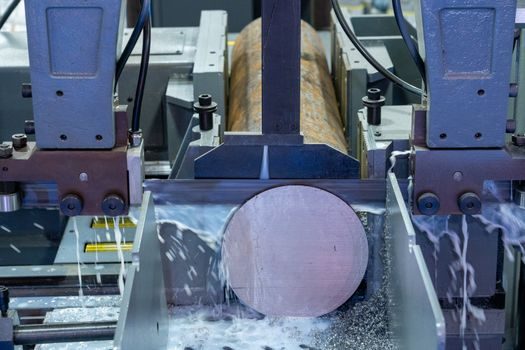
The 99.99% Cu plate is the feedstock — not the final product — and the next process step is set by the downstream form: wire rod (continuous cast rod ~8 mm or 1/2″ diameter for redraw to wire), billet (8″-diameter logs, ~30 ft long, for extrusion to tube and rod), cake (slab for hot- and cold-rolling to plate, sheet, strip and foil), and ingot (bricks for alloying and casting shops) [S3].
Downstream quality is tightly coupled to cathode cleanliness: residual sulfur above the LME spec causes cracking during drawing; oxygen above spec drives hydrogen embrittlement in OF-grade wire; lead and bismuth above their low-ppm ceilings ruin alloying batches for brass mills [S3]. For plants looking at integrated tube and pipe production, the same spec discipline that applies to copper material selection carries back upstream into the tankhouse.
Process Control and Modernisation Signals
Three measurable signals are worth tracking on a 2026 cathode line. First, current-efficiency drift in EW and refining cells — a falling CE% at constant kAh/t points to short circuits, organic contamination of the electrolyte, or falling Fe³⁺/Fe²⁺ ratio, all of which feed directly into the kWh/t figure. Second, cathode-stripper cycle time, which is the throughput bottleneck on permanent-cathode lines and is the metric to watch when comparing automation vendors. Third, the SO₂ capture rate at the smelter acid plant: modern double-contact plants run above 99.95% conversion, and a slip below that triggers visible stack opacity and lost sulfur credit. [S2]
Adjacent metallurgical capacity — including aluminum ingot manufacturing for conductor alloying and stainless steel coil lines for process equipment — is now commonly scoped into the same greenfield metallurgy parks, and EPC packages for copper cathode plants are increasingly bundled with downstream rod and tube fabrication under a single contractor [S2][S3]. For process engineers sizing cell-house busbars and rectifier capacity, the upstream current and downstream capex choices stay interlocked.
For component-level specifications, see additive manufacturing material, and multifunction process calibrator.