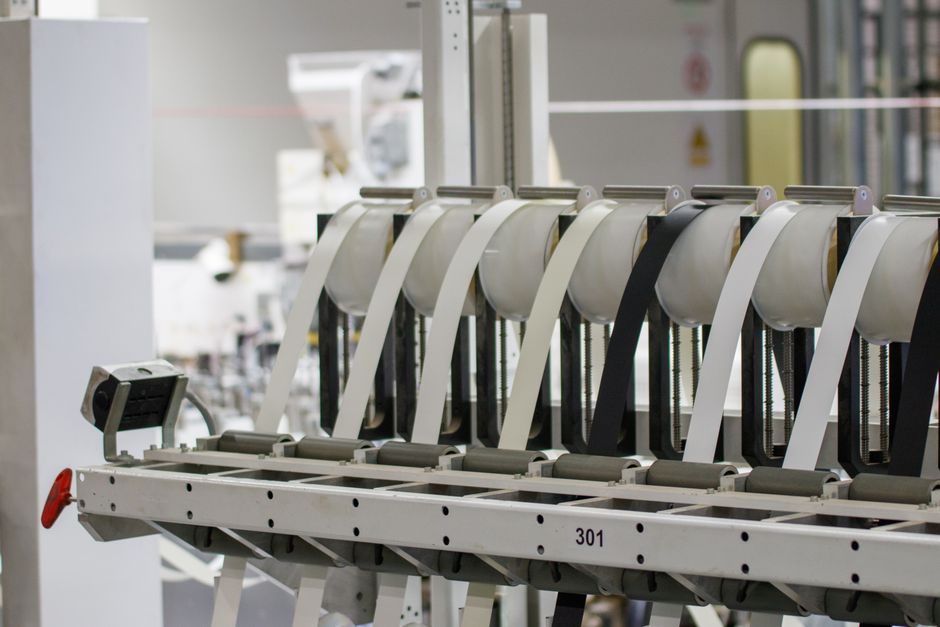
Stainless steel coil production in 2026 is dominated by Chinese mills running 20-roll Sendzimir clusters, AGC thickness loops and inline surface inspection on the same PLC/MES backbone, with TianJin Teda Ganghua [S2] and Bozhong [S1] stocking 304/316 in 2B, BA and No.4 finishes for UAE, European, Japanese, Southeast Asian and North American buyers.
The category is broader than a single product: it spans cold-rolled austenitic 300-series (304, 316, 321), duplex 2205, martensitic 17-4PH/15-5PH/17-7PH, plus precision strip down to 0.3 mm, supplied by mills including TISCO, Baosteel, JISCO and LISCO through trading hubs [S2]. Smart manufacturing now governs how that stock is cut, slit, polished, packed and traced from melt shop to coil yard.
Defining Smart Manufacturing on a Stainless Coil Line
A modern stainless coil cell is a stack of seven subsystems: a 6-high or 20-roll Sendzimir cold mill with hydraulic AGC, a continuous annealing-pickling line (CAPL), a bright annealing furnace for BA strip, a tension leveller, a slitting or cut-to-length line, a coil-packaging robot cell, and an MES layer that binds coil ID, chemistry, mechanical values and surface-defect images to the mill database [S1][S2]. Teda's standard product line — 0.3 mm sheet, 0.7 mm sheet, 1 mm strip, 15-5PH, 17-4PH, 17-7PH, 20-gauge 316 and 2205 duplex — is the typical SKU range a smart line is expected to handle without re-tooling [S2].
The MES layer is what separates "automated" from "smart." Level-1 PLCs and Level-2 process models control speed, tension and furnace atmosphere in real time; Level-3 MES tracks each coil through a unique coil ID, links the cast heat to chemistry, captures surface-inspection images from inline cameras, and publishes a mill test certificate to the customer's portal when the coil is loaded for export [S1]. For an engineer, the practical test is whether the mill can tell you, ten minutes after a coil is banded, what its mean roughness Ra is, where the first defect was flagged, and which strip map row it occupies.
Selection Criteria Buyers Use in 2026
Procurement decisions on smart coil supply in 2026 turn on four measurable criteria. First, chemistry and standard: 304 / 304L / 316 / 316L / 2205 / 17-4PH per ASTM A240, with EN 1.4301 / 1.4404 / 1.4462 equivalents, is the working vocabulary of Teda's hot-product list [S2]. Second, finish: 2B (cold-rolled, annealed, pickled, skin-passed), BA (bright annealed, Ra ≤ 0.05 µm for mirror parts), No.4 (brushed, 120–180 grit), HL (hairline) and 8K mirror — each maps to a different downstream forming operation. Third, dimensional tolerance: cold-rolled strip to ±0.02 mm thickness on precision lines, with coil ID 508 mm or 610 mm for downstream slitters. Fourth, traceability: an MTC that names the mill (TISCO, Baosteel, JISCO, LISCO), the heat number, the surface grade, the mechanical properties and the country of origin — Teda flags "Certification Guaranteed" alongside "30 Days Delivered" as a public buying criterion [S2].
The supplementary decision filter is what the mill has actually automated. A coil yard that runs AGVs between warehouse and slitter, online laser thickness gauges at every stand, and a robotic packaging cell can usually hold tighter width and edge-burr tolerances than a yard that still hand-straps coils. For a 200-tonne monthly draw of 316L 2B 1.2 mm × 1219 mm, that gap is the difference between an AQL 1.0 line and an AQL 2.5 line at the press shop. Engineers weighing AGV retrofit versus brownfield mill should review the cost lines and field realities documented in AGV Robot Advantages and Disadvantages: A 2026 Spec Engineer's View before green-lighting a material-handling capex.
Main Process Routes Compared
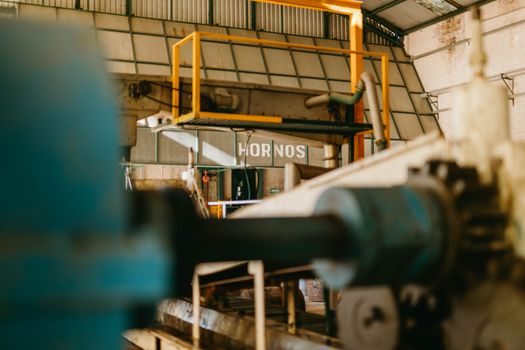
Four process routes compete for the same 304/316 coil demand, and the engineering trade-offs are concrete. (1) Hot-rolled black coil → cold-rolled 2B: cheapest, widest gauge window (0.3–6.0 mm), typical surface Ra 0.2–0.5 µm, used for general fabrication and structural stainless — the bulk of what Bozhong lists under "Stainless Steel Coil" [S1]. (2) Cold-rolled 2B → BA bright anneal: cleanest surface, Ra ≤ 0.05 µm, used for kitchenware, elevator trim and medical trays; needs H2/N2 atmosphere control and adds roughly two to three times the conversion cost of 2B. (3) 2B → No.4 / HL brushed finish: decorative, supplied as coil or sheet, mechanical brushing line runs at 10–30 m/min versus 100+ m/min on a 2B CAPL, so cost is dominated by the brushing head and the operator skill. (4) Precision strip route (0.03–1.5 mm) for springs, shims and battery cell cases: 20-roll Sendzimir cluster, tension levelling, eddy-current or laser surface inspection, with lot sizes below 5 tonnes — a different business model from mill-coil supply.
The 2026 capital question is duplex versus austenitic. Mills running a dedicated duplex CAPL can hold the lead-time advantage; mills that anneal 2205 in the same furnace as 304 lose cycle time and risk sigma-phase precipitation. For seawater, chemical-tank and structural-pipe applications, the 2205 route is the right pick; for general fabrication and food-grade 2B, 304 / 316L remains the cost baseline. Bozhong's catalog exposes the same breadth — 431 / 440A / 440B / 440C martensitic precision strip and ASME SA516 Grade 70 16Mo3 pressure-vessel plate sit alongside the austenitic 300-series, showing how the same mill addresses structural, cutlery and pressure-vessel codes under one supply contract [S1].
Real Use Cases From the Supply Base
Five concrete user profiles frame the demand side. (a) Pressure-vessel fabricators specify ASME SA516 Grade 70 with 16Mo3 alloy plate for hot-vessel shells, but use 304/316L 2B coil for the cladding, head-forming and nozzle reinforcement — Bozhong publishes both products on the same supply page [S1]. (b) Catering and medical fabricators — Newman Fabrications [S4] and Bell Manufacturing [S5] — work from 304 2B sheet and coil for sluice rooms, laundries, handrails, worktops, sinks and bar counters, with secondary integration of glass, plastic, casters and motors for the final assembly. (c) Stainless motor housings — TEMA (Dalian) Electric Motors — use precision stainless coil for motor shells and solenoid coils, where consistent magnetic permeability and burr-free slitting matter more than decorative finish [S6]. (d) Stainless tube and pipe producers take cold-rolled coil and feed welded or seamless mills; Maytun International Corp., established 1986, runs a one-stop coil, sheet, bar, welded-pipe and tube catalogue serving ASTM A312 / A778 specs [S8]. (e) Heavy-fabrication shops using 1.0402 DIN C22 alloy coil (10–2500 mm width, customised length) for structural and machinery components round out the demand map [S1].
Two cross-cutting patterns are visible. First, trading houses (Jiangsu Finemetal, Teda, Bozhong) act as inventory buffers and mill-of-origin aggregators, importing from TISCO, Baosteel, JISCO and LISCO and re-exporting to the UAE, Europe, Japan, Southeast Asia and North America [S2][S7]. Second, the smart-manufacturing premium shows up in the sub-fab, not the mill: the value is added at the slitter, the polisher and the packager that can hit a ±0.05 mm width tolerance and an AQL 1.0 visual standard, regardless of whether the upstream coil came from a fully automated mill or a partially upgraded one. For wider market context on coil-coating tailwinds and APAC demand concentration, the steel demand 2026-2030 forecast lines up the macro pull on these lines.
Limits, Failure Modes and Engineering Pitfalls
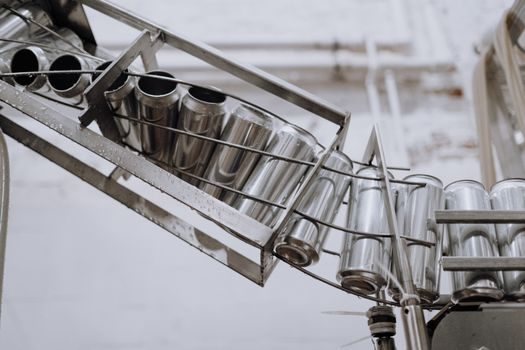
Smart-manufactured stainless coil is not a uniform commodity, and the failure modes are well known. (i) Surface contamination: residual rolling oil or annealing scale above 5 mg/m² will break laser-welding optics and stain BA surfaces; a CAPL with controlled HNO3/HF pickling chemistry and a final rinse-stage conductivity below 5 µS/cm is non-negotiable. (ii) Edge burr: hand-slit coil typically carries 0.05–0.10 mm burr, which a precision blanking line rejects; automated rotary-knife slitting with carbide tooling and inline deburring holds burr under 0.02 mm. (iii) Flatness: a coil that has not been tension-levelled will spring-back at the press shop, causing twist on laser-cut parts; ASTM A480 flatness tolerances are a starting point, not a guarantee. (iv) Traceability gaps: trading houses that mix lots across mills without re-issuing MTCs create compliance risk for pressure-vessel, food-contact and medical fabricators. (v) Storage corrosion: free-iron contamination from carbon-steel forklift tines or overhead crane hooks will rust-stain 304 in 24 hours; a smart yard enforces stainless-only tooling and segregated coil racks, often under an additive-manufacturing-material-style material-handling discipline. [S1]
Buyers should also recognise what "smart" does not fix. A Level-3 MES cannot correct a 0.5 mm camber that comes off a poorly set slitter; it can only flag the coil before shipment. A robotic packager cannot rescue a coil that has been scratched by an adjacent coil during transport. The honest engineering view is that smart manufacturing raises the floor of consistency but does not raise the ceiling of metallurgical capability — the 2205 line still needs the right CAPL, the 17-4PH still needs the right temper, and the 17-7PH still needs the right heat-treat recipe. For a deep dive on how fabrication-side heat-treat sequencing governs the final hardness of martensitic and precipitation-hardening grades, the tool and die steel installation guide is a useful cross-reference, even though it sits in the tool-steel world.
Sourcing Map, Standards and a Verifiable Next Signal
The 2026 sourcing map for smart-manufactured stainless coil runs through four hubs: Shanghai / Zhejiang / Jiangsu / Hong Kong (Bozhong) [S1], Tianjin (Teda Ganghua) [S2], Dalian (TEMA) [S6], Wuxi (Jiangsu Finemetal) [S7], and Taiwan (Maytun, est. 1986) [S8]. End markets divide into catering / medical fabrication (Newman Fabrications [S4], Bell Manufacturing [S5]), motor and solenoid assemblies (TEMA [S6]), tube and pipe conversion (Maytun [S8]), and pressure-vessel structural work (Bozhong SA516 / 16Mo3 plate) [S1]. The standards stack is consistent: ASTM A240 / A312 / A480 for chemistry, dimensional and surface; EN 10088 / 1.4301 / 1.4404 / 1.4462 for European equivalents; ASME SA516 for pressure-vessel plate; JIS G4304 / G4305 for Japanese buyers. Smart-manufacturing governance is built on IEC 61131-3 PLC programming, ISA-95 MES layering and OPC UA on the shop-floor network, though the buyer rarely sees these names in the MTC.
For purchasing teams, two trackable signals will tell whether a mill is genuinely smart-manufactured or just web-branded in 2026. Signal one: a digital MTC portal where each coil's chemistry, mechanical values, surface-grade images and slitting plan are visible by coil ID before the truck arrives. Signal two: a published AQL on visual and dimensional inspection (typically AQL 1.0–2.5 per ISO 2859-1) with a documented rework and claim rate. Mills that can show both, alongside the 20-year trading track record Teda advertises [S2] or the 40-year mill history Maytun carries [S8], are the safer bets for any 304/316/2205 line that has to feed a smart press shop. The next node to watch is whether more trading houses adopt coil-level QR traceability as a default rather than a premium — the rollout in 2025–2026 across Jiangsu and Tianjin export hubs [S2][S7] is the leading indicator.
For component-level specifications, see stainless steel.