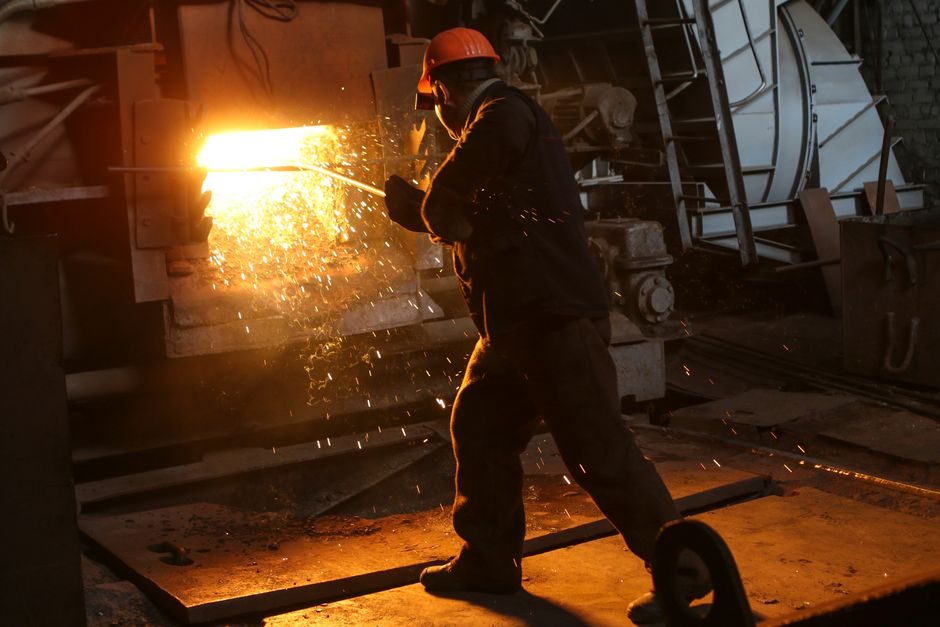
Modern copper production runs along three parallel chains: extractive metallurgy (concentrate → anode → cathode at 99.99% Cu), wrought product conversion (cathode → wire rod, bar, strip, foil), and end-user fabrication (plumbing fittings, busbars, heat-exchanger plates) [S1][S2].
Engineers buying into the chain care about three numbers first: cathode purity (LME Cu-CATH-1 minimum 99.99% Cu, with Bi, Pb, S and O each capped in ppm), oxygen content in finished stock (tough-pitch C11000 ≈ 100–650 ppm O vs deoxidised C12200 ≤ 100 ppm), and final form-factor tolerance (foil thickness in µm, rod diameter in mm, bar flatness in mm/m) [S1][S2].
Extractive chain: concentrate, smelt, convert, refine
Pyrometallurgical copper flows sulfide concentrate through autogenous smelting (Outokumpu flash, Mitsubishi, or Isasmelt bath) at matte grades of 55–70% Cu, then Peirce-Smith converting to blister copper at 98–99% Cu and anode casting at 99.5% Cu [S1].
Anodes enter tankhouse electrolytic refining at current density 220–340 A/m² with stainless-steel cathode blanks, producing LME Grade A cathode at ≥99.99% Cu over a 7–14 day cycle; SX-EW (solvent extraction + electrowinning) handles oxide ores directly, yielding cathodes that skip the smelter and convert steps entirely [S1].
The "fire-refined, high-conductivity" grade C11000 (tough-pitch) carries 100–650 ppm residual oxygen, which is why it is forbidden for hydrogen service above ~400 °C — hydrogen reduces the Cu₂O inclusions and creates steam embrittlement; C12200 (deoxidised, DHP) caps oxygen at roughly 100 ppm using phosphorus and is the default choice for welded plumbing, refrigeration, and medical gas tube [S1].
Wrought conversion: rod, bar, strip, foil
Continuous casting of cathode wire bar feeds rolling mills at 8–22 mm rod exit diameter; Properzi and Southwire Contirod lines cast 5,000–8,000 t/month per strand and deliver oxygen-controlled rod that downstream wire drawers can reduce from 8 mm to 0.05 mm without intermediate anneal on 14-die machines [S1].
Flat-rolled product splits into three downstream lanes: hot-rolled plate for busbars and anodes, cold-rolled strip (0.1–3 mm) for transformer windings, cable wrap and heat-exchanger fins, and rolled copper foil (RA foil) for PCB and lithium-battery current collectors [S2].
RA (rolled annealed) copper foil is typically produced in the 9–105 µm range with tolerance ±5–10%; electrodeposited (ED) foil extends down to 6–9 µm and is the dominant substrate for high-frequency PCB and lithium-ion anode current collectors, with the copper-clad laminate stack built up with prepreg and pressed at 180–200 °C [S2].
End-user fabrication: plumbing, busbar, OEM part
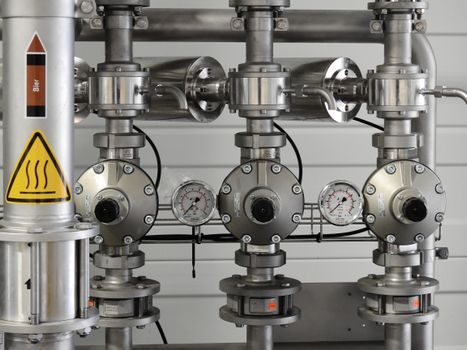
White-label copper fabrication covers drawn tube, extruded bar, machined fittings and brazed assemblies; CopperCraft's manufacturing line ships soldering-grade copper fittings, custom busbar stock, and formed heat-exchanger plates for OEM assembly [S1].
Spec gates at this stage are alloy temper (O61 annealed, H00 quarter-hard, H04 full-hard), dimensional tolerance to ASTM B88 (water tube) or B280 (ACR tube), and compliance with NSF/ANSI 61 for drinking-water contact or ASTM B75 for seamless tube [S1].
For PCB laminate and battery-cell manufacturing, the upstream process selection is the actual decision point: rolled-annealed foil is preferred for high-flex and dynamic-cycle applications, while electrodeposited foil wins on cost per m² below 12 µm and on the rough/matte surface that bonds to anode active material [S2].
Form-factor, alloy, and purity comparison
Buyers should weigh copper product options against four decision criteria: final thickness (and what rolling can hit), purity (and which standard grades it), mechanical temper, and end-use certification. A direct comparison: C11000 rod offers 100% IACS conductivity but is hydrogen-brittle; C12200 tube retains 95–101% IACS and is weldable; C11000 strip is the cheapest transformer winding; C12200 plate is the default for welded pressure vessel and heat-exchanger service; ED foil is the only viable option at 6–9 µm thickness, while RA foil is viable down to 9 µm with higher mechanical isotropy [S1][S2].
For PCB substrate work, the relevant trade is RA foil (better flex life, tighter thickness tolerance, higher cost) versus ED foil (cheaper, thinner possible, matte-side bond, lower flex endurance), with copper-clad laminate stack built on either at pressing temperatures of 180–200 °C [S2].
Process selection by end application
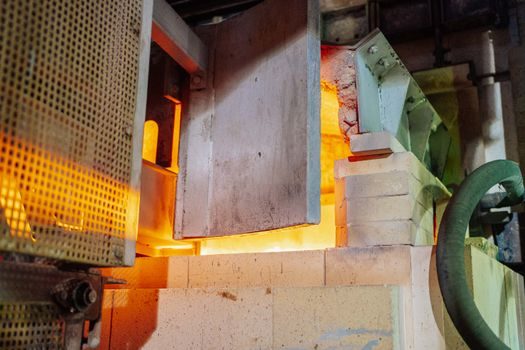
Plumbing and HVAC tube defaults to C12200 deoxidised drawn to ASTM B88, Type L or Type K, with temper O61 for soft coil and H58 for drawn straight length; nitrogen-inerted brazing is used in place of hydrogen-bearing atmospheres to avoid the embrittlement reaction that disqualifies C11000 above 400 °C [S1].
Electrical conductor rod for wire and cable uses C11000 or C11040 (with Cd above 50 ppm for higher tensile at small diameter), drawn through multi-die machines with intermediate anneal at 400–500 °C, with a finish gauge of 0.05–0.1 mm for magnet wire and 0.1–0.4 mm for building wire [S1].
PCB and battery foil production splits: ACF and similar vendors deliver ED foil at 6–35 µm with controlled profile roughness (Ra typically 0.3–0.8 µm matte side) for lithium-ion anode current collector and high-layer-count PCB; RA foil at 9–105 µm is used for flexible PCB, RFID antenna, and graphite-foil laminate stacks [S2].
Sourcing signals, standards and constraints
Three sourcing signals matter to a 2026 specifier: the move toward higher-density lithium batteries driving ED foil demand below 10 µm, the steady retrofit of tube mills to nitrogen-brazing for hydrogen-service safety, and the consolidation of white-label copper fittings in North America as plumbing OEMs outsource non-core forming [S1][S2].
Standards governing the chain include ASTM B49 (rod), B88 (water tube), B75 (seamless tube), B280 (ACR tube), and the LME Cu-CATH-1 cathode grade at 99.99% Cu, with impurities Bi ≤ 30 ppm, Pb ≤ 50 ppm, S ≤ 50 ppm and O controlled separately in finished stock [S1].
For the broader process-engineering view of where copper manufacturing sits alongside other metals, see Industrial Robot Manufacturing: 2026 Process Map and the rolling-mill / MES stack discussion in Steel Smart Manufacturing 2026, both of which share the same factory-floor data backbone that copper mills are now retrofitting.
Two trackable nodes to watch: the next wave of ED foil capacity coming online at 6–9 µm for high-energy-density cells, and the migration of plumbing-grade C12200 tube from open-bath to nitrogen-inerted brazing — both will show up in 2026–2027 supplier datasheet revisions rather than 2026 press releases.
For component-level specifications, see copper material, additive manufacturing material, and multifunction process calibrator.