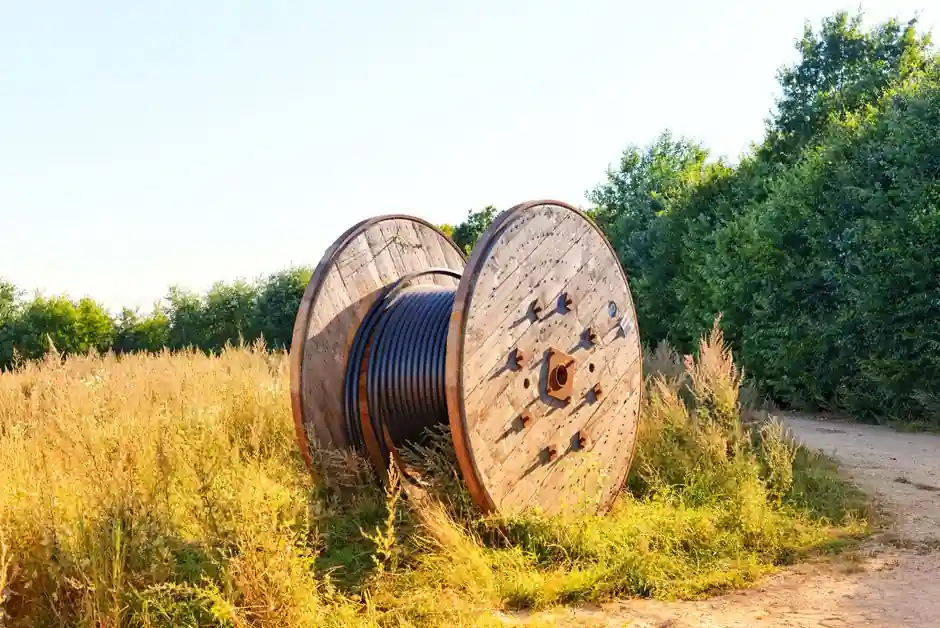
Global copper rod output capacity is set to climb by roughly 870,000 metric tons per year across announced 2026 projects, anchored by a new 320,000 ton SMS group Contirodr line in North America and a Primetals Technologies upgrade that lifts Southwire's Carrollton, Georgia SCR mill from 30 to 35 tons per hour [S4][S6].
Reference lines now run at 54 metric tons per hour for 353,000 metric tons of annual capacity, producing ETP (electrolytic tough pitch) rods in 8, 9.5, 12.7, 16 and 18 mm diameters for power cable, building wire and magnet wire feed [S1]. COMEX copper settled between USD 6.4820 and USD 6.4995 per pound in the first two trading sessions of October 2026, a level that keeps the long-cycle mill capex economics workable for integrated producers [S3].
Headline 2026 capacity additions and unit sizes
The Contirodr line under construction in North America adds 320,000 metric tons of annual rod capacity, taking the host plant's theoretical nameplate from roughly 230,000 to about 550,000 metric tons per year, a near 2.4x lift driven by a single new casting and rolling train [S4][S5].
Conticon, the operator of that line, is the first SMS group Contirodr customer in the region and is targeting commercial operation inside 2026, with the equipment package sized to push continuous wire rod production capacity by more than 50% versus the existing configuration [S4][S7]. For benchmarking, the Jiangxi Copper SCR 9000 reference mill in Guangdong runs 54 t/h for 353,000 t/yr, the highest-capacity system Southwire has supplied, with the finishing mill built around eight independently driven stands plus optimized roll pass minimum-tension-rolling (MTR) for longer roll life and tighter diametrical tolerance [S1].
Process configuration, rod sizes, and metallurgical scope
Continuous cast-and-roll copper rod mills take refined cathodes or high-grade scrap, melt under controlled atmosphere, cast a bar, then reduce it through roughing, intermediate and finishing stands before pickling, wax application, coiling and stretch wrapping [S5].
Standard product diameters cluster in the 8 to 25 mm window, with the reference SCR 9000 covering 8, 9.5, 12.7, 16 and 18 mm to feed wire and cable, transformer winding, building wire and magnet wire applications [S1][S5]. ETP copper (Cu-ETP, minimum 99.90% Cu, minimum 100% IACS conductivity) remains the dominant alloy for electrical rod, valued for its high electrical and thermal conductivity, ductility and corrosion resistance in downstream wire drawing [S5]. The Primetals scope on the SCR 9000 included two roughing mills (one 457 mm stand plus four 305 mm stands), a 610 mm entry shear, a 320 mm intermediate rotary shear, an eight-stand finishing mill, lubrication and guide equipment, pickling, wax applicator, turndown, coiler and a fully automatic recirculating conveyor with coil weighing, pallet destacking, compacting, strapping and stretch wrapping [S1].
Selecting equipment: where SCR, Contirold, and Contirodr compete
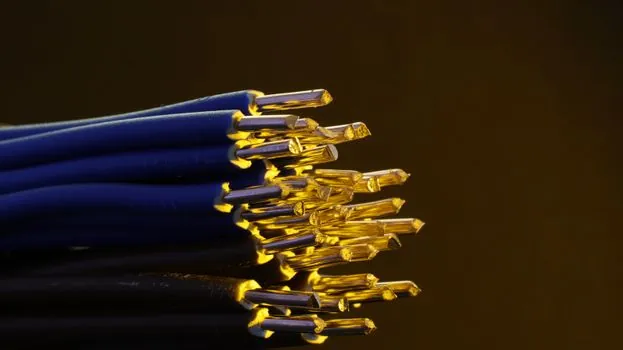
Three process families dominate greenfield copper rod mill capex in 2026: Southwire SCR, SMS group Contirold/Contirodr, and Primetals/Properzi-style continuous cast-and-roll, each scoring differently on hourly throughput, rod-size range, capex intensity and feedstock tolerance [S1][S3][S4].
Decision criteria for a new 50,000 to 200,000 t/yr plant typically start with hourly output (the headline KPI), then cover the diameter range, alloy flexibility, capex per annual ton, and the ability to consume a mix of cathodes and scrap. The table below lines the three families up against those four criteria using the data in the research:
The takeaway: SCR-class lines set the 54 t/h benchmark with tight diametrical tolerance from MTR, Contirodr trades a small amount of polish for larger unit sizes and scrap tolerance, and Properzi/Primetals casting-rolling systems remain the choice when oxygen-free or specialty alloy rod is in scope. For background on the upstream cathode and scrap feedstock, see our note on copper ore grade decline and mine output caps.
Project economics, profit margins, and what a 2026 greenfield actually costs
The IMARC Group February 2026 detailed project report (DPR) sizes a typical copper rod plant at 50,000 to 200,000 metric tons per year of nameplate capacity, with gross profit margins of 8-15% and net profit margins of 3-8% under normal operating conditions [S5].
The global copper rod market reached 2.40 million tons in 2025 by IMARC's volume estimate, and is projected to climb to 3.46 million tons by 2034 at a 4.2% CAGR from 2026 to 2034, with copper wire rod alone sized at USD 1,264.4 million in 2026 and forecast to reach USD 1,740.1 million by 2035 at a 3.64% CAGR [S2][S5]. Process steps on the capex side run cathode/scrap procurement, melting, continuous casting, rolling, surface cleaning, cooling, coiling, inspection and packaging, with the same line covering power cable, motor winding wire, transformer and generator winding, automotive harnesses, and power distribution equipment [S5]. Wider bar and wire rod rolling mill equipment demand was valued at USD 6.8 billion in 2025 and is projected to reach USD 11.2 billion by 2034 at 5.7% CAGR, reflecting capex flowing into both copper and steel rod capacity [S8].
Who the capacity is for, and who it is not for
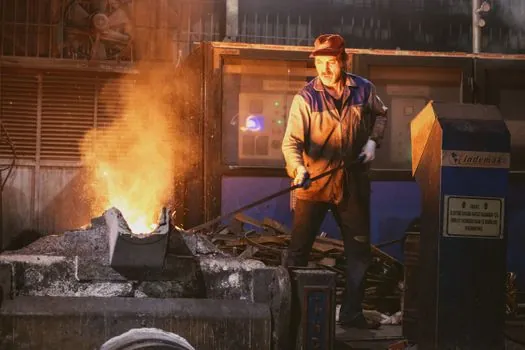
The new SCR 9000-class and Contirodr capacity is for integrated cathode-to-rod producers, large independent rod mills serving power-cable and building-wire customers, and wire-drawers that need a stable 8-18 mm feedstock with controlled mechanical properties and surface finish [S1][S4][S5].
It is not for downstream wire-drawing shops seeking oxygen-free (Cu-OFC) rod for specialty magnet or superconducting wire, not for producers needing alloy rod outside the standard ETP range, and not for sub-50,000 t/yr niche plants where a single 54 t/h train would sit at low utilisation. A plant that consumes 100% scrap rather than cathode will also need to verify the line's atmosphere control and dross handling, since most published capacity figures assume virgin ETP cathode feed [S1][S5].
Standards, testing, and what a buyer should pin in the contract
Buyer-side specification should pin rod to ASTM B49 (standard specification for copper rod drawing stock for electrical purposes) for chemical composition, electrical conductivity, tensile strength and elongation, and to EN 1977 for the European market, with the rod mill's quality plan including in-line conductivity testing, surface defect inspection and coil weight verification on the recirculating conveyor [S1][S5].
Mill acceptance tests on the SCR 9000 reference line covered performance guarantee parameters including hourly throughput, diametrical tolerance across 8-18 mm, and roll life under MTR operation, and any new 2026 line should match that scope on the punch list [S1]. For melt and casting sections, ISO 9001 quality systems plus ASTM E53 (copper by electrolytic method) or equivalent ICP-OES analytical methods are typical; downstream wire drawers then verify incoming rod against ASTM B49 lot acceptance before drawing [S5]. For a deeper look at downstream rod-to-wire testing, see free-filament wire strain gauges with flame-sprayed ceramic for high temperature.
Trackable signals for the next 12 months
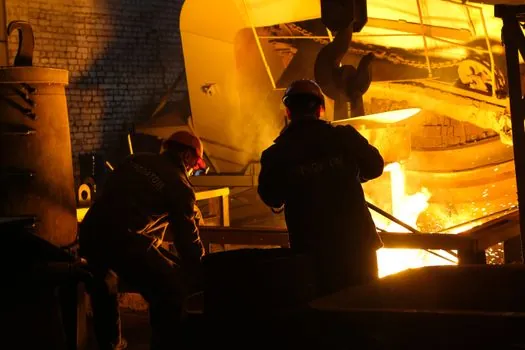
Two signals to watch: the Conticon North America Contirodr line is targeted for commercial operation in 2026, so first-coil and performance-test announcements from SMS group or Conticon will confirm the 320,000 t/yr headline number [S4][S7]. The Primetals Technologies upgrade to lift Southwire's Carrollton SCR mill from 30 to 35 t/h was tentatively scheduled to come online in fall 2024, with the line already contributing to Southwire's published 380,000+ t/yr annual figure, so any 2026 throughput update above that base rate would indicate the upgrade is fully ramped [S3][S6].
The underlying component specifications are covered under wire rod, copper material, and checking and testing apparatus.