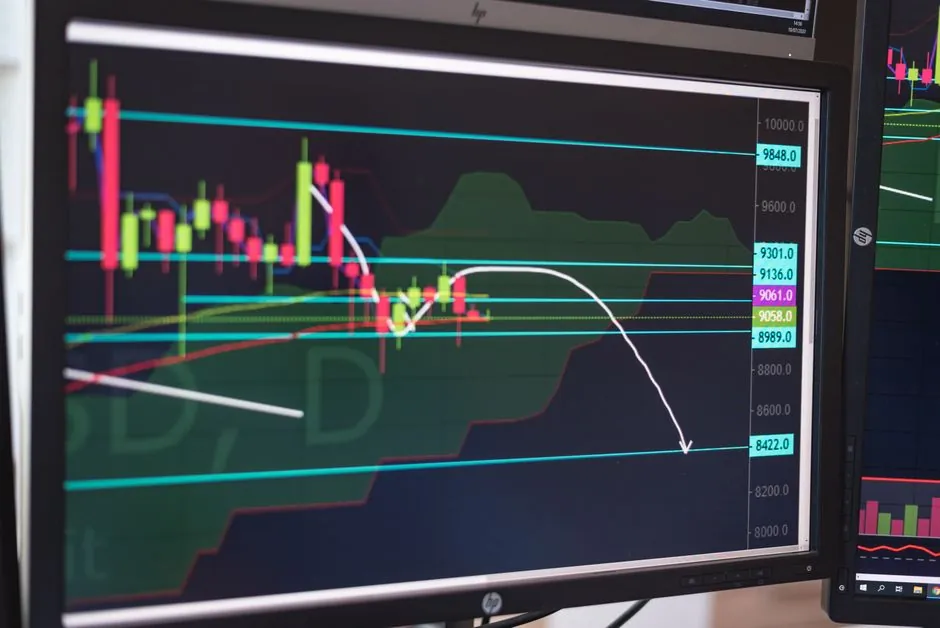
Copper hedging for cable buyers means converting a variable COMEX or LME copper cost into a fixed price for a defined quantity of conductor, typically 25,000 lb lots on COMEX, so that the metal portion of a power cable bid does not drift between award and delivery [S1][S3].
Most North American wire and cable manufacturers procure copper at a value based on the COMEX copper exchange, which is traded on the Chicago Mercantile Exchange's (CME) futures market and is tracked daily, and wire and cable conductors can be approximately a 20 percent material cost on commercial construction projects [S3]. The hedger's job is to make that 20% predictable.
Why a Cable Bid Needs a Metal Hedge, Not Just a Quote
Between bid date and project completion, copper can move enough to wipe out cable margin: from late March 2020 through early September 2021, LME copper nearly doubled, then fell nearly 25% from those highs, a swing of well over a dollar per pound inside 18 months [S3].
Contractors regularly wait several months from bid to award, then another several months to two-plus years to project completion, which means the cable order lives through multiple COMEX expiry cycles and seasonal construction peaks [S3][S4]. For OEM and contractor buyers sourcing control cable and building wire in 2026, the IEA notes that clean energy systems (EV charging, solar, wind) are pulling more copper per unit than fossil equivalents, adding structural demand on top of macro noise [S4].
The Three Main Hedging Instruments and What They Cost
Futures are the baseline tool. A cable manufacturer buys COMEX copper futures equal to its planned physical purchase, so any spot price rise is offset by an equal futures gain, in the classic back-to-back hedge [S1][S3]. COMEX copper contracts trade in 25,000 lb increments and require a non-cancellable, non-returnable purchase order with releases over the term, which most mills cap at 12 months though longer terms are negotiable [S3].
Options price in an insurance premium. A call option caps the buyer's purchase cost at the strike price while preserving downside if copper falls, and the LME characterizes the call premium as the cost of "unlimited potential upside" protection [S1]. To shrink that premium, buyers use collars, simultaneously buying a put (floor) and selling a call (ceiling), which trade some upside for a much lower net cost [S1]. For a cable gland or accessories buyer the same logic applies, but at much smaller tonnage the option premium per pound often exceeds the futures margin, so instruments are usually reserved for mill-scale copper material orders.
Forwards, swaps, and fixed-price supply agreements sit between futures and options. An OTC swap with a bank fixes a forward price and settles monthly against a market average, useful when a buyer's volume is too small or too irregular to roll futures cleanly [S1]. Long-term mill contracts work the same way operationally: the buyer and mill estimate an average price from copper futures, material volume, and delivery timing, then lock firm pricing for the project [S3].
When Hedging Pays Off, and When It is Overkill
Hedging is worth the friction when the order book is large, the delivery window is long, and the buyer cannot pass metal cost through to the end customer. A copper wire manufacturer with rising input cost concerns is a textbook hedge case, buying futures to lock current prices and protect margin [S5]. A copper producer worried about price declines does the mirror trade, selling futures to fix revenue [S5].
Hedging is overkill when the order is small, the delivery is spot, or the buyer has a passthrough clause. In those cases, the option premium or the margin call on the futures leg can cost more than the price move it would have offset, and a simpler approach is to shorten quote validity windows or index the surcharge to COMEX at ship date [S5][S3]. Hedging also does not fix the second-order cost drivers: freight, PVC or XLPE insulation compound, and cable tray support steel all move on their own cycles, so a copper hedge solves roughly half the material volatility problem on a typical cable BOM [S4].
Cost Driver Breakdown: What Actually Moves a Hedged Cable Price
The four controllable cost drivers on a hedged cable order are, in order of typical impact: cathode copper price (fixed by the hedge instrument), processing fees and the mill's rod premium (refixed at each release), insulation and jacket compound (XLPE, PVC, LSZH), and freight plus minimum order fees [S4].
The cathode leg is fully de-risked by a properly sized futures or swap position, but the rod premium, the surcharge a mill adds over COMEX for converting cathode to wire rod, is not hedgeable on the exchange and is reset at each contract release, so a buyer who locks the futures leg but ignores rod premium volatility can still see the landed cost of cable wire move by 5 to 10% [S1][S3]. Insulation and jacket compound pricing is driven by petrochemical feedstocks and is independent of copper, so it has to be hedged or fixed separately, and freight varies with diesel and routing, often peaking in Q3 during the North American construction season [S4].
Minimum order fees and set-up charges matter more for small buyers: many mills will not accept a 12-month copper contract below a certain monthly release volume because the administrative cost of a COMEX position is roughly the same regardless of size [S3].
Decision Matrix: Which Instrument Fits Which Buyer
A large OEM or utility buyer with multi-year, multi-million-pound annual draw and passthrough constraints is best served by OTC swaps combined with mill fixed-price contracts, because swaps smooth the monthly cash exposure and the mill contract smooths physical delivery [S1][S3]. A mid-size cable manufacturer with a 6 to 12 month backlog and variable order book is the natural fit for COMEX futures plus periodic options collars, sized to roughly 70 to 80% of the order book to leave some spot flexibility [S1]. A small contractor buying project-specific bulk cable should rely on the mill's own hedging program, typically embedded in a 12-month fixed-price offer, rather than running a personal futures account [S3].
A trader or financial buyer with no physical exposure is the only profile for whom speculative futures positions make sense, and that use case is outside the scope of cable procurement [S7].
Limitations, Failure Modes, and What Hedging Cannot Do
Hedging fails in three predictable ways: basis risk between COMEX and the buyer's actual delivered cathode grade, margin call liquidity stress on the futures leg, and counterparty risk on OTC swaps and long-term mill contracts [S1][S6]. Cross-hedging copper scrap against COMEX copper is a known source of basis error, because scrap grades and regional premiums diverge from exchange cathode pricing, so the hedge ratio has to be calibrated to the actual scrap flow, not assumed at 1:1 [S6].
Hedging also cannot protect against supply disruption, mining labor stoppages, or smelter capacity cuts, which move the physical premium independently of the exchange price, and 2025 saw Chinese smelters pledge capacity cuts that pushed the physical market wider even as the futures curve stayed range-bound [S1]. Financial speculation, hedge funds, and inflation-hedging flows add a volatility layer on top of physical fundamentals, which is exactly why the operational hedge exists in the first place [S7].
Standards, Sourcing Workflow, and Trackable Signals
There is no ASTM or IEC standard that prescribes how a cable buyer should hedge copper; the practice is a commercial workflow layered on top of conductor standards such as ASTM B3 for drawn copper wire and ASTM B8 for concentric-lay conductors, which govern the metal itself, not its procurement [S3]. The workflow that works in practice is: forecast 12-month copper draw by month, request a COMEX-referenced quote from the mill, compare it to an OTC swap quote from a bank or trading house, choose the cheaper basis-risk-adjusted hedge, and re-mark monthly against a documented trigger band [S1][S3].
For related context on copper supply fundamentals, see the analysis of copper ore grade decline and its hard cap on near-term mine output growth, and for the smelter side of the same squeeze, see the 2026 smelter margin squeeze driven by TC/RC floors. For projects that pair cable buys with on-site DC distribution, the 2026 spec and sourcing snapshot for DC microgrids in industrial plants shows where the demand pull is heading.