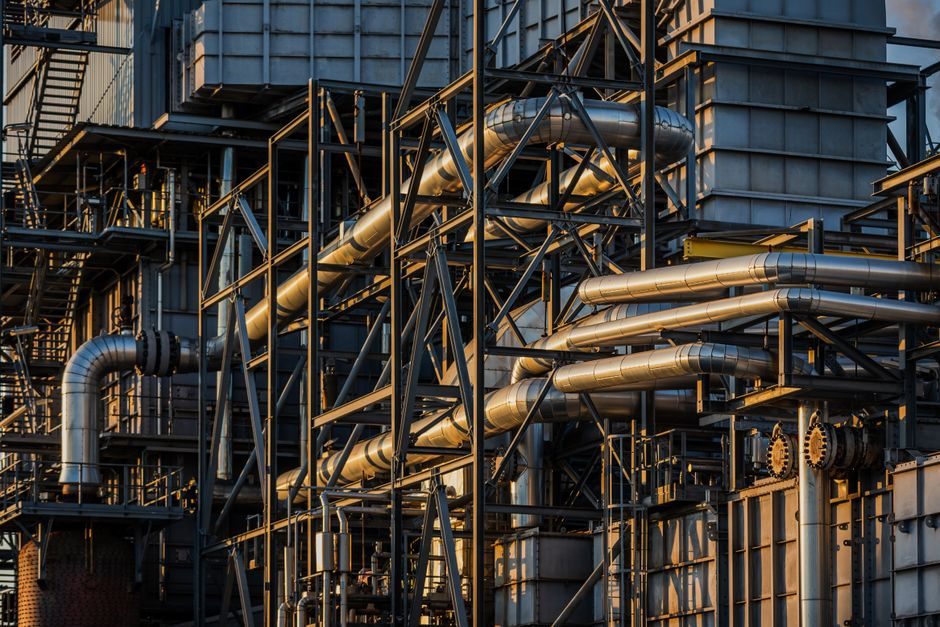
Copper's industrial chain runs from mine concentrate and solvent-extraction/electrowinning (SX-EW) cathodes, through smelter anode and refinery output, into wire-rod mills, brass mills, alloy foundries, and finally electric motors, power cables, transformers and copper-based chemicals.
The chemical-side downstream of copper — sulfates, oxides, foams and phosphides — is the same chain tracked in industrial chemistry databases, where each substance page lists the upstream raw material and the downstream derivatives in a single record (e.g. the Cu–S/P family entry at [S2]). Process engineers sizing a 2026 spec should treat that database view as a template for the wider chain.
Upstream: Mine Output, Concentrate Grade and the SX-EW Route
Mine supply still anchors the chain, and most 2026 sourcing plans still start at the concentrate-to-cathode boundary [S2]. The upstream segment is typically divided into four process nodes: open-pit or underground sulfide mining, concentrator flotation producing 25-35% Cu concentrate, smelter converting to 98-99% Cu anode, and electrolytic refining to 99.99% Cu cathode. SX-EW cathodes from oxide/secondary sulfide ores typically test 99.99% Cu and skip the smelter step.
Sourcing gates at the upstream tier include concentrate Cu grade, deleterious-element limits (As, Sb, Bi, Hg, F, Cl), payable-vs-treatment-and-refining (TC/RC) terms, and shipping moisture. The Springer agro-industry reference describes the same general "upstream industries" pattern in capital-vs-labour substitution terms [S1], which translates here into capital-heavy concentrator and SX-EW capacity replacing marginal mine output when ore grade falls.
Midstream: Smelter Anode, Refinery Cathode and Wire-Rod Stock
Smelter and refinery capacity is the throughput bottleneck between mine and mill, and 2024-2026 industry coverage has flagged a persistent concentrate-to-smelter mismatch that pushed TC/RC terms to historically low levels (mid-2024 benchmarks of roughly USD 80/dmt and USD 0.08/lb were reported across multiple trade press runs, with the structural deficit continuing into the 2026 contract season). The midstream output is sold as Cu-CATH-1 or Cu-CATH-2 cathode and as fire-refined high-conductivity rod (ETP, FRHC, OF-OK). [S1]
Wire-rod mills convert cathode into 8 mm ETP rod (EN 13602 Cu-ETP-1 / CW004A, conductivity 100-101% IACS) and into oxygen-free grades Cu-OF-1 (CW008A) for magnet and vacuum-tube use, and Cu-OFE (CW009A) at ≥101% IACS for semiconductor crystal-pull applications. Brass-mill feedstock is the Cu-Zn alloy series (C26000 cartridge brass at 70% Cu / 30% Zn being the dominant strip-mill grade) — the same mill also feeds copper material plate, sheet and tube catalogues used in plumbing, heat-exchanger and stamping work.
Downstream: Wire, Cable, Motor and Transformer Off-Take
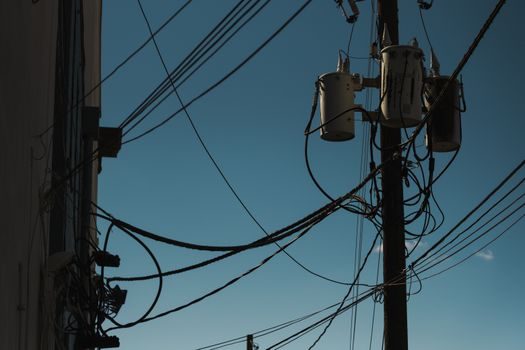
Off-take is concentrated in five end-use families — building wire, power cable, electric motors and transformers, automotive wiring harnesses and EV traction motors, and industrial heat-exchange tube. [S2]
Spec-critical downstream products include PVC/XLPE-insulated power cable to IEC 60502-1, building wire to IEC 60227 / IEC 60228, transformer winding to IEC 60076, and motor windings specified against IEC 60034. Engineering on the demand side also flows into adjacent chains covered on this site — see the electric motor market 2026 sizing piece for the off-take framing, and the broader aluminium supply 2026 gap article for how copper and aluminium are now jointly subbed in transformer and busbar work.
Comparison: Smelter-Refined vs Recycled vs SX-EW Cathode at a Glance
The three cathode routes do not interchange cleanly, and the 2026 spec cut between them is decision-driven, not cost-driven. Decision rule: spec the cathode route to the EN/ASTM grade, not to a "purity floor" alone. [S3]
For the copper-material spec pages referenced in this article, the copper material encyclopedia entry collects the CW-grade and UNS-grade cross-walks used in 2026 sourcing work. The Springer reference also frames "upstream" and "downstream" as two ends of the same value chain, with the midstream processor standing between raw input and finished product [S1]; that framing maps directly onto a copper-sourcing plan.
Where Copper's Upstream-Downstream Chain Sits Inside Industrial Sourcing
Copper is a cross-cutting input — it is bought not just by cable mills but by motor winders, transformer makers, heat-exchanger fabricators, and the broader process-instrument supply chain. Pressure transmitter and flow meter manufacturers that use copper-bearing brass wetted parts (C36000 free-machining, C46400 naval brass) source against the same cathode, brass-mill and rod-mill tiers, so a cathode TC/RC shock propagates into instrument hardware as well as into motor and cable off-take. Spec writers should treat cathode TC/RC, brass-mill lead-time and rod-mill order book as a single set of lead-time signals when locking 2026 BOMs. [S1]
For sourcing gates, the practical 2026 watch list is short: (a) smelter TC/RC contract settlement (benchmark settlement in late Q4 sets the Q1 cathode benchmark price), (b) C26000 and C11000 strip-mill order book, (c) Cu-ETP-1 rod spot premiums, and (d) scrap-spread (No.2 Birch/Cliff vs cathode), which is the leading indicator on recycled-route competition. Two trackable next nodes: the late-2026 TC/RC mid-year benchmark settlement and the Q3-2026 SX-EW cathode premium revision — both are observable on LME/SHFE windows and feed directly into the 2026 wire-rod and brass-mill run plans.