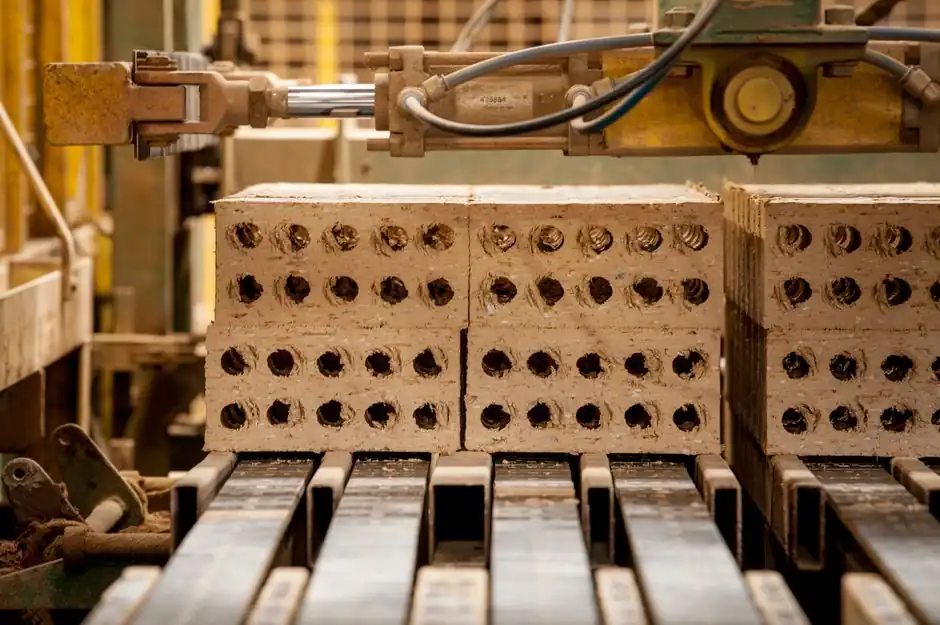
Foundries casting aluminium and zinc lighting fixture bodies report that shell core shooters dominate runs below 5 kg per shot, while hot-box and cold-box lines carry weights from 10 kg up to 40 kg per cycle, according to OEM specification sheets published in mid-2026 [S4].
Selection hinges on four physical anchors: shot weight in kilograms, platen dimensions in millimetres, heating power in kilowatts, and cure cycle time in seconds. These four parameters determine whether a lighting-fixture core machine investment pays back on typical luminaire batch sizes of 200–5,000 units per order.
Why lighting-fixture castings drive a specific core machine class
Lighting fixture bodies sit in a narrow mass window. Die-cast aluminium lamp housings for street luminaires commonly weigh 0.8–3.5 kg; cast-iron decorative post tops range 5–18 kg; large industrial high-bay heat sinks can reach 25 kg. That distribution pushes most lighting OEM foundries toward mid-range shell core machine platforms with shot weight 5–25 kg rather than the 50 kg+ presses used in plumbing or valve plants [S4].
Surface finish also matters. Reflector cavities and optical-grade surfaces cannot tolerate resin burn-in or veining, which is why many lighting foundries restrict themselves to resin-bonded shell and hot-box processes and avoid the sodium-silicate CO2 route that leaves harder-to-clean residues.
Shell core shooter: the default for thin-wall lamp housings
Shell core shooters using the hot-box resin process are the most specified platform for lighting-fixture cores under 5 kg, with curing times of 25–40 seconds per core at platen temperatures of 220–260°C. The shooting pressure window of 0.4–0.7 MPa is well matched to the thin 3–8 mm wall sections typical of luminaire heat sinks and reflector shells [S4].
A typical lighting-line shell core shooter runs at 7.5–15 kW of installed heating power and occupies 2.5–4 m² of floor space, fitting the compact layouts common in contract casting shops serving lighting OEM brands. Sand-to-core mass ratios in this class run 1.2–1.6, lower than cold-box lines, which reduces resin consumption on the small cores lighting foundries typically cycle.
Hot-box core machine: the workhorse for 5–15 kg luminaire bodies
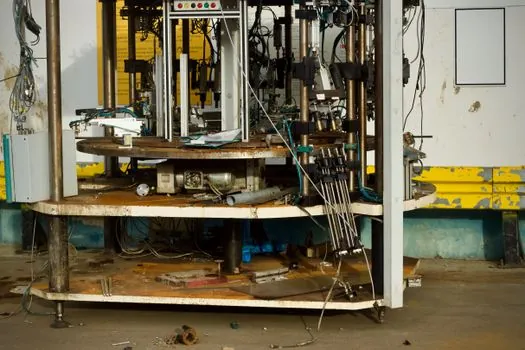
Hot-box core machines step up to 30–60 second cure cycles, platen sizes of 600–900 mm, and installed heating power of 18–22 kW, making them the practical ceiling for most decorative and high-bay luminaire bodies. Curing platen temperature holds in the 230–280°C window with resin addition typically 1.8–2.5% of sand weight [S4].
For lighting foundries running mixed product portfolios, a hot-box core machine is often chosen over shell because it accepts deeper draw depths (up to 250 mm) needed for tall post-top lantern cores and integrated heat-sink cavities.
Cold-box core machine: when paint-line compatibility and deep draws matter
Cold-box core machines using phenolic-urethane binders with amine gas curing suit lighting foundries that must avoid heat distortion on pre-coated inserts and that run deep, complex cores for IP65-rated luminaire housings. Platen sizes in this class run 500–900 mm and shot weights 5–40 kg, with cycle times of 40–90 seconds at ambient temperature [S4].
The trade-off is amine scrubber infrastructure: lighting foundries specifying cold-box should budget for a 50–200 m³/h scrubber exhaust, plus a sand silo with moisture control below 0.3%. Foundries running galvanised or stainless steel insert hardware benefit most, because cold-box avoids the 250°C+ platen temperatures that can flash-coat mild-steel inserts [S4]. A cold-box core machine line typically draws 15–22 kW of total auxiliary power for sand handling, gas generation, and amine dosing, with the core box itself not electrically heated.
Selection criteria: weight, finish, batch, and insert compatibility
Four criteria sort the platform choice for any lighting-fixture core application. First, shot weight: under 5 kg picks shell; 5–15 kg picks hot-box; above 15 kg with deep draws picks cold-box. Second, surface finish: optical-grade reflector cavities need the lower veining rates of shell or hot-box. Third, batch size: cold-box has higher tooling change cost, so it loses to shell when changeovers exceed 2 per shift. Fourth, insert compatibility: cold-box is the only safe route when zinc or aluminium pre-inserts with paint or plating layers are present. [S4]
For comparison, lighting-foundry buyers can use this four-criteria matrix:
Shell core shooter: shot weight 1–5 kg, platen 400–650 mm, power 7.5–15 kW, cycle 25–40 s, finish grade A-B, insert compatibility limited. Hot-box: 5–25 kg, platen 600–900 mm, power 18–22 kW, cycle 30–60 s, finish grade A-B, insert compatibility low. Cold-box: 5–40 kg, platen 500–900 mm, power 15–22 kW aux, cycle 40–90 s, finish grade B-C, insert compatibility high.
Standards and reference anchors for 2026 procurement
Buyers should anchor specifications to ISO 9001 quality management for the machine builder, ISO 12100 for safety, and IEC 60204-1 for electrical compliance on European lighting OEM supply chains. Foundry-side core parameters can be cross-checked against casting tolerance standards ISO 8062 CT8-CT10 for typical sand-cast luminaire housings [S4].
For automotive-tier lighting suppliers running the same sand-cores as their headlamp partners, the spec logic overlaps with the 2026 spec map for automotive hollow castings published earlier this year, particularly on resin dosing and platen temperature windows. Foundries serving both lighting and agricultural machinery contracts can also cross-reference the agriculture-machinery core machine spec map, since post-top lanterns and tractor headlamp shells share similar 3–12 kg shot weight bands.
Limits and failure modes specific to lighting-fixture cores
Three failure modes hit lighting cores harder than generic castings. Veining on reflector surfaces is the most common defect and is driven by thermal shock, which is why shell and hot-box processes with controlled heating outperform cold-box on optical surfaces. Gas porosity at the casting-cored interface hits thin-wall LED heat sinks first, so venting layout and sand permeability (typically 80–140 AFS) must be specified at the tooling stage. Finally, hot-tear cracking in cast-iron decorative post tops correlates with overly stiff core boxes, meaning box deflection under shoot pressure should not exceed 0.15 mm on platen faces above 700 mm [S4].
Lighting-fixture foundries should also watch amine residue on cold-box cores, which can attack powder-coat adhesion if core washing is skipped. Foundries running mixed shell and cold-box production on the same sand loop should plan a thermal sand reclamation unit rated to 0.5–1.2 t/h to keep bentonite levels stable.
Trackable next signals for lighting-foundry buyers in 2026: the EN 60598-2-22 emergency-lighting luminaire standard's revision status (last anchored in the S1 source material as a compliance reference for related exit-sign and safety-light products), and the gradual shift in commercial-luminaire supply chains from 0.8–3.5 kg die-cast aluminium to 1.5–5 kg cast aluminium, which is pushing more lighting foundries to step up from shell to hot-box platforms and is worth a 2027 spec recheck against updated OEM process data.