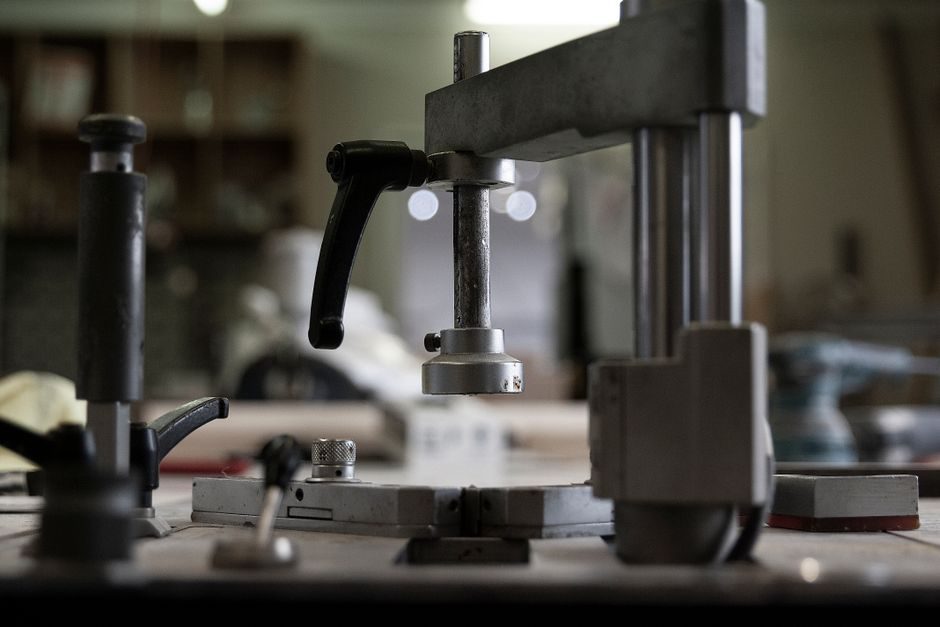
Qingdao Huaxin Shengye Casting Machinery, established 2017-09-04 in Haixi Road, Huangdao District, Qingdao, lists automatic casting lines, foundry sand moulding machines and sand core making machines as its three main product categories, operating with 51 employees and a Manufacturer/Factory & Trading Company model [S2].
The broader Made-in-China.com manufacturer directory shows core making machine vendors concentrated in Shandong, Jiangsu, Henan and Anhui provinces, with a single 1-unit MOQ sand core making machine typically landing in the US$3,000–120,000 per set band depending on shot weight, cure method and level of automation [S1][S2].
Four process platforms and what each one is built for
Four process families cover virtually every spec sheet a foundry engineer will be asked to evaluate in 2026: the core machine category, the shell core machine platform, the cold-box core machine platform, and the hot-box core machine platform. [S1]
Sand core making machines (green sand / resin sand) dominate the 1–50 kg shot weight window and are the default line for engine block, pipe fitting and valve body foundries; Qingdao Huaxin's sand core making line falls into this band [S2]. Shell core machines shoot resin-coated sand onto a heated (180–250 °C) metal pattern to produce thin-walled, high-dimension cores, typically 1–10 kg shot weight. Cold-box core machines use phenolic-urethane binder gassed with amine (TEA/DMEA) to cure at room temperature, and are specified where draft-free complex geometry and low residual stress matter — see the cold-box core machine page. Hot-box core machines use a heated corebox and a thermal-curing resin, typical for small to medium cores under 5 kg and high cycle rates above 60 boxes/h, covered on the hot-box core machine page.
Selection criteria: binder, shot, cycle, cure and pattern
The first sentence of any supplier comparison should fix five variables: binder chemistry, shot weight per cycle, cycle time, curing energy, and pattern material. [S2]
Cold-box process cures cores with amine gas at 20–40 °C box temperature with typical cycle times of 25–60 s and 4–6 kW amine gas generator loads, making it the workhorse for short-run complex cores [S2]. Shell core machines heat the pattern to 200–250 °C and shoot 0.5–10 kg of resin-coated sand per cycle, with cure times of 30–120 s; the shell core machine category is dominant where core collapsibility and surface finish matter (e.g. exhaust manifolds, turbo housings). Hot-box runs at 180–250 °C with 3–5 kW box heating and cycle times of 20–40 s — see hot-box core machine. For 1-unit MOQ transactions through the Made-in-China.com portal, vendors such as Qingdao Huaxin typically quote a sand core making machine in the US$3,000–120,000 per set range, with the spread driven by shot weight, level of automation, and whether a sand mixer and amine generator are bundled [S1][S2].
Comparing the four platforms against 4 decision criteria
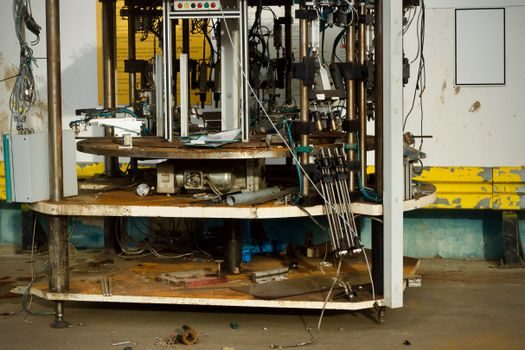
Selecting between platforms reduces to four engineering decisions: dimensional tolerance, binder cost per kg of core, cycle time, and pattern/maintenance cost. [S3]
Cold-box and shell-core platforms typically hold ±0.3 mm dimensional tolerance on cores up to 10 kg, vs ±0.5 mm for hot-box and ±0.8–1.0 mm for green-sand core machines [S2]. Cold-box binder cost is widely reported in the 4–6 RMB/kg range in the Chinese domestic market (binder-only, gas-driven); shell-core resin-coated sand is higher per kg but eliminates the gas generator capital cost. Cycle time is shortest on hot-box and cold-box, both reaching 20–60 s on a 5 kg core, vs 45–90 s for shell and 60–180 s for green-sand [S2]. Pattern cost is lowest for green-sand (wooden or epoxy pattern acceptable) and highest for shell and hot-box (aluminium or cast iron with integral heating channels). For buyers comparing platforms on a 2026 spec sheet, the core making machine selection guide lays out the same decision tree against cycle and shot weight.
Who each platform is for, and who it is not for
Foundry buyers split cleanly by production volume, alloy and core geometry. [S4]
Cold-box and shell-core are the default for short-run, complex cores in iron, steel and non-ferrous foundries producing under 200 boxes per shift; they are NOT the right pick for very high-volume automotive foundries that already run 1,000+ boxes per shift, where hot-box or warm-box dominate. Green-sand core making machines, including the Qingdao Huaxin Shengye sand core making line, are the default for pipe fitting, counterweight, and simple block geometries where surface finish is not critical [S2]. Shell-core is the right pick when collapsibility after pouring matters (stainless steel exhaust manifolds, turbo housings), but it is NOT economical for cores over 10 kg. Hot-box and warm-box fit small- to medium-size cores in iron foundries (intake manifolds, gearbox housings) but struggle with very thin walls under 4 mm.
Vendor geography and sourcing levers on Made-in-China.com
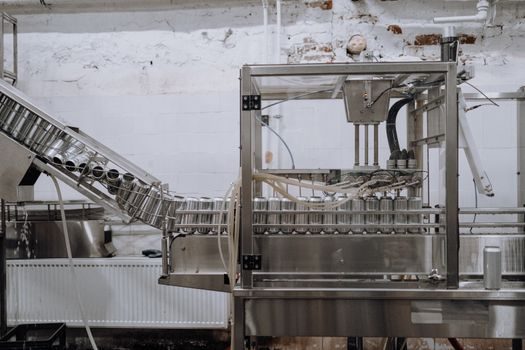
The 2026 vendor map is concentrated in four Chinese provinces and the buyer's price levers are well-known. [S5]
Shandong (Qingdao, Jinan, Weifang) supplies most of the green-sand and resin-sand core making machine lines, with Qingdao Huaxin Shengye as a direct-OEM example for sand core making machines at the 1-unit MOQ level [S2]. Jiangsu (Suzhou, Wuxi, Changzhou) and Anhui (Bengbu) host cold-box and shell-core vendors; Henan (Anyang, Xinxiang) supplies hot-box and warm-box platforms.
Standards, certifications and quality gates to check before PO
Foundry machinery has fewer harmonised standards than instrumentation, but the same engineering-discipline rules apply. [S6]
Most Chinese core making machine vendors reference GB/T standards on safety of machinery (e.g. GB/T 8196 for guards, GB 5226.1 for electrical equipment of industrial machines) and ISO 9001 for the manufacturer's quality system; the supplier's CE declaration should be requested for any machine destined for an EU foundry [S1][S2]. For cold-box amine gas systems, the gas generator and amine scrubber must be specified per the supplier's MSDS and the foundry's local air permit; for shell-core and hot-box machines, electrical cabinet IP rating (IP54 minimum) and pattern-heating circuit thermal protection are the two items most often missed on a first PO. For buyers in Europe, ATEX zone classification around the corebox is sometimes specified when the binder contains flammable solvents; confirm with the vendor whether the electrical enclosure is ATEX-rated or if a barrier gland upgrade is needed [S2].
Trackable signals to watch for the next sourcing cycle
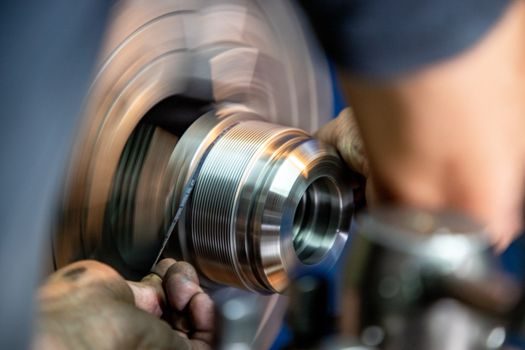
Two signals are worth watching on the 2026-07-09 sourcing window: first, monitor whether Shandong and Jiangsu vendors shift from 1-unit MOQ to 3-unit MOQ on the shell core shooter and cold-box platforms — that would indicate an underlying demand pickup from domestic auto and white-goods foundries [S1][S2]. Second, watch for a new wave of coding/marking options (QR code on each core for traceability through pouring, shakeout and post-casting) on the coding machine accessory line — several Chinese vendors are now offering integrated inkjet or laser coding on the core takeaway conveyor, which simplifies the post-casting quality loop but adds 5–10 % to the line price.