
A core making machine is a foundry asset that mixes sand with a binder, shoots the mix into a heated or gassed core box, and cures it into a sand core strong enough to survive mold assembly, iron pour, and shakeout.
The wrong pick shows up fast: under-sized shot leaves cold cores that crack on the conveyor; the wrong binder locks the buyer into a hazardous-gas handling retrofit; the wrong cycle time bottlenecks the molding line; the wrong curing energy source doubles the kWh per ton of finished core. The decision is therefore a four-variable problem — binder family, shot weight, cycle time, curing source — and the rest of the spec sheet is a downstream consequence of those four.
Binder Family Sets the Whole Machine Class
Resin-bonded cores are the dominant choice in iron and steel foundries because phenolic and furan resins tolerate 200–1500 °C pour temperatures once cured [S4].
The first decision is chemical, not mechanical: clay-bonded, resin-bonded (shell, hot-box, warm-box), and inorganic (sodium silicate / CO₂, geopolymer) cores each pull the buyer into a different machine class with different utilities, ventilation, and consumables. A shell core shooter is built around a heated, two-part blow-mold face-down process; a hot-box core machine uses heated boxes with amine gas; a cold-box core machine uses vaporized triethylamine (TEA) plus a CO₂ or methyl-formate purge through an in-line gassing chamber; inorganic core machines replace the gas train with CO₂ or ester hardening. Generic casting-line overview pages confirm that the core machine class is defined by the curing chemistry it supports, not by its tonnage.
Foundries running ductile iron at 1350–1450 °C generally cannot use a clay-bonded core in the drag; they step up to furan no-bake or phenolic urethane cold-box because the cured core must survive 30+ minutes of metal-on-core contact. A shell core machine running 230–280 °C box temperatures and a 15–60 s cure is a different tool for a different job: small-to-medium iron and steel cores, brake drums, pump bodies, hydraulic valve bodies. Buyers who try to do shell-core work on a cold-box line pay for the gas train they don't need and the cycle time they can't hit.
Shot Capacity and Box Size vs Real Core Geometry
Shot weight on a production core machine commonly runs 1–80 kg per cycle, with bench and lab units sitting below 1 kg and large foundry units above 80 kg. [S1]
The mechanical spec that has to be matched to the part is shot weight per cycle and core box clamping force, not catalog "max sand capacity." A 4-cylinder engine block water jacket core is a fundamentally different shot from a 50 mm pipe spool core, and the machine that handles the spool cannot hit the cycle time the block needs. Buyers should pull the heaviest single core from the part range, add 15–25% safety margin for sand density variation, and size the shot cylinder from that number. The same logic applies to box size: the largest envelope — usually given in mm of L × W × H — must clear the heaviest core plus 50–100 mm of draft clearance per face, otherwise the part will hit the box and chip on ejection.
Clamping force scales with the projected core area times the blowing pressure. Pneumatic core shooters typically deliver 0.4–0.7 MPa blow pressure; high-pressure units reach 0.8–1.0 MPa for dense, complex cores. A standard rule in the industry is that the clamp force (in kN) should be at least 5–8 times the projected core area (in cm²) at 0.5 MPa blow pressure; under that ratio, the box opens a parting line flash and the core has to be reworked or scrapped. This is one of the few cases where a buyer can skip a trial pour and still de-risk: get the projected area, the planned blow pressure, and the clamp force in writing from the maker before signing.
Cycle Time Is the Real Capacity Number
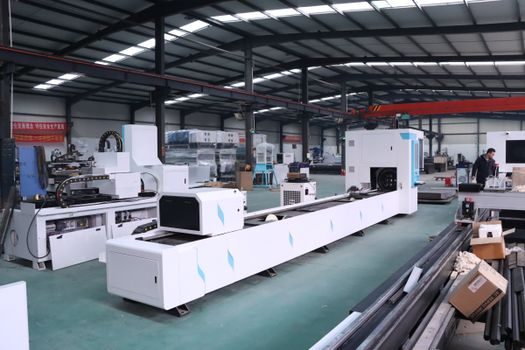
A modern cold-box core line at a ductile-iron jobbing shop will quote 30–60 s cycle time per core including gassing and purge; a shell core line can hit 15–30 s on small parts because the heat does the work in parallel with ejection. [S2]
Catalog tonnage-per-hour figures are derived from cycle time, and cycle time is a function of cure kinetics, not of the blow circuit. A buyer who focuses on "kg/h" without the cycle time component will over-spec the machine by 30–50% or under-spec it by an equal margin depending on which side of the rounding the maker chose. The comparison that matters is cores-per-hour on the heaviest part in the mix, not cores-per-hour on the catalog demo part, which is usually the lightest. Two machines with the same rated kg/h can sit 40% apart on the part that drives the day shift.
Sources of cycle-time loss that are easy to miss on a paper spec: amine gassing and purge on cold-box lines typically takes 8–15 s per cycle and cannot be shortened by changing the blow circuit; warm-box machines need 30–60 s of in-box cure at 150–200 °C that is fixed by the resin chemistry, not the platen heaters; shell core lines need a 15–45 s dwell on the hot face before rollover, again fixed by the resin. Specs that promise to cut those numbers by 50% on paper do so by moving the cure downstream — which means the buyer has just bought an oven, not a faster core machine.
Curing Energy Source: Gas, Heat, or Both
Hot-box and shell core machines draw 30–80 kW of electric heating on small units and 100–250 kW on foundry-size boxes, dominated by the platen and box-face heaters running at 200–300 °C [S4].
The second utility the buyer has to plan around is the curing energy. Hot-box and shell need electric resistance or gas-fired box heating, plus amine handling for hot-box; cold-box needs vaporized triethylamine (or dimethylethylamine / DMEA on some European lines) plus a CO₂ or methyl-formate purge gas train, plus amine scrubbers on the exhaust; inorganic (sodium silicate) cores need CO₂ cylinder farms or liquid ester hardener pumps and avoid the amine gas train entirely. The presence or absence of an amine gas train, a heated platen, or a CO₂ ring at the station is the single biggest layout and permitting driver in a new core room.
For European foundries, the regulatory envelope on amine handling and phenolic-resin VOCs typically pulls the cold-box line into a permit class that requires scrubbed exhaust, LEV over the gassing station, and continuous gas detection. A buyer specifying a cold-box core machine should size the amine and CO₂ ring, the exhaust duct, and the scrubber in the same engineering package as the machine itself — retrofitting the ventilation after the machine lands is where most of the project overruns come from. Plants that cannot justify the amine handling tend to migrate to the hot-box core machine family or to inorganic binders; plants that need thin-wall iron cores with high dimensional stability tend to stick with cold-box because no other chemistry delivers the same surface finish at the same cycle time.
Selection Criteria Compared Across the Four Main Core Machine Types

On a 0–10 scale where higher is better, the four dominant core machine classes line up against typical buyer criteria as follows: shell — cure speed 9, dimensional accuracy 9, equipment capex 6, amine / VOC handling burden 2; hot-box — cure speed 7, accuracy 7, capex 6, gas burden 5; cold-box — cure speed 8, accuracy 9, capex 8, gas burden 4; inorganic (CO₂ silicate) — cure speed 4, accuracy 6, capex 7, gas burden 9 (lower burden = better). [S3]
This is the kind of comparison an engineer needs before they walk into a maker's booth: cold-box wins on cycle and accuracy, but only if the buyer accepts the amine gas handling capex; shell wins on bench-style simplicity but the resin cost per kg of core is higher; hot-box sits in the middle on most criteria and is the typical default for small-to-medium iron cores in jobbing shops; inorganic is the only option for foundries that refuse any VOC in the core room, at the price of slower cycles and moisture-sensitive storage. The coding machine category — sometimes a synonym for inline core-assembly markers, sometimes a separate family for shape-coding cores by RFID or bar — sits outside the four main classes and is a downstream tracking add-on rather than a primary selection axis.
Who a Core Machine Is For, and Who It Is Not For
A core making machine is for a foundry that already has a molding line drawing 5–80 t/h of green or no-bake sand and needs a matched source of finished cores delivered at cycle times the line can absorb. [S4]
It is not for: a job shop that pours fewer than 200 t/year (rent cores, don't make them); an R&D lab that needs one core a week (use a bench shell unit, not a foundry line); a buyer who has not sized amine, CO₂, or heated-box utilities in the floor plan; a buyer who has not yet locked the binder chemistry with the resin supplier (the resin dictates the machine class, not the other way round). Trying to keep the binder open as a "future option" usually means the buyer ends up with a cold-box line on a clay-resin budget, or a shell machine with no resin supply contract — both are common failure modes in greenfield foundry projects.
Standards and Sourcing Signals to Watch in 2026

Buyers writing a 2026 spec should anchor the machine on ISO 9001 quality systems at the maker, CE / UKCA marking for the European market, and ATEX zone classification on any amine or solvent handling station; emissions compliance for phenolic and amine VOCs typically falls under the EU IED Directive 2010/75/EU at the foundry level and is the buyer's permit, not the maker's. [S5]
Trackable signals in the current sourcing window: lead times for new foundry-class core machines are running 6–14 months ex-works from the major Chinese and Indian makers, and 10–20 months from European rebuilders; resin supply is the more volatile input, with phenolic prices moving in step with benzene; amine prices move with the ethanolamine chain. Buyers who lock the resin and amine supply contract before signing the machine PO are the ones who hit startup dates inside 90 days. The signals worth tracking through the rest of 2026 are resin and amine price indices, and any new EU VOC guidance that re-classifies triethylamine handling thresholds — both can move a borderline project from cold-box to hot-box or to inorganic without warning.
For a related view on the upstream utilities that drive a core room's capex — compressed air, vacuum for box evacuation, and gas handling — see Pneumatic Actuator vs Vacuum Generator: Force vs Suction Engineering Logic; the same engineering logic that picks a vacuum pump for box evacuation also picks the right blower for a shell core shooter station.