
Global sourcing for degassing and refining units splits into three supply clusters: Chinese process-vessel fabricators listed on Made-in-China and chemicalbook.com, Indian specialty-chemical manufacturing groups such as Aadhunik Industries, and EU metallurgy engineering shops publishing in Springer-indexed journals [S2][S4][S5].
Real buying decisions for a steel or aluminum melt shop are driven by four numbers: ladle or chamber capacity in tons, target hydrogen pickup below 1.5 ppm in aluminum, sulfur drop to under 0.002% in pipe steel, and refining cycle time in minutes — all of which are process-locked before any RFQ goes out [S4].
What the equipment actually does in 2026 specifications
A chamber degasser is sized to the teeming ladle: the 180-ton ladle case published in the Russian Metallurgy (Metally) study processed deoxidized steel under a refining slag, with desulfurization tracked through equilibrium partition ratios of sulfur between metal and slag phases [S4]. The published data confirms that longer holding time, lower melt temperature, and modified slag chemistry each shift the partition ratio — meaning buyers must specify an endpoint (target S or H value), not just a cycle time [S4].
For aluminum foundries, the Foundry Degassing Unit (FDU) work at MOTOR JIKOV Slévárna a.s. showed the moment of greatest hydrogen decrease can be measured and used to short-cycle the treatment, lowering gas consumption per heat [S4]. Refining efficiency in those trials was assessed by tracking hydrogen content across the cycle, which is the standard method for sizing rotor speed and argon flow on industrial FDUs [S4].
Supplier clusters: who builds what, where
China-based suppliers of atmospheric and vacuum distillation units, low-temperature cooling cycle units, and degassing agents all surface on the chemicalbook.com supplier index — these are typically engineering companies bundling a degassing column or skid with upstream and downstream vessels [S1][S2][S6]. Made-in-China lists separate manufacturer categories for milling units, rice processing lines, and process skids under the same Trading Company + OEM/ODM banner, which is the typical go-to-market for smaller Chinese fabricators chasing export RFQs [S5].
India-based suppliers such as Aadhunik Industries operate as a manufacturing group with toll manufacturers and representatives in the UAE, Europe, Canada, and the USA, supplying oil-well drilling and fracking chemicals to customers in over 15 countries [S2]. REACH registration is listed among the credentials, which matters for any EU-bound shipment of chemical auxiliaries tied to the refining process [S2].
Global B2B marketplaces such as Bestsuppliers.com aggregate drilling tools, fasteners, hand tools, and process equipment categories side by side, which is the typical entry point for first-time industrial buyers searching for a hydraulic power unit supplier or a sand reclamation unit supplier in the same procurement cycle [S3].
Selection criteria that actually move the spec sheet
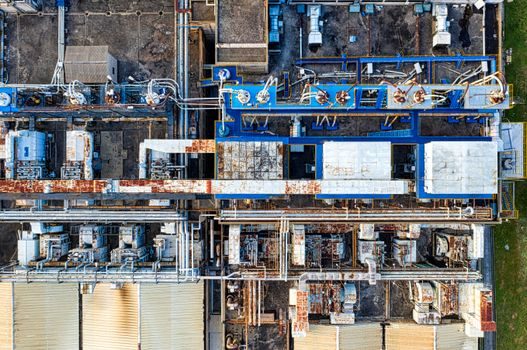
Four decision criteria dominate a degassing unit RFQ in 2026: melt mass handled per heat (tons), hydrogen or sulfur endpoint (ppm or %), refractory lining grade, and refining cycle time (minutes) [S4]. Buyers should treat any quote without a published ladle capacity and rotor-or-injector count as non-comparable — the unit cost per ton of melt processed is the only normalized figure.
A side-by-side comparison of the three main equipment types against buyer criteria looks like this: chamber degasser (RH/RH-OB type) handles 30-300 t heats with deep steel desulfurization capability under slag [S4]; in-line foundry degassing unit (FDU) handles 0.5-5 t aluminum batches with argon rotor and hydrogen endpoint tracking [S4]; and vacuum distillation / refining skid handles smaller specialty chemical throughput with vacuum and temperature control as the lead spec [S1]. The wrong pick is the one whose lead spec does not match the dominant metallurgical constraint of the buyer's melt shop.
Standards and safety envelope
Refining vessels operating under vacuum and with elevated melt temperatures fall under pressure-equipment design codes and, where installed in hazardous areas, ATEX 2014/34/EU and IEC 60079-x series for zone classification of associated instrumentation. Buyers specifying new builds in European chemical plants should require ATEX category 2 plus IECEx dual certification on vacuum pumps, instrumentation, and flow meters tied to the refining loop. Pressure transmitters on the chamber should carry the same dual certification when used in zone 1 boundaries. [S1]
For metallurgical steel grades, NACE MR0175 governs sour-service material limits, which interacts with the sulfur endpoint the buyer is asking the degasser to reach [S4]. When the RFQ quotes an ultralow-sulfur target, refractory and gas-purging component materials must be qualified against the same sour-service regime, not just against generic ASTM equivalents.
Lead times, MOQ patterns and sourcing levers
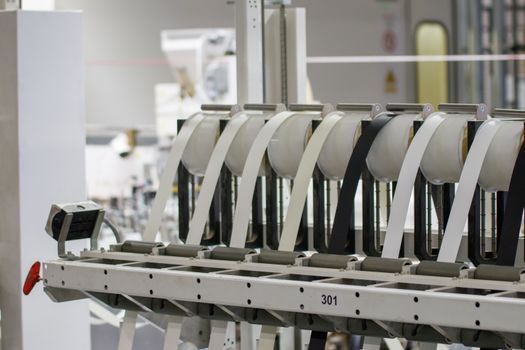
Chinese process-vessel fabricators listed on Made-in-China commonly quote 1-piece MOQ for capital equipment, with delivery bands of 15-90 days for standard skids and 90-180 days for engineered-to-order chamber degassers [S5]. Indian toll-manufactured chemical auxiliaries such as degassing agents and fracking chemicals typically run on container-load MOQs aligned to REACH and IMDG shipping lots, with Aadhunik's published model covering USA, Canada, UAE, and EU destinations [S2].
Sourcing levers that compress lead time and cost: (1) bundle the degassing unit RFQ with the pressure transmitter and flow-meter RFQ so the same engineering house delivers a skid; (2) request ladle capacity and rotor count up front to normalize Chinese, Indian, and EU quotes onto the same per-ton basis; (3) for aluminum foundries, ask the vendor for measured hydrogen endpoint data from a running FDU rather than a calculated theoretical value [S4].
Limitations and failure modes worth flagging
Chamber degassers lose efficiency as melt temperature drops below the slag-melting window — the desulfurization partition ratio degrades sharply when the slag starts to solidify, which the 180-ton study documents as a hard process limit [S4]. Foundry degassing units are rotor-life bound: argon-bearing rotor shafts erode, and the moment of greatest hydrogen decrease shifts as the rotor wears, which means cycle time is not a fixed number across the rotor's service life [S4].
For vacuum refining skids supplied by Chinese trading-company + OEM/ODM combinations, the documented limitation is documentation depth: ODM/OEM branding without published ASME or PED weld procedure qualification records will block EU and US plant acceptance, regardless of headline price [S5].
Cross-link: how this connects to holding furnace and refractory choices
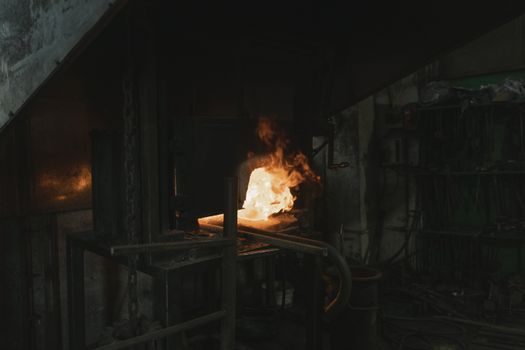
The degassing unit sits downstream of a holding furnace, and the refractory grade, capacity, and heat source chosen upstream constrain the temperature window the degasser can work in — buyers running a side-by-side RFQ should treat the two as a coupled system, not as separate purchases (see holding furnace suppliers 2026: maker map, price bands and sourcing levers and crucible furnace sizing and selection: capacity, heat source, and refractory logic for the upstream spec bands). [S2]
Trackable next signals: 2026 H2 should bring a Springer or Russian Metallurgy follow-up on the 180-ton desulfurization case study extending partition-ratio data to lower-sulfur endpoints, and the MOTOR JIKOV FDU group has signaled further work on cycle-shortening protocols for EN-AC-42000 alloy series [S4].