A counterbalance forklift and a reach truck solve the same load-moment problem with two different physical arrangements, and the difference is not cosmetic: counterbalance machines carry the load outside the wheelbase and offset it with a rear cast-iron mass, while reach trucks carry the load inside an outrigger leg footprint and offset it with retracted forks plus a wider stance [S3][S7].
That single design choice cascades into aisle width (2.5-3 m for reach vs 3.5-4.5 m for counterbalance), lift height, drive power, and operator-class certification, which is why one machine dominates outdoor yards and the other dominates high-bay racking [S1][S3].
How the Counterbalance Principle Works: Rear Mass and Load Overhang
A counterbalance truck positions a heavy iron counterweight at the rear of the chassis so the load hanging on the front forks cannot tip the truck about the drive axle, which is the standard load-moment stability model used for sit-down Class I trucks [S3][S4].
Because the load sits entirely forward of the front wheels, the truck has to be physically longer and heavier than the load it carries, the mast geometry is a straightforward vertical lift (no pantograph), and the chassis can mount cushion or pneumatic tires for outdoor yards, dock plates, and uneven surfaces [S3][S4]. Counterbalance machines also accept a wider attachment catalog than reach trucks: side shifters, rotators, clamps, and push-pulls are routine, while reach-truck carriages usually carry only a side shifter [S4].
How the Reach Principle Works: Outriggers, Pantograph, and Retracted Centre of Gravity
A reach truck drops the rear mass and instead places stabilizing outrigger legs ahead of the drive wheels, so the load is picked by extending the forks on a pantograph, then pulled back between the outriggers before the truck travels; the load weight stays centred over the support polygon throughout the lift cycle [S3][S7].
This lets the chassis be significantly shorter than a counterbalance truck of equal capacity, which is the geometric reason reach trucks can run in aisles 40% narrower than standard sit-down counterbalance machines and reach lift heights where the operator is putting pallets 10 m off the floor [S3]. The reach-truck mast is built much like a counterbalance mast, with the addition of the pantograph mechanism that slides the carriage horizontally, and the variants break down into four families: single-reach (one pallet deep), double-reach (two pallets deep for higher storage density), moving-mast (mast traverses on rails above the base legs), and multi-directional (pivoting load wheels for long loads in narrow bays) [S2][S4].
Comparison: Counterbalance vs Reach Truck Across the Decision Criteria
Across the criteria that drive a fleet-buy decision, the two machine classes separate cleanly. Aisle width is the headline: reach 2.5-3 m, counterbalance 3.5-4.5 m, with reach effectively reclaiming up to 40% of floor footprint versus a sit-down counterbalance [S1][S3]. Lift height favors reach (pallets routinely handled above 10 m vs typical counterbalance masts topping out at lower heights for equivalent stability). Power favors reach in the warehouse context: reach trucks are electric-only by design (typically 36 V / 48 V industrial battery packs) and exhaust-free, while counterbalance covers the full powertrain menu of electric 3-wheel, electric 4-wheel, LPG, gasoline, and diesel [S2][S4]. Travel speed, counter-intuitively, can be higher on the counterbalance: a 36 V 3,500 lb capacity Toyota 3-wheel electric forklift is rated 9.9 mph versus 7.5 mph on the equivalent 36 V 3,500 lb reach truck, because the reach truck carries a higher mast and a longer moment arm [S2]. Attachment flexibility clearly favors counterbalance; operator environment clearly favors the standing reach cab for repetitive put-away work, while the sit-down counterbalance cab is closer to a road vehicle and easier to train for mixed-use operators [S3][S4].
On operator certification, both truck families in North America fall under different OHS classes, with reach typically Class II and counterbalance sit-down typically Class I, and operators usually require separate evaluations on each [S3].
Failure Modes and Floor-Surface Constraints
The two design principles also produce two different failure envelopes. Counterbalance trucks carry a higher risk of forward tip-over when overloaded, because the entire load moment sits forward of the front axle and is countered only by the rear mass [S3]. Reach trucks carry a higher risk of mast-racking collisions and lateral instability, because the small outrigger wheels and low ground clearance cannot tolerate dock-leveler transitions, slope, or uneven yard surfaces; this is the practical reason reach trucks are restricted to smooth indoor concrete, while counterbalance machines with pneumatic tires and suspension cope with yard gravel and dock plates [S3][S7].
A related detail that catches first-time specifiers: a reach truck can carry floor-level loads between the outrigger legs with the forks retracted, but it is not designed for long-distance bulk transport, and the lack of suspension on the chassis means anything but flat concrete produces dangerous vibration through the mast [S3].
Who Each Truck Is For, and Who It Is Not For
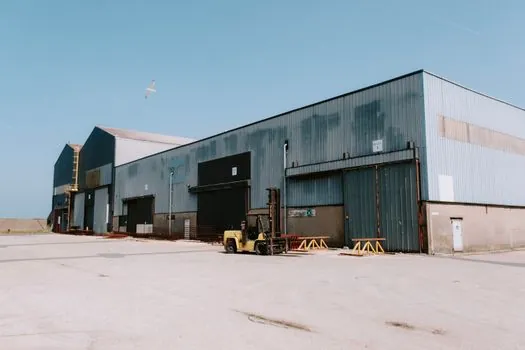
Counterbalance is the correct pick for outdoor yards, loading docks, mixed surfaces, heavy attachments (rotators, paper clamps, bale clamps), LPG/diesel duty cycles, and any application where the operator needs a sit-down car-like cab [S3][S4]. Reach is the correct pick for high-bay racking above 6 m, single-deep or double-deep pallet storage, narrow-aisle warehouses under 3 m, indoor-only operations with smooth concrete, and electric-only fleets targeting zero exhaust in food, pharma, or cold storage [S1][S5]. Reach is the wrong pick for dock plates, sloped yards, long outdoor travel between buildings, or any job that needs a clamp or rotator beyond a side shifter [S3][S4][S7].
If you need both worlds in one site, the typical fleet pattern is counterbalance for the dock and yard, reach for the rack aisle, with no overlap in operator certification [S3].
Selection Checklist, Standards, and Sourcing
Specifying either truck family against a real warehouse requires three numbers before talking to a dealer: minimum aisle width (clear of rack uprights and column protectors), maximum lift height to the top beam, and peak pallet weight at that height (which sets capacity, not the nominal truck rating). The capacity chart de-rates with lift height and load centre, so a 2,500 kg-rated reach truck at 600 mm load centre will not lift 2,500 kg at 9 m, and any quote that does not carry the height-specific load chart should be rejected [S1][S3].
On the standards side, both classes are powered industrial trucks under the relevant regional OHS frameworks (in North America, the OHS Class I/II distinction mentioned above; in the EU, the equivalent EN ISO 3691 series applies to electric industrial trucks), and operator training is non-substitutable between classes [S2][S3]. For deeper mast and load-balance logic, see this walk-through of forklift mast, carriage, forks, and counterweight: component layout and load-balance logic; for an alternative truck class that trades reach height for rough-terrain mobility, the rough-terrain forklift family uses a different stability solution entirely.
Trackable signals to watch over the next quarter: lithium-ion drop-in battery packs reaching the reach-truck voltage class (48 V and 80 V) at prices that close the gap with lead-acid, and warehouse-build press releases quoting aisle widths below 2.6 m for new greenfield distribution centres, both of which would tilt incremental reach-truck share further upward. For broader fleet context outside the warehouse, the dump truck and aerial work truck classes solve load-stability and lift problems with yet another set of design principles.