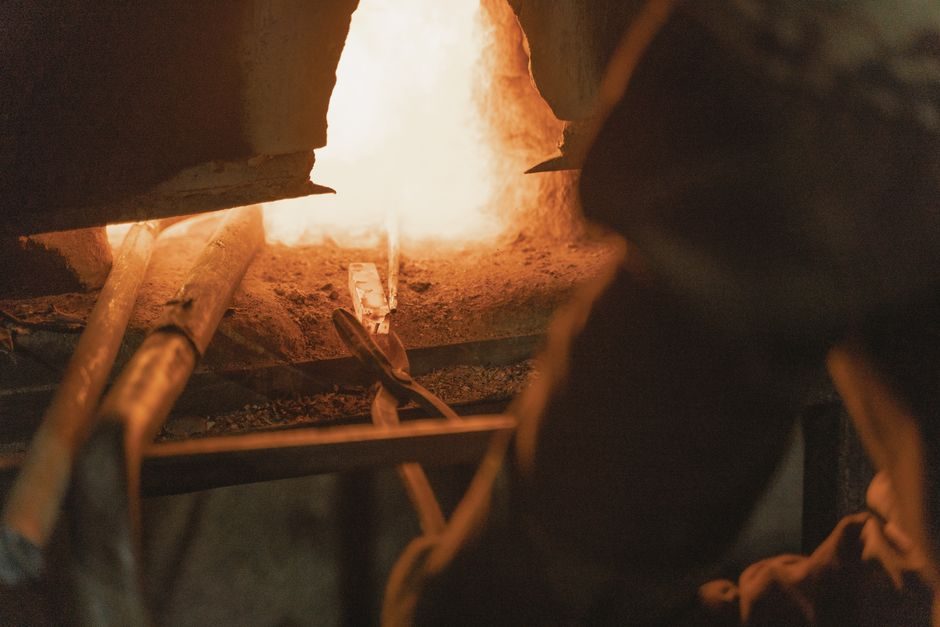
Buyers sourcing a crucible furnace in mid-2026 face a market where 3 kg/1500 W electric gold-melting units sit at 142-211 USD on retail channels, isostatic silicon-carbide graphite crucibles list 10-500 USD per piece at wholesale MOQ 1, and Shandong-based OEM capacity dominates global supply [S2][S5].
Total cost of ownership is the second number that matters: published 2026 furnace-buying guidance flags installation labor, refractory life, and electrical draw as the line items that swing a cheap headline price into a five-year cost penalty, and the same logic applies one-for-one to industrial crucible furnaces used in foundries, labs, and jewelry shops [S4]. A complete spec must include melt weight, peak temperature, crucible material, heating medium, atmosphere control and certification path before a buyer talks price.
Three furnace families and where each one fits
Resistance-fired electric crucible furnaces are the entry-tier workhorse for gold, silver, copper and small-batch non-ferrous work; retail 2-3 kg models at 110-220 V draw 1400-1500 W and reach 1149-1150 °C (2102 °F), matching the melt point of aluminum alloys, sterling silver and 9-18 kt gold without process gas [S5].
Medium-frequency induction crucible furnaces dominate the 5-500 kg range in production foundries and couple to silicon-carbide or clay-graphite crucibles rated for 1600-1800 °C; the standard induction topology and its water-cooled coil arrangement are detailed in the crucible furnace reference. Larger iron and steel foundries route through cupola furnaces for continuous melt, then transfer to a holding furnace for pour-side temperature trimming.
Fuel-fired (oil, gas, charcoal, biomass) crucible furnaces remain the low-capex option in regions with cheap fuel and weak grid stability; documented case work has demonstrated rice-husk briquette firing for sub-700 °C aluminum and lead melts in Nigeria, and that low-temperature envelope defines the unit's economic niche [S6].
Crucible material gates the temperature and the alloy
Clay-graphite (ISO-pressed and isostatic) is the default crucible for non-ferrous melts up to 1600 °C, with Shandong suppliers listing 1-piece MOQ at 10-500 USD on the 2026 wholesale index for the 2-50 L size band used in induction furnaces [S2].
Silicon-carbide graphite crucibles extend continuous service to 1800-2000 °C and survive faster thermal cycling, which is why they appear in the OEM's "aluminum melting pot for induction furnace" range, but at a roughly 2-3× price premium per litre over clay-graphite [S2].
For melt points above 2000 °C — exotic alloys, precious-metal refining, certain laboratory ceramics — fused-quartz or zirconia crucibles are specified; the 2026 wholesale index does not list these in the same volume band, signalling custom quote and longer lead time. The induction heating envelope behind all of these is laid out in the induction furnace reference.
Selection criteria: the six gates that lock the model code
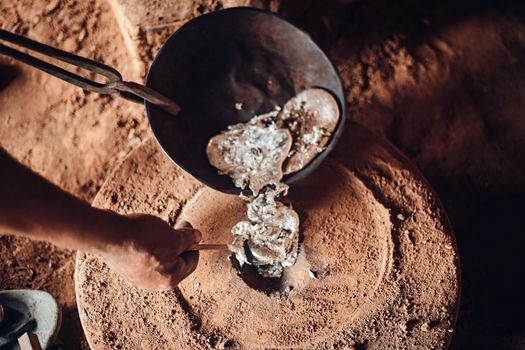
Gate 1 — Melt capacity vs. pour frequency. A 3 kg unit is right for batch jewellery work; a 50-100 kg induction unit is the workhorse for a small non-ferrous foundry, and anything above 250 kg moves into industrial melt-deck pricing [S5].
Gate 2 — Peak temperature. Aluminium melts near 660 °C, copper at 1085 °C, cast iron above 1150 °C, nickel super-alloys above 1400 °C; pair the crucible material first, then the furnace kW draw — an under-powered 1500 W unit cannot bring a 3 kg iron charge through latent heat on a 220 V domestic line [S5].
Gate 3 — Atmosphere. Oxidation-sensitive melts (magnesium, titanium, certain bronzes) require flux cover, vacuum chamber, or inert gas purge; the retail units priced 142-211 USD are open-air units without atmosphere control, and that capability is the single biggest price step after capacity [S5].
Gate 4 — Power and service. Single-phase 110-220 V suits sub-3 kW bench units; three-phase 380-480 V is mandatory above roughly 15 kW, and the larger induction machines need a dedicated water-cooling loop with a chiller rated for 10-30 °C delta-T.
Gate 5 — Certification. CE/UKCA is the European baseline, UL/cUL covers North America, CCC is required for China-domestic sale, and lab units may need to meet IEC 61010-1 electrical-safety clauses; 2026-05 customs data for the "laboratory-crucible-furnace" HS-code family returns no current anti-dumping or restriction notices, so the standard duty stack applies on import [S1].
Gate 6 — Spare-parts and refractory life. Crucible life is quoted at 100-300 heats for clay-graphite in non-ferrous service and drops sharply above 1700 °C; budget a 10-15 % annual refractory line item, or the headline price becomes misleading on a five-year view [S4].
Cost structure: headline, freight, install, life
Headline unit price in mid-2026 spans roughly 142 USD for a 3 kg/1500 W bench electric furnace to 4,000-50,000 USD for a 50-500 kg medium-frequency induction rig, with laboratory-grade muffle-style units sitting in the 1,500-8,000 USD band on retail channels [S5].
Installation covers three-phase power upgrade (1,000-3,000 USD where the feed is missing), water-chiller hookup (2,000-6,000 USD for a 5-15 kW closed loop), fume extraction (1,500-5,000 USD for a 2,000-5,000 m³/h canopy), and refractory dry-out — which is a 24-48 h controlled-heat procedure, not a free item, and a frequent source of early crucible failure when skipped [S4].
Comparison: electric vs. induction vs. fuel-fired on the four decision axes
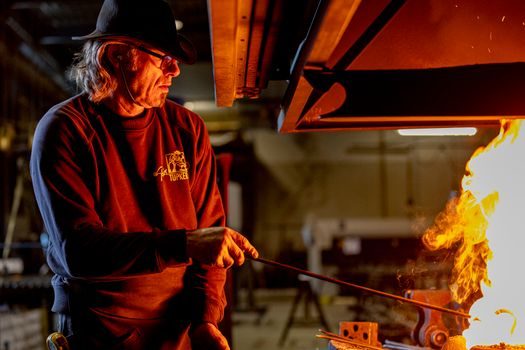
Axis 1 — Capex per kg of melt capacity. Electric resistance is cheapest below 10 kg, induction wins on capex-per-kg from 10-500 kg, and fuel-fired has the lowest entry cost where fuel is subsidised but the highest handling cost [S2][S5][S6].
Axis 2 — Energy efficiency. Modern medium-frequency induction reaches 70-85 % electrical-to-melt efficiency; resistance-fired crucibles sit at 40-60 % because radiant losses dominate, and fuel-fired units land in a wide 15-35 % range depending on combustion control and insulation [S4].
Axis 3 — Atmosphere and melt purity. Induction and vacuum-top electric units give the cleanest melt because the bath is electromagnetically stirred without combustion products; fuel-fired units introduce soot and sulphur, which rules them out for aerospace and electronics-grade copper or aluminium.
Axis 4 — Operator skill and permits. Electric units plug into standard 110/220 V or three-phase feeds and need only PPE; fuel-fired rigs need flue permits, fuel storage, and emission checks in most jurisdictions, which is a real hidden cost [S6].
Sourcing channels, MOQ and supplier diligence
The dominant 2026 wholesale channel for graphite and silicon-carbide crucibles is Shandong-based OEM on Made-in-China, with 1-piece MOQ on standard isostatic crucibles and tier-1 freight terms for full-container orders; verified Diamond-Member status and on-site video are the two most cited trust signals on listings dated May 2026 [S2].
Cross-reference sourcing cost models in the steel plate buying guide 2026 for the same MOQ, freight, and CCC/CE documentation pattern that Shandong OEM channels use — the workflows are nearly identical for refractory-lined equipment [S2].
Tariff and compliance side: the 2026-05 customs snapshot for "laboratory-crucible-furnace" returns no anti-dumping or restriction flags, which means standard MFN duty applies; the operator must still confirm CCC for China-domestic sale, CE for EU, and pre-shipment inspection (PSI) clauses with the freight forwarder because crucible and refractory goods are routinely flagged for dimensional and composition spot-checks [S1].
Limitations, failure modes and warranty traps
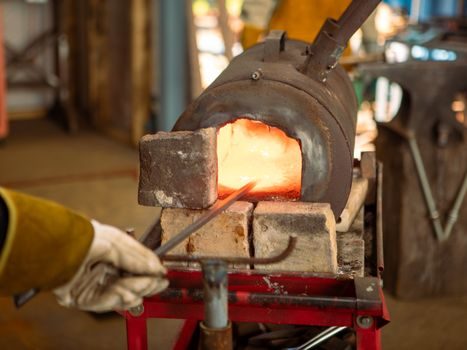
Crucible cracking on first heat is almost always a dry-out failure, not a material defect, and 2026 OEM warranty terms from Shandong suppliers typically exclude thermal-shock damage within the first 50 cycles [S2].
For induction units, coil water-quality is the second most common failure path — hard water above 200 ppm CaCO₃ scales the copper coil and trips the over-temperature protection; specifying a closed-loop chiller with a 6-12 month descaling cycle is cheaper than a coil replacement, which can run 30-45 % of the new-machine price.
Retail 142-211 USD bench units carry thin-user manuals and no third-party certification in most listings dated 2026-05; a buyer who needs IEC 61010-1 or CE marking for a commercial shop should request the Declaration of Conformity before paying, since retrofitting compliance after arrival is far more expensive than sourcing the certified SKU up front [S5].
Trackable next nodes: (1) confirm whether the European CE-marked induction SKUs from Shandong OEM publish EN 60519-1 thermal-safety declarations by Q3 2026; (2) watch for the 2026-09 energy-efficiency disclosure round on mid-frequency induction units rated above 100 kW, which is where EU ecodesign rules are tightening most aggressively. Similar selection logic — capacity, peak temperature, certification, and total-cost levers — applies to adjacent process equipment profiled in the holding furnace selection criteria 2026 reference.