
Steel plate procurement in mid-2026 still runs on three primary grade families — carbon, stainless (200/300/400 series) and special alloys such as 904L, 2205 and 2507 duplex — and the cheapest compliant offer usually comes from an ISO 9001:2015-certified distributor with direct mill ties [S1][S3].
Verified spot indicators on 2026-06-22 show Chinese suppliers quoting 904L / 2205 / 2507 stainless plate in a tight US$1,190–1,290 per ton band at a 3-ton minimum order quantity [S3], while carbon and structural grades are routinely tendered against ASTM A283 / A36 specifications from mills in Henan and adjacent inland provinces [S5].
Grade Family Selection: Carbon, Stainless, Special
Carbon steel plate — typified by ASTM A283 grades A/B/C/D — remains the workhorse for general fabrication, structural base plates and tank shells, and is typically tendered with fabrication services bundled in for OEM and job-shop buyers [S5][S6]. Buyers handling pressure-vessel or sour-service duty step up to alloy steel plate (ASME SA387, SA516) for creep and H₂S resistance.
Stainless plate is split into three series with very different price points: 200 series (austenitic, manganese-bearing, lowest cost), 300 series (304, 316L — the chemical/food/pharma default) and 400 series (ferritic, magnetic, used for appliance and architectural applications) [S1]. For chloride-bearing or marine service, 2205 duplex and 2507 super-duplex are the next step up; 904L is reserved for sulfuric / phosphoric acid service where standard 316L fails. Buyers should match the grade to a verifiable corrosion data sheet — not to a brochure — and the steel plate reference on grade families is a useful starting matrix for this comparison.
Special plate also includes abrasion-resistant (AR400/AR500) and high-strength low-alloy (HSLA) grades; the 2026-06-22 Made-in-China product index lists 904L/2205/2507 stainless plate in the same hot-product cluster as these wear grades, confirming that Chinese mills now run all four families on common hot-rolling capacity [S3].
Standards, Certifications and Tolerances to Pin in the RFQ
Any 2026 RFQ worth sending should pin four items: (1) the material standard (ASTM/ASME/EN/JIS grade), (2) the third-party test report type (EN 10204 3.1 mill certificate vs 3.2 witnessed), (3) dimensional tolerances (thickness, flatness, length/width camber per ASTM A6 or A480), and (4) the supplier's quality system certificate — ISO 9001:2015 is the baseline quoted by full-line stainless distributors [S1].
For sour-service (NACE MR0175) or marine (EN 10088 / ASTM A240) applications, the buyer should also require a heat-traceable MTC and, where surface finish matters (2B, BA, No.4, No.8 mirror), an actual Ra value rather than a generic "polished" callout [S1][S3]. Carbon plate destined for welded fabrication should specify CE (carbon equivalent) limits to avoid HAZ cracking on multi-pass welds, especially for thicknesses above 25 mm [S5].
Buyers running steel plate selection typically pre-screen on those four gates before sending the RFQ; the gates save roughly one round of clarification emails and prevent the common trap of receiving quotes on the wrong ASTM/EN grade.
Form Factor: Sheet, Coil, Plate and Cut-to-Size
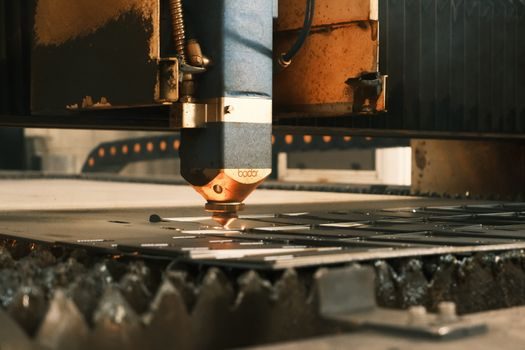
"Plate" technically starts at 3/16 in (4.76 mm) and is cut to discrete rectangular dimensions, while "sheet" is thinner and "coil" is the as-rolled form downstream of the hot strip mill [S1]. A 2026-06-24 source separates the categories as: stainless coils and sheets in 200/300/400 series stocked for quick-ship, plate cut to thickness for structural and pressure-vessel duty, and cut-to-shape plate for OEM fabricators [S1].
For buyers with non-rectangular parts — skid plates, stair treads, loader floors — anti-slip plate (checker / tear-drop / perforated) is sold as a finished product with raised-pattern geometry, sourced from dedicated Chinese mills that also make perforated aluminium mesh and steel grid [S2]. This category is shipped by piece or by square meter, not by ton, and pricing tracks pattern depth (typically 1.0–2.5 mm raised) rather than the base plate price [S2].
Common service centres — both in the US Midwest and in coastal China — now offer plate burning (oxy-fuel, plasma, laser) as a value-add that turns commodity plate into a near-net-shape BOM item; one Ohio service centre lists burning and processing alongside raw plate supply on its 2026-06-24 update, with OEM and job-shop partnerships as the stated customer base [S6].
Cost Levers and Verified 2026 Spot Prices
The single most useful spot data point for 2026 is the Made-in-China 2026-06-07 product index: 904L/2205/2507 stainless plate quoted at US$1,190–1,290 per ton FOB at a 3-ton MOQ [S3]. That is roughly 3.0–3.3× the typical 304 stainless coil baseline, and 8–10× an ASTM A36 carbon plate baseline — useful for sanity-checking quotes that look too low.
Reference pages on carbon steel and alloy steel cover the chemistry bands buyers should compare against their RFQ targets.
For buyers running a wider steel industry 2026 outlook, the lead-time lever is now as material as the price lever: scrap availability, plate-mill scheduling and downstream CNC capacity (especially in Japan) have compressed or extended delivery windows by 2–6 weeks through H1 2026, which directly affects whether a low FOB price is actually useful.
Supplier Vetting: Distributor vs Mill vs Service Centre
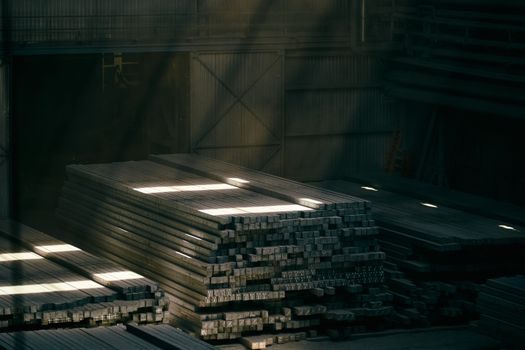
The 2026 supplier map splits cleanly into three tiers. Tier 1: integrated mills (Baowu, Tisco, Posco, Aperam, Nucor) — best for direct mill orders above 25–50 tons, longest lead time, lowest per-ton price. Tier 2: ISO 9001:2015-certified distributors and stockholders — carry 200/300/400 series stainless coils, sheets and plate for quick-ship, useful for 1–20 ton orders and for grade consolidation [S1]. Tier 3: processing / service centres — cut, burn, drill, coat and deliver fabricated plate parts to OEM drawings [S6].
For RFQ hygiene, the minimum supplier check is: (a) ISO 9001:2015 certificate in date [S1]; (b) two recent MTCs from different heats; (c) a clear statement of which standard governs dimensional tolerance (ASTM A6 for carbon, A480 for stainless); (d) for sour / marine / cryo duty, evidence of the relevant third-party approval (NACE, EN, Lloyd's, DNV, TÜV). Vague answers to (a)–(d) are a stronger negative signal than an aggressive price — run the steel plate reference page against the supplier's claims before paying a deposit.
Common Failure Modes and Constraints
Three failure modes dominate steel plate RFQs in 2026. First, grade substitution — a 304L quote silently replaced with a 304 (higher carbon, sensitisation risk) or a 201 in place of 304 (lower corrosion resistance, no Ni price-hedge benefit). Pin the UNS number (S30403, S31603, N08904, S32205, S32750) in writing, not just "304L" or "2205" [S1][S3].
Second, thickness tolerance creep — many 2026 spot quotes are for "nominal" thickness with no A6/A480 tolerance band cited, which on 6 mm plate can mean a 0.3–0.5 mm shortfall. Specify tolerance class (e.g. ASTM A6 Table A1.1) and require actual measured thickness on the MTC. Third, finish / Ra mismatch — "mirror" plate from different mills spans Ra 0.05–0.4 µm; without an Ra number, the cheapest "mirror" quote is almost always a No.8 mechanical polish, not an actual BA finish [S1].
A subtler constraint: 904L plate is technically a "nickel-bearing superaustenitic" and some stockists classify it as a non-stainless "special" for customs and documentation purposes, which changes lead time and paperwork — confirm the customs HS code (7219 vs 7220) before the LC is opened [S3].
Decision Matrix: Picking the Right Sourcing Path

Match the buyer's profile to a sourcing path in four steps. (1) Order size under 5 tons, single grade, quick-ship → ISO 9001:2015 distributor with mill ties; expect 1–3 week lead time and a 5–12% premium over mill-direct [S1]. (2) Order size 5–25 tons, mixed grades, normal finish → still distributor, but lock the MTC type and tolerance class up front. (3) Order size 25–100+ tons, single grade, project-tied → go direct to mill via a sourcing agent on Made-in-China or a comparable B2B marketplace, MOQ 3 tons confirms the entry point for special stainless [S3]. (4) Cut-to-shape or fabricated parts → service centre with burning capacity, e.g. an Ohio / Cleveland / Akron / Canton-area processor that lists OEM and job-shop partnerships [S6].
For plate that will feed downstream equipment like a rebar bender or rebar cutter production line, the upstream scrap and plate lead-time story from the steel industry 2026 scrap and plate update is the single most important read, because a four-week plate slip cascades into a six-week machine delivery slip.
2026 Buying Checklist (RFQ-Ready)
Before sending any 2026 plate RFQ, lock the following: grade per ASTM/ASME/EN (e.g. SA516-70, 316L/UNS S31603, 2205/UNS S32205, 904L/UNS N08904); thickness with tolerance class; surface finish with Ra (if stainless); MTC type (EN 10204 3.1 minimum, 3.2 for witnessed); ISO 9001:2015 certificate; price basis (FOB/CIF/ex-works) with USD-per-ton or USD-per-piece; MOQ and lead time in calendar weeks; payment terms (typically 30% TT deposit, 70% against B/L copy for Asia-origin plate) [S1][S3][S5].
Track these two signals over the next 60–90 days: (1) the spread between 904L/2205/2507 spot quotes and 304L baseline on Made-in-China — a widening spread means nickel / molybdenum surcharges are back, useful for Q3 hedging decisions [S3]; (2) US Midwest plate-burning lead times — a published 2-week slot is a soft market, 6+ weeks is tight and likely to pull carbon-plate base prices up [S6].