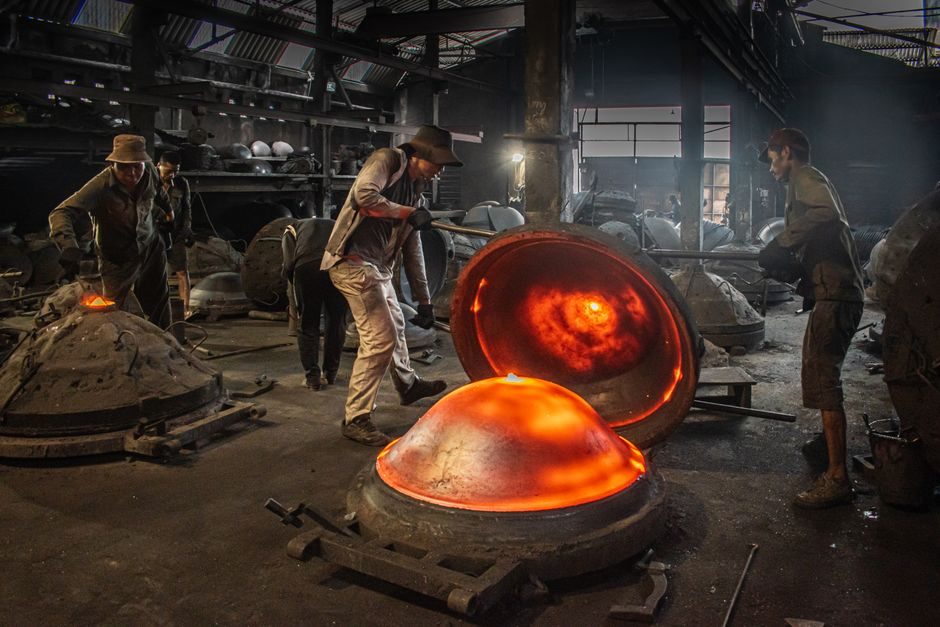
A holding furnace is sized to the throughput and the alloy it must hold, not to the melter that feeds it; pour temperature band, metal-loss budget, and energy class are the four parameters that determine whether a 1 t hydraulic-tilting gas-fired unit, a 3 t electric resistance box, or a 30 t vertical-channel induction unit is the correct 2026 buy [S1][S2].
For context, an aluminum holding furnace (holding furnace) is a fixed vessel whose job is to receive tapped metal from a separate melting furnace and hold it within a narrow temperature window until the casting line calls for metal, and patent-office English usage groups it under the same family as crucible-type and metal-melt holding furnaces (metal melting holding furnace) [S2][S3]. A 2026 supplier listing for a homogenizing-class holding furnace shows FOB Foshan pricing in the US$253,000–258,000 band for 1–3+ sets at a 5 sets/month production capacity, which is a useful order-of-magnitude reference for Asian OEM Class A furnace buyers [S1].
Gate 1 — Alloy Family and Required Pour Temperature Window
Aluminum alloys hold in the 660–760 °C window, copper alloys in the 1 050–1 250 °C window, and cast iron in the 1 350–1 550 °C window; the holding furnace must hold the alloy within a ±5–10 °C band at the low end of that range, because every 10 °C of superheat above the liquidus accelerates dross formation, hydrogen pickup, and refractory wear [S2][S3].
For a foundry switching between 356 and 413 Al-Si alloys, a single furnace set up for the higher-temp 413 pour will burn additional fuel on every 356 pour, so the buy decision is alloy-locked before capacity is even discussed. Chinese-English patent usage explicitly separates "molten metal holding furnace" (molten metal holding furnace) from generic purpose, which signals that alloy-specific lining and burner trim are engineered-in, not retrofittable [S2].
Gate 2 — Capacity, Tap-to-Pour Cycle, and Pour Rate
Hold capacity is set by the rule of thumb: hold vessel ≥ 1.3× peak hourly pour demand × longest expected melter downtime; for a die-casting cell pouring 800 kg/h with 45 min melter interruptions, the minimum practical hold is roughly 500–600 kg, and 2026 industrial listings commonly quote 1 t, 3 t, 5 t, 10 t, 20 t, and 30 t classes [S1].
The Foshan OEM benchmark above ships 1–3+ set orders in the US$253 000–258 000 range, and a 30 t channel-induction class for iron will sit roughly an order of magnitude above that figure once inductor coil and water-cooling skids are added. Pour-rate matching is the next sub-gate: a tilting-hydraulic furnace covers 1–10 t cast at low tilt angle, while a 20–30 t iron-hold is normally emptied through a bottom-pour spout or a pressurized launder, which dictates furnace geometry from the start [S1].
Gate 3 — Heating Class: Gas-Fired, Resistance, or Induction
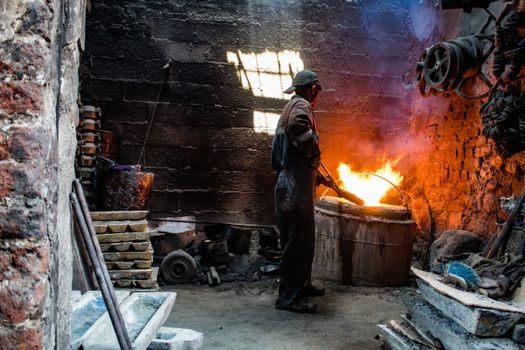
Three heating classes dominate 2026 holding-furnace buying: gas-fired radiant-tube (low capex, common for Al, NOx-compliant on low-fire), electric resistance with silicon-carbide or MoSi2 elements (clean, tight temperature control, common for Mg and specialty Al), and channel-type induction (high thermal efficiency, suitable for iron and large Al reservoirs) [S2][S3].
Gas-fired holds typically land at 35–55% thermal efficiency depending on recuperator fit, while channel-induction holds for iron run at 75–85% steady-state efficiency and hold temperature within ±5 °C at the bath thermocouple. The trade is capex vs operating cost: gas-fired wins on first cost for any 1–10 t Al class, induction wins on life-cycle cost for any 5 t+ iron class running two or three shifts. For comparison against the main melting furnace classes used upstream, the Line Frequency vs Melting Furnace spec cut walks through the same heating-class trade at the melting step, which is the natural upstream reference for a 2026 hold specification.
Gate 4 — Refractory Lining, Lining Life, and Metal-Loss Budget
Refractory selection is alloy-locked: high-alumina (70–85% Al2O3) castable or brick for iron at 1 500 °C+ service, alumina-silica (45–60% Al2O3) for Al at 700–800 °C, magnesia-spinel for Cu at 1 100 °C+, and graphite-clay or SiC crucibles for Mg and Zn to keep iron pickup below 0.05 wt% [S2].
Typical lining life figures that should appear in any 2026 RFQ: 12–24 months for a 5 t Al gas-fired hold, 18–36 months for a 10 t Al resistance hold, and 36–60 months for a 30 t iron channel-induction hold when the channel inductor is replaced as a unit on a planned campaign. Metal-loss budget is the financial gate behind lining: every 1% extra melt loss on a 10 t Al cell pouring 24 h/day is roughly 87 t/yr of lost metal at 2026 LME-linked pricing, which by itself pays for a refractory upgrade in under 18 months.
Gate 5 — Controls, Emissions, and Compliance Stack
Baseline 2026 controls for a Class A holding furnace include: a bath thermocouple (type K for Al, type R or S for Cu/Fe), an O2 trim probe or exhaust lambda sensor on gas-fired units, a PLC with PID loop holding ±5 °C, and a HART or PROFINET link to the foundry MES so each pour is logged against furnace state [S2].
Emissions gates: gas-fired Al holds must meet regional NOx limits (typically < 50–100 mg/Nm³ at 3% O2 in EU/China Tier 2 zones), and iron/steel holds fall under foundry dust and CO rules that drive baghouse specification. CE/ANSI-marked instrumentation is the default for export builds, and ANSI is the U.S. national standards coordinating body whose accredited third-party certification carries weight in cross-border equipment acceptance [S4]. Where a holding furnace sits next to a crucible furnace or an induction furnace on a brownfield site, the same emissions skid can be shared, which is a 2026 spec shortcut that procurement teams often miss.
Selection Comparison: Gas-Fired vs Resistance vs Channel-Induction Holds
Across the four buy-decision criteria that drive every 2026 RFQ scorecard, the three heating classes line up as follows. Energy efficiency: gas-fired radiant-tube 35–55%, resistance 60–70%, channel-induction 75–85%. Temperature band: gas-fired ±8–10 °C, resistance ±5 °C, channel-induction ±3–5 °C. Capex per ton of capacity: gas-fired lowest (US$25 000–60 000/t benchmarked off the Foshan 1 t unit near US$258 000), resistance mid, channel-induction highest. Best-fit alloy: gas-fired for Al/Zn, resistance for Mg and high-purity Al, channel-induction for Fe/Cu and large Al reservoirs [S1][S2].
The pick matrix is straightforward: if the alloy is Al at 1–10 t scale and gas is cheap and clean at the site, gas-fired holds; if the alloy is Mg, specialty Al, or the plant is on a tight emissions cap, resistance holds; if the alloy is Fe or Cu, or the line is 24/7 and electricity is contracted, channel-induction holds. The same engineering logic that drives a holding furnace pick also drives the upstream melting furnace class, and the Line Frequency Induction Furnace 2026 Buying Guide is the reference for buyers who are sizing the melter-and-hold pair together rather than specifying the hold in isolation.
Who a Holding Furnace Is For — and Who It Is Not For
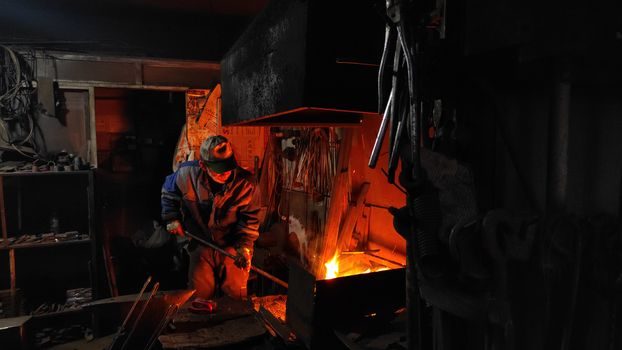
The class fits: die-casting cells pouring Al or Zn, foundries running 2–10 t iron batches on a campaign schedule, copper-alloy continuous-casting lines, and any melt shop where the melter is batch but the casting line is continuous. The class does not fit: very small job-shop foundries below 300 kg/h pour rate, where a crucible furnace lifted by a monorail is a more flexible and cheaper tool, and very-high-temperature specialty alloys (Ni-superalloy, Co-based) where vacuum or controlled-atmosphere holds are required instead of atmospheric holds [S2][S3].
A 2026 buy should also be ruled out when: the upstream melter is single-shift (no melter downtime to bridge, so the hold is dead capital), the casting line is itself batch (no buffer needed), or the plant is < 1 MW connected electrical load on a site that would force a transformer upgrade to run channel-induction holds. In all three cases, the next-best alternative is a heated launder or an insulated transfer ladle, not a stand-alone hold.
Failure Modes and Field-Proven Mitigations
The most expensive failure on a 2026-spec hold is not the refractory, it is the temperature probe drifting out of calibration, which lets the bath climb 30–50 °C above setpoint, accelerates dross, and burns through the lining locally. Mitigation is a quarterly calibration check with a secondary hand-held thermocouple, and redundant type-K probes on any Al hold above 3 t. The second failure is burner impingement on gas-fired Al holds, where flame impingement on the bath surface creates local hot spots that pit the lining within 6–12 months; the fix is to switch to radiant-tube firing and to verify tube-to-bath clearance at commissioning [S1][S2].
On channel-induction units, the classic failure is a channel clog from oxide buildup during a hold at low power, which drops thermal efficiency by 20–40% and forces a planned channel rebuild. The 2026 mitigation is a weekly channel-temperature scan against baseline, with a power-stepping protocol that exercises the channel every shift. None of these failure modes are exotic, but each one is the kind of detail that a turnkey OEM should put in writing as a commissioning deliverable before payment of the final 10% holdback.
Trackable next nodes for a 2026 holding-furnace buyer: (1) lock the alloy-temperature matrix and confirm whether 1 t, 3 t, or 5 t+ capacity is the right entry class using the gate logic above; (2) request three budgetary quotes — gas-fired radiant-tube, resistance, and channel-induction — on the same capacity and lining spec, so the buy is benchmarked before RFQ; (3) confirm whether the upstream melting furnace class is line-frequency, medium-frequency, gas-fired, or cupola, since the hold spec is anchored to whichever melter feeds it. A foundry that runs these three steps against the five gates above will normally cut its 2026 buy decision from 12–16 weeks of debate to 4–6 weeks, and the resulting spec will not need retrofit at commissioning.