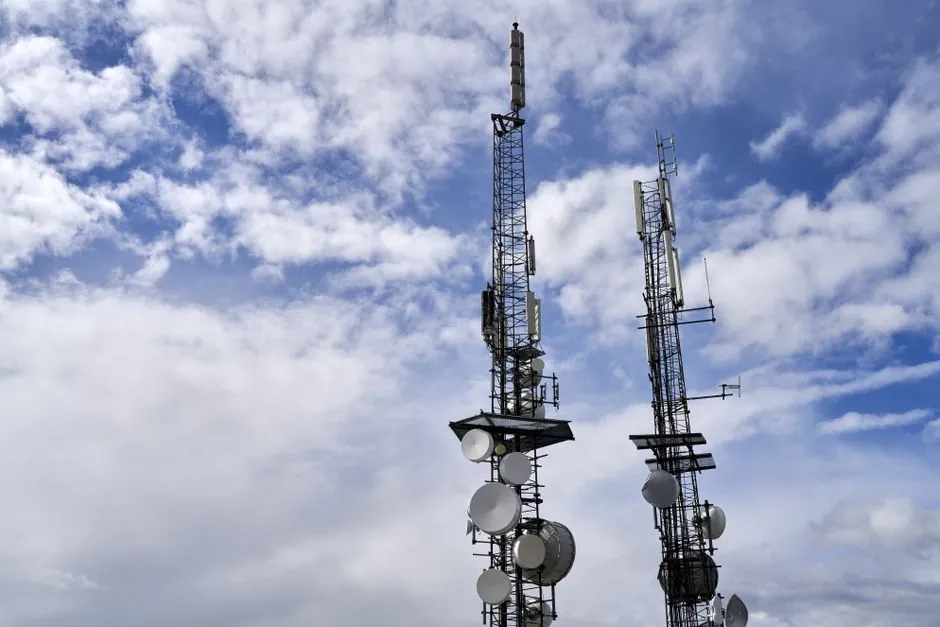
Specifying a crucible furnace for a telecom enclosure is a category error: crucible furnaces are designed to hold molten metals (aluminum, copper, precious metals) at 1100°C to 2102°F (≈1150°C) in a graphite or ceramic pot [S2], and have no defined role in outdoor radio unit, small-cell, or roadside cabinet thermal design. Engineers who arrive at this term usually mean one of three other things: a heat-treatment or holding furnace for conformal-coat cure and moisture bake-out, a heat-treatment furnace for gasket bonding, or an induction furnace for a metallisation step on RF shields.
The right starting point is the enclosure spec sheet, not the furnace catalog. Outdoor telecom enclosures (typically IP55 to IP66, ETSI EN 300 019-1-4 class 4.1 to 4.2 for non-condensing or condensing environments) require internal cabinet heaters rated 60°C to 250°C to drive humidity, cure coatings, and stress-relieve solder joints. A graphite-crucible induction melting unit, with a 3 kg / 2 kg precious-metal melt capacity at 1400 W to 1500 W input [S2], is the wrong class of equipment for that duty cycle.
What a Crucible Furnace Actually Does, and Why It Does Not Fit an Enclosure
A crucible furnace is, by definition, a refractory pot inside a heated shell used to melt a charge of metal for casting, alloying, or refining. Commercial units documented on the B2B market in mid-2026 are 2 kg to 3 kg electric gold-smelting furnaces with graphite crucibles, drawing 1400 W to 1500 W to reach 2102°F (≈1150°C) at a unit cost near USD 142.84 on early-bird pricing [S2]. At industrial scale, induction-furnace crucibles published on advanced-ceramics platforms are sintered oxide, carbide, nitride, or cermet components (categories: oxide, carbide, nitride, boride, silicide, cermet, composite) supplied for the chemical and metallurgy market, not for electronics assembly [S1].
That thermal envelope, defined by the melt point of the charge, is 5 to 10 times hotter than any telecom enclosure will ever see. A graphite crucible operating at 1100°C to 1500°C would destroy any polymer gasket, FR-4 PCB, or aluminium die-cast housing it was placed inside, and the inductive stray fields (medium-frequency induction at 1 kHz to 30 kHz, or high-frequency at 30 kHz to 100 kHz for small melts) would couple into RF cabling. A passive telecom cabinet, by contrast, is specified to keep internal electronics between -40°C and +70°C, and only briefly reaches the 60°C to 250°C range during a controlled bake-out or cure.
Selection Criteria the Engineer Should Be Using Instead
For bake-out, moisture drive-off, and conformal-coat cure, the melting furnace category is wrong, and a heat-treatment furnace or oven-grade holding furnace is correct. Decision criteria: (1) operating temperature window, 60°C to 250°C for coating cure vs. 1100°C+ for metal melt; (2) atmosphere, ambient air vs. inert N2 or vacuum; (3) ramp rate, 2°C/min to 5°C/min for polymer cure vs. unrestricted for metal; (4) heater power density, 1 W/L to 5 W/L for a cabinet oven vs. 100+ W/L in a small induction crucible [S1][S2].
For thermal-stress screening of PCBAs and solder joints, a convection or IR reflow-style oven with ±2°C to ±5°C uniformity is the right tool. For EMC gasket curing (conductive elastomer, particle-filled silicone), a small benchtop hot-plate or convection oven at 150°C to 200°C is sufficient. A cupola furnace is a vertical shaft melting unit for cast iron and has no place in this conversation either; a crucible furnace is a sub-class of melting furnace by definition, and is reserved for molten-metal duty.
Comparison: Real Furnace Classes Against a Telecom Enclosure Spec
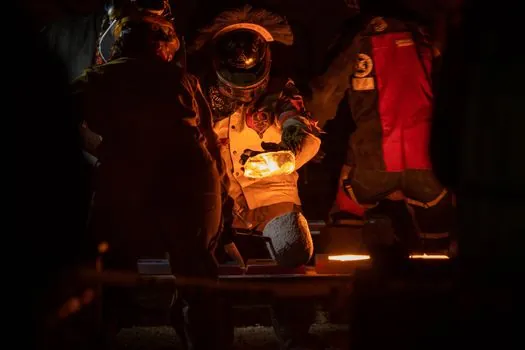
Lining up the main equipment types on four decision criteria makes the mis-specification visible. Crucible furnace: 1100°C to 1500°C operating range, molten metal only, 2 kg to 50 kg typical charge, and high (1400 W to 1500 W per 2 to 3 kg) power density [S2]. Heat-treatment furnace: 200°C to 1200°C operating range, solid-state metallurgical work (anneal, temper, age), 50 kg to 5000 kg workload, low to medium power density. Holding furnace: 200°C to 800°C operating range, molten-metal holding only, 50 kg to 5000 kg bath, low to medium power density, continuous duty. Induction furnace: 1100°C to 1700°C operating range, molten metal with electromagnetic stirring, 5 kg to 50 t charge, high power density and high electrical infrastructure cost.
None of those four classes match a telecom enclosure's 60°C to 250°C cure and bake-out duty. The correct mapping is to an industrial batch oven or inline reflow oven, which is a sibling class of heat-treatment equipment but operates in a much lower temperature band with forced-air convection and tight ±2°C to ±5°C uniformity. Specifiers who find themselves on a crucible-furnace product page when sourcing a cabinet heater should treat that as a stop signal and back out to the cabinet thermal-management category, where the working temperature range, atmosphere, and power-density numbers all line up with their bill of materials.
Use Cases in Electronics Manufacturing That Are Adjacent to the Misframed Spec
There are electronics-adjacent processes where crucible-class temperatures do legitimately appear, and where engineers may have encountered the term. Die-attach soldering with Au-Sn (80/20) preforms runs at 310°C to 330°C; a small benchtop reflow oven handles that. Hermetic package sealing (Kovar-to-glass) needs 450°C to 700°C in a belt or batch furnace, not a crucible. Wave soldering sits at 250°C to 280°C with a pump-driven solder bath, and a crucible furnace is the wrong topology because the bath must be pumped, not ladled. [S1]
For RF shield metallisation and copper-on-aluminium brazing, a small vacuum or controlled-atmosphere brazing furnace at 600°C to 1100°C is the correct fit, and here an induction furnace heated susceptor can also work for low-volume runs. In all of these cases the specifiers need a chamber whose walls are cool to the touch, with a sealed front and interlocked door, not a 1100°C graphite pot with a pour spout. Documentation on advanced-ceramics platforms consistently positions induction-furnace crucibles as a chemical and metallurgy component category [S1], with material choices spanning oxide, carbide, nitride, boride, silicide, cermet, and composite grades for severe-service molten-metal containment.
Limitations, Failure Modes, and What to Watch in Procurement
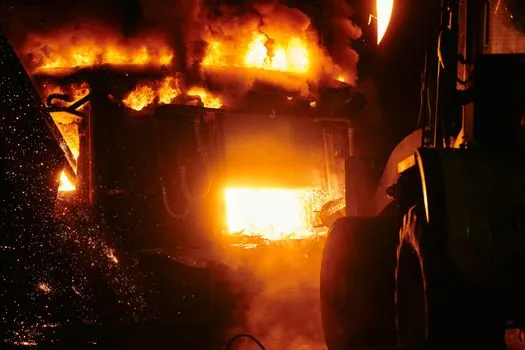
Specifying the wrong furnace class is the dominant failure mode, and the visible symptom is usually a procurement team receiving quotes for 2 kg to 3 kg benchtop smelters at USD 100 to USD 700 per unit [S2] when the engineering requirement was a 200°C cabinet oven in the USD 300 to USD 2000 range. Energy-misallocation follows: a 1500 W crucible running an 8-hour shift is a 12 kWh unit, which is 10 to 20 times the duty cycle of a correctly-sized enclosure heater.
Material failure modes also diverge sharply. Crucibles fail by thermal shock, slag penetration, and oxidation at the melt line; oven heaters fail by element burnout, fan-motor bearing wear, and silicone-gasket compression set. Specifying a graphite crucible where a silicone-rubber-gasketed oven was needed would not just waste procurement budget, it would create a fire hazard. A second procurement-side trap is treating supplier counts as proof of fit: the B2B ceramics catalog lists induction-furnace crucibles under "Chemical & Metallurgy" markets, not "Electronics" [S1], and that market label is the cleanest signal that the equipment does not belong in a telecom-enclosure bill of materials. Specifiers who route through a cabinet thermal-management category, with a 60°C to 250°C operating range and a documented IP55 to IP66 cabinet integration, will end up with the right equipment and a defensible audit trail. Related procurement-side framing for adjacent decisions, including capacity planning and total-cost-of-ownership, is covered in the gas generator set pricing 2026 cost-driver guide.