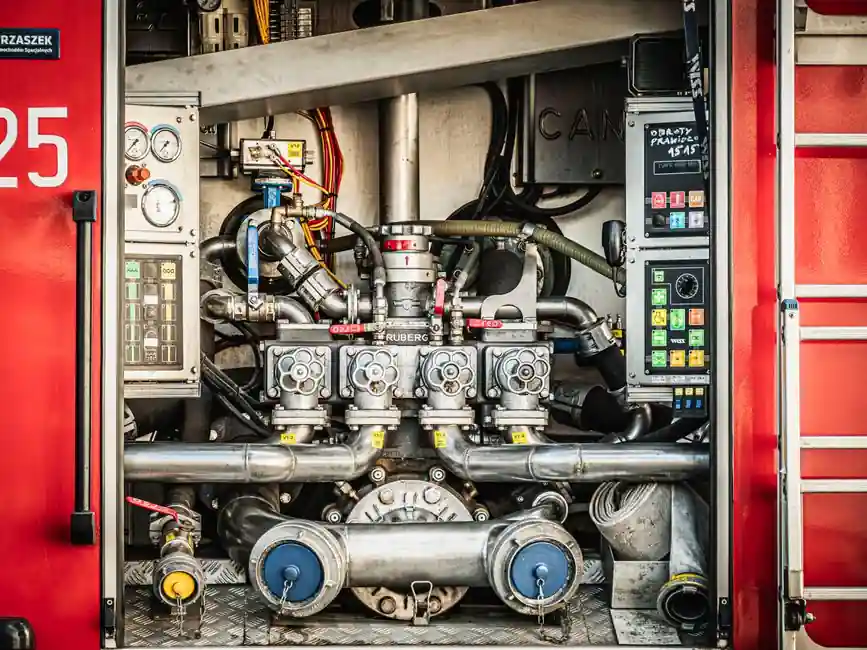
Graphite-clay and silicon-carbide crucible furnaces dominate small-to-mid pump and valve foundry cells because they deliver 1200–1600°C melt temperatures with batch sizes of 50–500 kg, matching the typical bronze, cast-iron, and stainless trim castings used in valve bodies and pump impellers [S1].
The Chinese supply base lists 262 crucible-furnace manufacturers offering roughly 786 distinct models, with a strong concentration in medium-frequency induction units paired with clay-bonded graphite or SiC crucibles; this density makes it a buyer's market for standard 1.5–3.0 kW-class furnaces but a careful evaluation for higher-power or corrosion-lined units [S1].
What a crucible furnace actually is in a foundry context
A crucible furnace is a metal-melting vessel in which a refractory crucible (clay-graphite, silicon carbide, or fused silica) holds the charge while an external heat source (gas flame, resistance, or induction) raises it to pouring temperature, in contrast to a cupola furnace that uses a vertical shaft and continuous charge or an induction furnace where the metal itself acts as the secondary of a transformer. [S1]
In pump and valve work, the term is used loosely to cover three equipment families: gas-fired lift-off crucible furnaces (typical 50–300 kg brass/bronze melts, 1100–1250°C), resistance-heated crucible furnaces for precious-metal or lab melts, and medium-frequency induction crucible furnaces (250 Hz to 10 kHz, 1.5–3.0 kW-class ratings scaled to crucible size) that have largely displaced gas units in new Chinese foundry builds since the late 2010s [S1].
For foundries producing valve bodies to ASME B16.34 or API 600, and pump casings to API 610, the crucible furnace is the central asset on the melt deck because it controls pour temperature, melt cleanliness (through flux and degassing), and the alloy window available for the day's mix of CF8M, WCB, CD4MCu, and bronze grades.
Selection criteria tied to pump and valve alloys
The first gate is the alloy matrix the foundry must pour: bronze and brass for valve trim and pump impellers melt in the 950–1100°C range, gray and ductile iron casings need 1280–1420°C, and stainless variants such as CF8M and CF3M require 1500–1600°C with tighter carbon control; a single melting furnace sized for the highest-grade pour wastes energy on lower-melt days and is often paired with a holding furnace for the lower-melt alloys. [S1]
Second gate is batch size: pump foundries serving water-works and HVAC markets typically need 50–150 kg pours per cycle, while oil-and-gas valve foundries running bodies up to 24-inch class 1500 need 300–500 kg crucible lifts, which pushes the design toward a hydraulic-tilting induction crucible furnace with dual-crucible change-out.
Third gate is the refractory lining chemistry matched to the alloy. Clay-graphite crucibles (typical 60–70% SiC or graphite, 30–40% clay binder) tolerate iron and bronze but are attacked by strongly oxidizing melts; silicon-carbide crucibles extend life 30–50% on aluminum bronze and on high-Mn stainless where FeO slags dissolve clay-graphite linings quickly.
Fourth gate is atmosphere control: pump foundries pouring ductile iron require nodulizing treatment (FeSiMg) at 1450–1500°C under a covered ladle, and stainless valve foundries routinely specify argon-purged lid and bottom-pour arrangements to limit chromium oxidation; gas-fired crucible furnaces are easier to seal than top-loaded induction units but offer less precise temperature ramp control.
Comparison: gas-fired vs resistance vs induction crucible furnaces
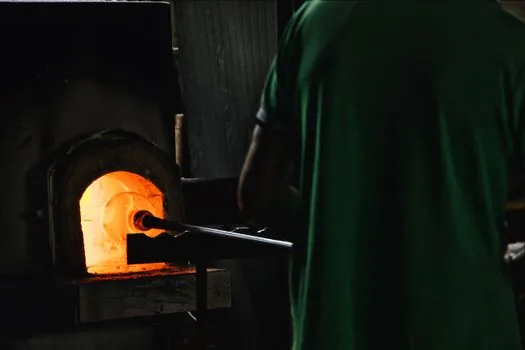
For a foundry that runs only one alloy and high volumes, the induction unit is the obvious answer; for a job shop serving mixed bronze, iron, and stainless trim orders, the gas-fired crucible furnace with a small holding furnace as a buffer is still the most flexible platform on the floor, and a resistance unit is a sensible add-on for precious-metal or test-bar melts.
Use cases in pump and valve production
In a bronze valve foundry producing 2–8 inch bodies to MSS SP-80 or API 600 trim, the workhorse configuration is a 100–250 kg gas-fired lift-off crucible furnace pouring into handheld or overhead-pour ladles, with a holding furnace set to 1080–1120°C to keep metal ready between cycles; melt loss to oxidation typically runs 1.5–3.0% for tin bronze and is the dominant cost line the furnace selection has to address [S1].
In a ductile-iron pump casing foundry running WCB-equivalent or 65-45-12 ductile grades for municipal pump housings, the standard pick is a 300–500 kg medium-frequency induction crucible furnace coupled with an in-line desulfurization ladle and a magnesium treatment wire feeder; this combination is the dominant new-build pattern in Chinese iron foundry supply [S1].
In a stainless valve body foundry making CF8M, CF3M, or CD4MCu bodies to NACE MR0175 for sour service, the requirement shifts toward argon-oxygen decarburization (AOD) downstream of the crucible furnace, but the melt itself still originates in a silicon-carbide-lined medium-frequency induction crucible furnace rated for 1580–1620°C peak pour, with a bottom-pour arrangement to minimize slag carry-over into the mold.
Limitations, failure modes, and what crucible furnaces cannot do
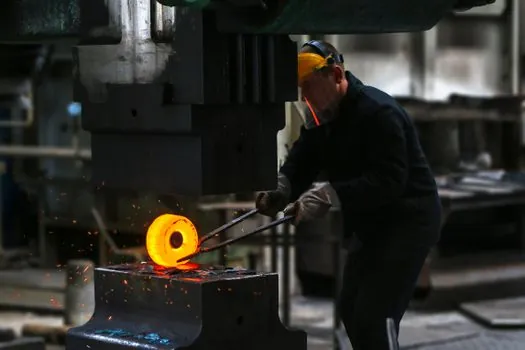
Crucible furnaces, in any of the three configurations, are batch units with melt cycle times measured in tens of minutes to a few hours; they are a poor fit for continuous high-tonnage iron or steel melting where a cupola furnace or electric arc furnace will out-ton them at lower specific energy. A 500 kg bronze induction cycle in a crucible furnace draws roughly 250–400 kWh per heat, versus a continuously fed cupola on the same alloy running closer to 550–650 kWh per ton. [S1]
Common failure modes the spec has to address: crucible cracking from thermal shock when cold-charged (especially with SiC linings that are less tolerant of cold starts than clay-graphite), slag-line erosion accelerated by FeO in iron melts, and induction coil water leaks that can turn a heat into a hazardous steam event; in modern medium-frequency units the coil leak is detected by a differential flow switch and an in-line conductivity probe set to alarm at roughly 10–20 µS/cm above the closed-loop cooling-water baseline.
Foundries specifying crucible furnaces for stainless trim must accept that the unit itself does not perform alloy trimming, deoxidation, or desulfurization; those happen in the ladle, and the right process architecture pairs the melting furnace with a ladle furnace or a wire-feed station rather than asking the crucible furnace to do work it is not built for. Buyers who skip this pairing end up with high inclusion counts and scrapped valve castings, not with a furnace problem.
Sourcing, standards, and 2026 supply signals
The 2026 supplier landscape for crucible furnaces is heavily concentrated in Chinese OEM and ODM shops, with 262 manufacturers and roughly 786 distinct product listings surfaced on the major B2B portals as of November 2025, the largest grouping being medium-frequency induction units between 1.5 kW and 3.0 kW coil ratings with clay-graphite or SiC crucibles [S1].
Applicable standards for pumps and valves cast in these furnaces include ASME B16.34 for valve body and trim pressure-temperature ratings, API 600 for gate valves, API 610 for centrifugal pumps, MSS SP-80 for bronze gate and globe valves, and NACE MR0175 for sour-service trim; material standards such as ASTM A216 (WCB), A351 (CF8M/CF3M), and A439 (austenitic ductile iron) govern the alloy test bar pulled from each heat and referenced back to the crucible-furnace pour record.
For buyers comparing induction crucible furnace quotes, the discriminating data points are: coil frequency band (250 Hz to 10 kHz, with 1–4 kHz typical for 100–500 kg units), crucible material grade and replacement lead time (clay-graphite typically 2–4 weeks, SiC 4–8 weeks from Chinese stockists), inverter brand and IGBT vs SCR topology, and whether the package includes a preheated ladle, slag skimmer, and a backup crucible of the same size. Background on the broader industrial lighting and equipment used in foundry bays is also worth reviewing for the heat-rated fixtures around the melt deck, since conventional HID fixtures fail within meters of a tilting pour.
Cross-reference reading on adjacent process equipment is in our recent coverage of holding furnace selection for electronics-housing die castings and the mining equipment manufacturing spec map for heavy-industry fit. Two trackable signals for the next procurement cycle: Chinese OEM price lists for 250 kg SiC-lined induction crucible furnaces (watch for sub-USD 8,000 quotes which usually indicate a clay-graphite relabel rather than true SiC), and revisions to GB/T 23313 frequency-converter EMC requirements that affect which medium-frequency crucible furnaces can be CE-marked for European pump and valve buyers.