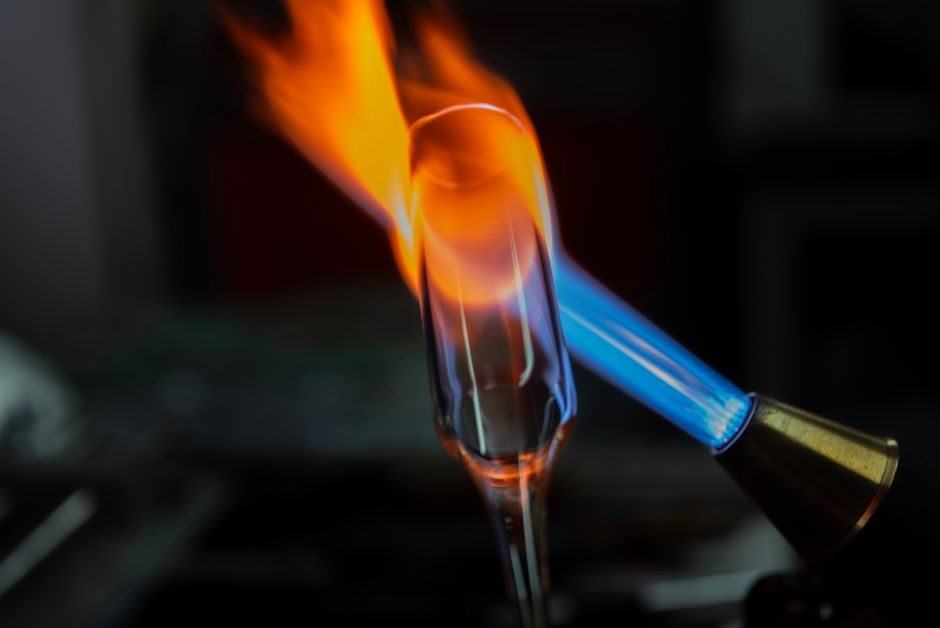
Crucible furnace selection is driven first by the molten metal's working temperature, the required throughput in kg/h, and the metallurgical chemistry that dictates refractory compatibility and atmosphere control [S1].
Wholesale catalogs list medium-frequency electric crucible units at 6-ton charge capacity for brass, copper, steel, iron, and aluminium scrap melting [S2], while tilting hydraulic aluminium furnaces ship from Qingdao with a 1-set MOQ and 50 sets/month production throughput [S3]. Crucible furnace is the standard English term for what Chinese spec sheets label 坩埚炉, the refractory-lined vessel furnace widely used in batch metal melting [S1].
Charge Capacity and Throughput Bands
Crucible furnace sizing begins with the per-shift melt mass: small foundries typically spec 50–500 kg crucible furnaces, jobbing aluminium shops run 1–3 ton units, and high-volume scrap recyclers push to 6-ton medium-frequency electric units such as the wholesale catalog example for copper and brass [S2]. For aluminium scrap melting and holding, hydraulic-tilting crucible designs ship with a 1-set minimum order and 50 sets/month production capacity from Qingdao-based manufacturers [S3].
Holding capacity, by contrast, uses a fraction of melt power — see the related guide on holding furnace capacity and refractory tradeoffs for the side-by-side logic between melting and holding duties.
Heat Source Comparison: Gas, Resistance, and Induction
Three heat-source families dominate the crucible furnace market, each with distinct operating profiles: gas-fired crucible furnaces use natural gas or propane burners around a clay-graphite or silicon-carbide crucible and are favored for non-ferrous foundries above 1 ton; resistance-fired crucible furnaces embed NiCr or FeCrAl elements clamped to the crucible wall and dominate precision aluminium holding at lower kW; medium-frequency induction crucible furnaces couple the coil directly to the charge and scale cleanly to 6-ton production units such as the wholesale catalog example covering brass, copper, steel, iron, and aluminium [S2].
Selection among these three is a decision matrix on four criteria: (1) melt rate per kW, (2) alloy compatibility with crucible material, (3) atmosphere control for melt quality, and (4) capex/opex per ton of melt. Induction leads on melt rate and atmosphere isolation, resistance leads on precision and capex for aluminium, gas leads on flexibility for mixed ferrous/non-ferrous work in smaller foundries. Where the duty is strictly metal-melting and the chemistry is non-ferrous, the comparison is best framed against cupola furnace economics — induction crucible units beat small cupolas below roughly 5 ton/h on emissions and start-up flexibility.
Crucible Material and Refractory Compatibility
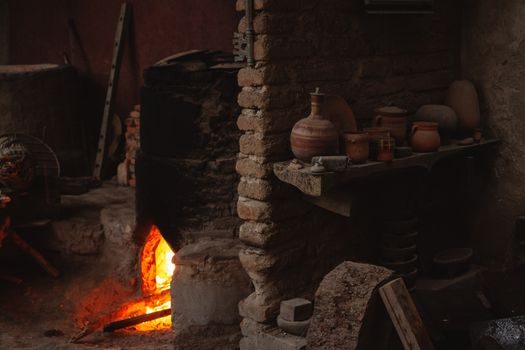
The crucible itself is a consumable selection: clay-graphite crucibles (roughly 50–70% SiC/alumina with graphite binder) handle copper, brass, and precious metals up to 1,300–1,400 °C; silicon-carbide crucibles extend to 1,500–1,600 °C for iron and steel; cast-iron and steel crucibles (or monolithic refractory linings) are used in induction furnaces where the coil couples to the melt directly rather than the crucible [S2].
Aluminium foundries commonly specify clay-bonded silicon-carbide or fused-silica crucibles to avoid iron pickup; the 6-ton medium-frequency units listed in wholesale catalogs are typically lined with magnesia or alumina-based dry-vibrated refractory for ferrous service [S2]. For smaller hydraulic-tilting aluminium furnaces, the crucible is often a preformed silicon-carbide or isostatically-pressed clay-graphite sleeve rated for 800–900 °C continuous service [S3]. The holding side of aluminium duty — especially in pulp-and-paper mill foundries — is covered in a spec-driven guide to holding furnaces that pairs refractory selection with operating envelope.
Atmosphere, Fluxing, and Degassing Integration
Crucible furnaces used for aluminium holding and pour typically integrate fluxing and degassing stations downstream; the furnace itself may be specified with a sealed lid, a controlled-atmosphere purge, or a simple cover for batch operation [S3]. Hydrogen porosity in aluminium is the dominant quality defect, so spec writers on aluminium units should require an integrated rotary degasser or a graphite-shaft impeller port at the furnace lip.
For ferrous induction melting, atmosphere control is less critical than for aluminium, but slag coverage and cover-flux additions are standard practice; the 6-ton medium-frequency units in the wholesale channel are described as suitable for brass, copper, steel, iron, and aluminium scrap — note that switching between alloys in the same crucible is constrained by prior-metal contamination, and refractory selection should follow the dominant alloy, not the occasional melt [S2].
Selection Criteria: Who It Is For and Who It Is Not
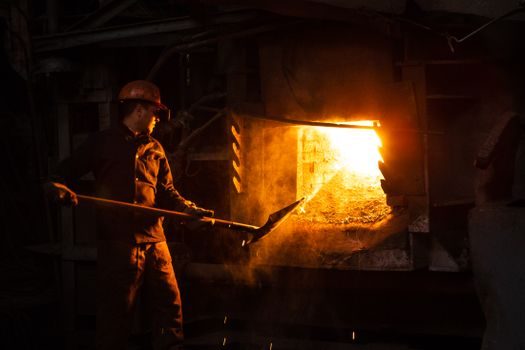
A 6-ton medium-frequency induction crucible furnace is the correct spec for jobbing foundries and scrap recyclers running 3–4 shifts per day on copper, brass, or iron [S2]. A smaller hydraulic-tilting aluminium crucible furnace, with 1-set MOQ and 50 sets/month capacity, is the right pick for aluminium scrap melting operations with intermittent tilts and pour-into-hold operations [S3].
Crucible furnaces are NOT the right spec for continuous high-tonnage ferrous production (use a cupola furnace or electric arc furnace above 20 ton/h), and they are NOT the right spec for precision heat-treatment of solid stock (use a chamber or holding furnace for that duty). The smallest crucible furnaces, below 50 kg, are also economically dominated by resistance or gas-pot designs used in jewellery and lab work.
Limitations, Failure Modes, and Sourcing Signals
Three failure modes dominate crucible furnace service: crucible cracking from thermal shock during cold-charge loading, refractory wear at the slag line during long holding cycles, and coil ground-fault on induction units from crucible breach. Crucible lifetime on aluminium holding is typically 6–12 months at continuous duty; on iron and steel melting, clay-graphite crucibles last only 30–80 heats before replacement [S2][S3].
Wholesale channels such as Made-in-China list 6-ton medium-frequency crucible furnaces from trusted manufacturers and suppliers, with MOQ and lead-time visible on the manufacturer page rather than at the category level [S2]. For aluminium melting, the Qingdao hydraulic-tilting crucible furnace ships at 1-set MOQ with payment via L/C, T/T, D/P, Western Union, Paypal, or Money Gram and a 50 sets/month capacity [S3] — a trackable signal for any 2026 procurement cycle is a request for updated last-login dates and refreshed production-capacity figures from the listed manufacturer.
For component-level specifications, see crucible furnace.