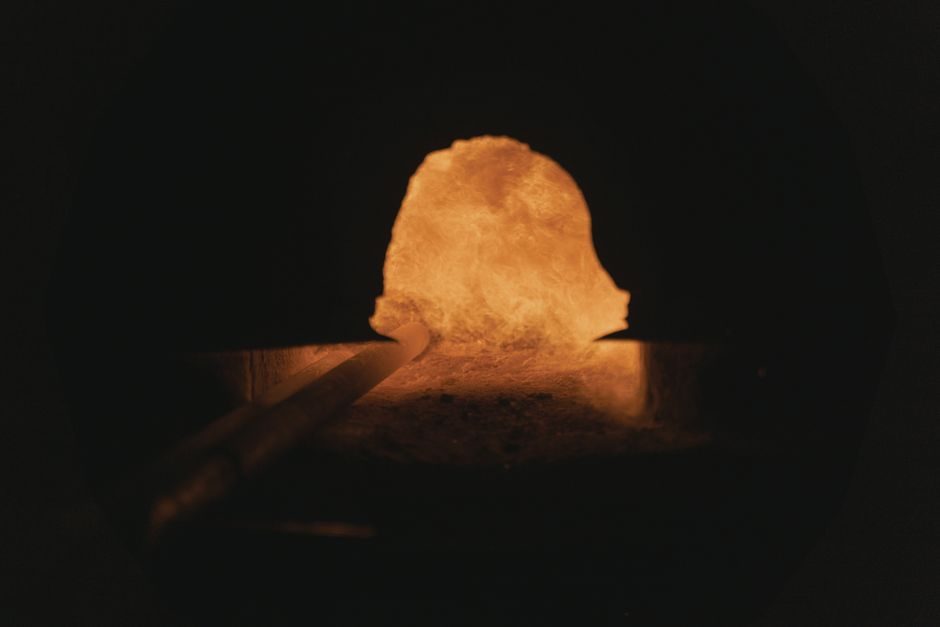
A holding furnace in a paper-mill context is almost always a metal-containing vessel — ductile-iron or steel soak unit, calender-roll preheat bath, or a small channel/coreless induction holder feeding alloy castings — rather than a fibre-stock reservoir. The clearest signal in the 2026 trade flow is that holding-furnace makers like Pioneer Furnaces (since 1972) and Sinc Thermal's Freedom® reverb line continue to position coreless and channel induction units at 50–60 Hz line frequency with refractory-backed inductors, sized for 1–20 t aluminium or zinc baths [S1][S2].
For pulp-and-paper buyers, that translates to a different procurement reality: most mills do not buy a "holding furnace" by that name — they buy a holding furnace for metallurgy-heavy sub-assemblies (cast-iron dryer section frames, polymer roll shells, lead-bath calender preheats historically, or zinc-bath galvanizing of structural steel on site). The pulp-and-paper headlines tracked in 2026 — ABB drives for Guangxi Jianhui, Cascades tissue in Quebec, Metsä Group moves, double-disc refiner retrofits — name refining, recycling, drive and bale-handling equipment, not melt shops [S3].
What a "Holding Furnace" Means in Paper-Mill Procurement
Holding furnaces in non-ferrous metallurgy hold molten metal between melting and casting at a tight ±5 °C band, which is why Pioneer Furnaces markets both channel-type (high efficiency, suited to continuous galvanizing coating pots) and coreless units (cleaner melt, better for alloy changeover) [S1]. In paper mills, the analogous equipment is a temperature-stabilised bath for cast-iron dryer-section bearings or a melt unit for in-house Babbitt-bearing re-pouring, usually 50–500 kg batch size rather than the multi-tonne units a foundry would specify.
The category split that drives buying decisions is threefold: (1) channel induction holders — high electrical efficiency, suited to one alloy, very sensitive to metal freeze in the throat; (2) coreless induction holders — flexible alloy, simpler refractory, higher kW/t; (3) gas- or oil-fired reverb holders — lower capex, higher NOx, suited where power cost or supply is unfavourable. Pioneer's "Turnkey Induction Melting, Heating & Galvanizing" range covers all three families under one vendor, which is the structure most pulp-and-paper OEMs use for low-volume in-house metallurgical needs [S1].
Selection Criteria That Actually Move a Paper-Mill Spec
Five criteria dominate. First, hold-temperature band: aluminium die-cast and zinc galvanizing demand 660–680 °C and 440–460 °C respectively, and a unit that holds within ±5 °C is the practical baseline [S2]. Second, refractory lining — silicon-carbide or high-alumina castable for aluminium, magnesia-based for zinc — and the maker's stated lining life in number of campaigns. Third, power density: 50–80 kW/t for coreless holders, 30–50 kW/t for channel holders, and the inductor cooling (water-cooled copper coil, 30–40 °C rise, < 0.5 MPa pressure drop) must match plant water quality.
Fourth, atmosphere control: reverb and crucible holders lose metal to dross formation; Sinc Thermal's "Better Hold — less cleaning, less metal loss, greater profits" pitch is essentially a claim of flux-covers and tight-seal lid design cutting oxide formation by 30–60 % versus open-top reverb units [S2]. Fifth, controls integration: modern units ship with HART or Foundation Fieldbus-enabled temperature/level instrumentation so they can be tied into the mill's DCS — the same instrumentation architecture that pulp-and-paper buyers already use on stock-prep and dryer-section PLCs.
Who a Holding Furnace Is For — and Who It Is Not For
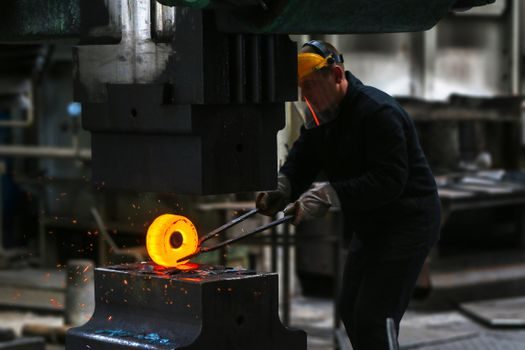
The user profile that actually buys a holding furnace for a paper-mill context is narrow: an in-house foundry pouring dryer-section frames, a galvanizing line coating structural steel for the mill build, or a Babbitt-bearing re-pour bay. The user profile that should NOT be specifying a holding furnace is the pulping, stock-prep or paper-machine operator — that scope is governed by melting furnace and heat-treatment furnace selections for steel rolls, not for fibre stock itself [S3].
Capacity band mapping: a 0.5 t coreless holder suits a small job-shop feeding polymer-roll-shell pours; 2–5 t fits a mid-size non-ferrous foundry with one casting line; 10–20 t channel holders are dedicated to continuous galvanizing coating pots where Pioneer and its peers concentrate. For a paper mill's real metal needs, the 0.5–2 t coreless class is the most common spec, with 200–500 kW total connected load and a 4–6 hour hold cycle on standby power.
Comparison of the Three Holding-Furnace Families
Side-by-side, channel induction holders win on electrical efficiency (typically 80–85 % at the inductor) and on continuous-duty suitability, but lose on alloy flexibility — a channel throat freezes if held empty too long, and re-melting takes hours [S1]. Coreless induction holders invert that trade: 65–70 % efficient, but swap alloys in 30–60 minutes versus 8–24 hours for a channel unit.
For a paper-mill buyer, the math usually lands on a gas-fired reverb holder at 1–3 t capacity if the mill already has natural-gas infrastructure and runs one alloy; on a coreless induction holder at 0.5–2 t if the mill needs alloy flexibility (e.g. both aluminium bronze bearing pours and zinc die-casting for spares) and has stable three-phase power; and on a channel holder only if the volume justifies the dedicated line — typically above 5 t continuous duty. Sinc Thermal's pitch that "Better Pour — transfer quality metal to your molds" is the operational language buyers use to justify the higher capex of induction over gas [S2].
Use Cases, Standards, and Failure Modes
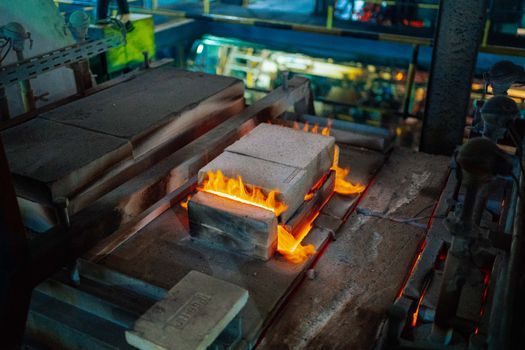
Real paper-mill use cases split three ways: (1) holding molten zinc at 440–460 °C in a continuous-galvanizing line for structural-steel members and roof decks — a Pioneer-style channel induction coating pot [S1]; (2) holding molten aluminium at 660–680 °C for dryer-section bearing housings and polymer-roll-shell castings — a coreless or reverb unit [S2]; (3) holding lead-bath or salt-bath for heat treatment of calender roll journals, which is technically a heat treatment furnace but is often procured from the same vendor list.
Failure modes that drive warranty language: inductor copper burnout from cooling-water fouling, refractory erosion at the metal line, throat freeze in channel holders after power loss, and dross build-up in reverb units from poor lid sealing. For induction units, IEC 60079 series governs any hazardous-area classification near black-liquor tanks; for refractory work, ASTM C401 covers classification of alumina-silica castables. Pulp-and-paper buyers who route the spec through a foundry-equipment vendor get a pre-aligned documentation pack; those who route it through a general industrial vendor typically do not.
Sourcing Path and 2026 Maker Map
The 2026 sourcing map for paper-mill holding-furnace buyers is short. Pioneer Furnaces (India, since 1972) covers the full non-ferrous induction range including channel and coreless holders, with explicit turnkey delivery and OEM-style documentation [S1]. Sinc Thermal (US) holds the aluminium reverb and Freedom® shaft-melter niche [S2]. China-based Rongchuang Equipment (佛山融创) lists holding furnaces, homogenizing furnaces and hot-top casting tables in English on aluminiumfurnace.com, which is the entry point for buyers in the SE-Asia paper-mill build cycle [S4]. The relevant 2026 pulp-and-paper industry headlines cluster on drives, refiners and tissue capacity, not on metallurgical equipment, so a paper-mill holding-furnace spec is usually pushed up to a corporate-engineering or capital-projects team rather than the mill's own procurement [S3].
For induction-furnace buyers, the related line-frequency induction furnace suppliers 2026 capacity bands and pricing map covers the same maker pool at higher capacity tiers, and the gas-fired aluminium melting furnace sizing and selection guide walks the alternative path for mills leaning toward reverb over induction. Both are useful adjacent reads for paper-mill engineers who are sizing their first in-house holder. Trackable signals for the next six months: ABB and drive-supplier orders on Guangxi Jianhui's new paper line (delivery milestones through 2026–2027), any Metsä Group or Cascades tissue expansion that pulls in a galvanizing line for structural steel, and any AFT or Tiger Group OCC pulp-mill auction that bundles a metallurgical equipment package [S3].