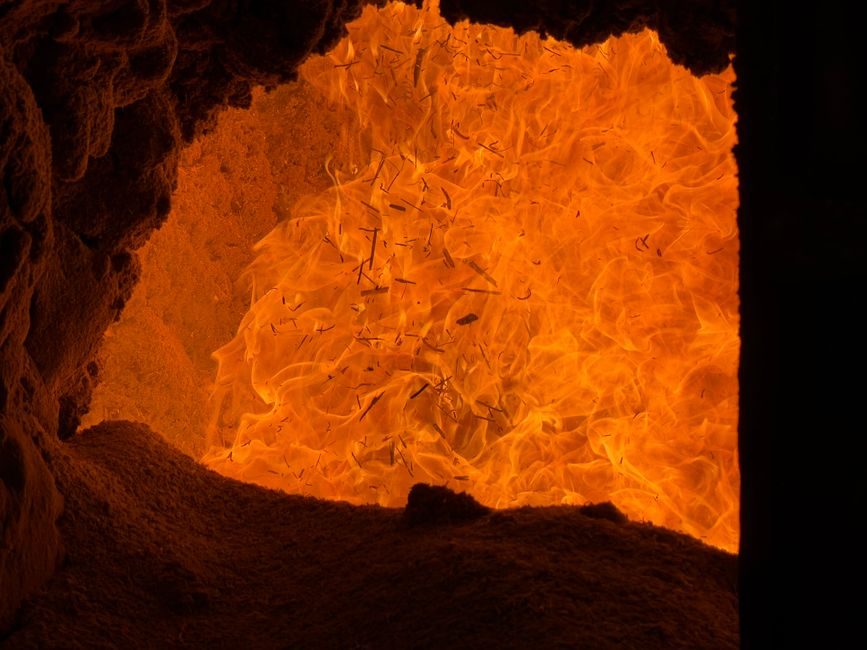
A holding furnace is a thermal reservoir placed downstream of a primary melter, sized to keep molten metal within a narrow working-temperature band until it is poured into dies, launders, or casting tables [S2]. Production capacity scales with tap weight plus a holding-time margin, and mainstream industrial units sit in the 1–20 t bracket for aluminium, brass and zinc die-casting cells [S3][S4].
Two heating architectures dominate the market: electric resistance holding furnaces (电阻保温炉) with embedded metallic or silicon-carbide elements [S1], and coreless or channel-type induction furnaces fed by an intermediate-frequency power supply cabinet (中频电源柜) [S5]. Sourcing data from a Guangdong-based manufacturer in 2026 shows a 2-set FOB homgenising-and-holding line quoted at US$253,000 from Foshan, with a stated production capacity of 5 sets per month [S4].
Define Tap Weight, Pour Rate and Working-Temperature Window First
Selection starts from the casting cell: maximum single-shot tap weight, hourly pour demand, and the alloy's pourability band. Holding furnaces are intentionally not designed to melt cold charge — they only offset radiative and launder losses, so a melt-rate margin is not built in [S3]. For an aluminium extrusion line holding at 680–720 °C, the rule of thumb is that furnace capacity in tonnes equals hourly pour rate in tonnes, plus a 30 % buffer for shift transients and ladle transfer.
Steel and iron foundries specify holding at 1 480–1 560 °C for ductile iron and 1 520–1 600 °C for steel, well above any aluminium envelope, which is why refractory class — not kW rating — drives cost. The deeper holding furnace overview in the holding furnace encyclopedia entry lists the standard 0.1–0.3 %/h melt-loss band for aluminium and a tighter 0.05–0.15 %/h for magnesium under cover flux, both figures that should be cross-checked against the alloy supplier's allowable burn-off before signing a purchase order.
Heat Source: Resistance, Gas, or Coreless Induction
Electric resistance units are the default for aluminium foundries up to ~10 t because element replacement is straightforward, and the radiant top is easy to insulate. [S1]
Gas-fired reverberatory holding furnaces are still common in primary aluminium smelters and large brass mills, where off-gas can be tied back to a regenerator burner system [S4]. Coreless induction holding furnaces fed by an intermediate-frequency (200–1 000 Hz) power supply cabinet are favoured where metallurgical cleanness matters — melt is stirred by the field, and temperature uniformity can be held to ±5 °C across the bath [S5]. Channel-type induction furnaces, by contrast, run on line frequency and give higher electrical efficiency but less agitation, so they are often paired with a separate launder pump. Cross-references for induction-style holding are captured in the induction furnace encyclopedia entry and the crucible furnace entry.
Refractory Class, Lining Life and Metal-Loss Budget
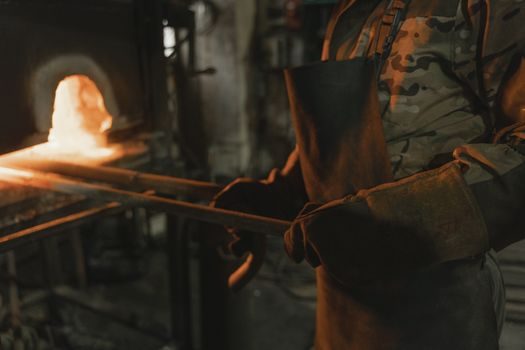
Lining selection is where 60–70 % of holding-furnace lifetime cost is decided. Alumina-silica castable (45–60 % Al₂O₃) suffices for aluminium hold at ≤800 °C, but iron and steel holding at >1 500 °C needs high-alumina (70–85 % Al₂O₃) or magnesia-spinel, and copper-alloy holding at 1 150–1 250 °C typically uses a silicon-carbide or fused-cast AZS working lining against a backup insulating layer. Lining life in a well-run ductile-iron channel induction holding furnace is commonly 1–3 years on the bath roof and 2–5 years on the sidewall, with campaign length driven by metal temperature and number of cold starts. [S2]
Metal-loss budget should be written into the spec, not negotiated after delivery. For aluminium, holding at 720 °C with a closed lid keeps burn-off near 0.1 %/h; an open-lid operation doubles that. Each additional 50 °C of superheat above the alloy's liquidus adds roughly 30–50 % to the burn-off rate. Source verification for shipping classification and tariff treatment of intermediate-frequency holding-furnace cabinets is documented in the intermediate-frequency power supply customs record reference dataset [S5].
Comparison of Holding Furnace Architectures
Four architectures are routinely compared on the same RFQ: resistance, gas-fired reverberatory, coreless induction, and channel induction. The decision matrix below is anchored to the buyer-side variables that change price most: connected load class, melt-loss sensitivity, agitation requirement, and turnkey budget. [S3]
Resistance units score on capex and ease of repair but lose on thermal efficiency at high tap rates. Gas-fired reverberatory holding wins on fuel cost per kWh where natural gas is cheap, but emissions and NOx control hardware can erase that advantage in regulated regions. Coreless induction gives the cleanest melt and the fastest restart after a weekend soak-out, at the cost of a higher kW-rated inverter and stricter cooling-water discipline. Channel induction is the efficiency leader for high-tonnage iron and steel holding, but its channel inductor is a consumable that must be planned for scheduled rebuild. For buyers cross-shopping aluminium, the line-frequency induction furnace picks for marine foundry duties article lays out the same selection logic in a marine context and is worth a read before locking the spec.
Who a Holding Furnace Is For — And Who Should Skip It
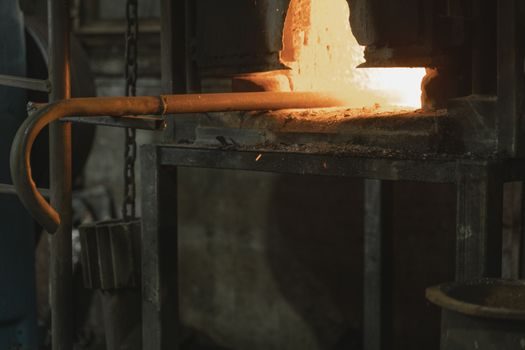
It is for foundries and cast houses that already have a primary melter and need a steady, on-spec supply of molten metal to a high-rate casting cell. It is not for job shops that melt cold charge every shift — that is a melting furnace, and forcing a holding furnace to do double duty wastes fuel and shortens lining life. Process engineers specifying a new die-casting cell, an aluminium extrusion press, or a ductile-iron pouring line are the primary specifiers. Operations running under 4 h of continuous pour per shift rarely justify a dedicated holding furnace at all; a transfer ladle is cheaper. [S4]
Failure Modes and Sourcing Risk to Budget For
Three failure modes dominate warranty claims: (1) silicon-carbide element burnout in resistance units from voltage spikes or flux attack; (2) channel-inductor liner washout when the holding temperature drops below the alloy's freezing point, often during shift changeover; (3) roof-panel sag in gas-fired reverberatory units after years of thermal cycling. Source-side risk in 2026 is concentrated in the inverter cabinet supply for induction units, where lead times for IGBT stacks have stayed long, and in monolithic refractory delivery from central China. [S5]
Comparable sourcing data for capacity bands, price levels and maker geography in the induction segment is documented in the line frequency induction furnace suppliers 2026 capacity and pricing map. For buyers also evaluating a primary melter upstream of the holding unit, the gas-fired aluminium melting furnace supplier map 2026 provides a side-by-side capex view that helps frame whether to bundle or split the procurement.
Standards, Documentation and Verifying What the OEM Promised
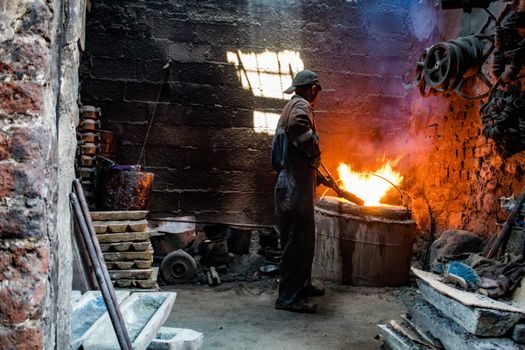
Buyers should require an ISO 9001-certified quality plan on the refractory and a documented cold-to-hot commissioning curve. For iron and steel holding, NACE MR0175 conformance is needed only if the castings enter H₂S service, and that requirement belongs on the casting spec, not the furnace spec. Electrical safety of the power supply cabinet falls under IEC 60079-area classification rules when the holding furnace sits in a classified zone, and the customs record for the intermediate-frequency cabinet should be requested as part of the shipping documentation set [S5].
One line that tends to get negotiated away and should not: "furnace shall hold alloy X at temperature Y ± 10 °C for Z hours with melt loss not exceeding W %/h under closed-lid operation." That sentence, signed by the OEM, is the single most useful warranty claim a buyer will ever have. Track next: (a) the 2026 refractory lead-time index in central China, and (b) any update to the Foshan export price band for homgenising-and-holding lines currently quoted near US$253,000 for a 2-set FOB package [S4].