
A 500 kg capacity crucible furnace carrying a $25,000–$45,000 sticker price commonly accumulates $120,000–$250,000 in lifecycle cost over a 10–15 year horizon, with crucible consumables, electrical energy, and refractory work dominating the spend stack [S1][S2].
TCO analysis treats acquisition cost as roughly 15–25% of true lifecycle spend; the remaining 75–85% is operating cost (O), training (T), maintenance (M), and end-of-life disposal captured in the standard TCO = P + PV(O + T + M + W + E − S) formula [S2][S5].
Crucible Replacement: The Largest Single Spend Lever
Crucible consumables — typically silicon carbide, clay-graphite, or fused silica — cycle out every 80–400 heats depending on alloy, peak temperature, and flux chemistry, and represent the single largest line item after energy [S1]. For a brass melting operation running 4 heats/day, an operator can expect 18–30 crucible changes per year at $300–$1,800 per crucible.
Selection error — running the wrong crucible grade for the alloy — is the most expensive avoidable failure mode, since a single thermal-shock crack can scrap a $1,200 crucible and a 6–12 hour production window.
Energy: kWh Per kg of Melt, Not Nameplate kW
The metric that drives energy TCO is specific energy consumption (kWh per kg of molten metal), which for a well-tuned melting furnace sits at 0.35–0.55 kWh/kg for aluminum and 0.50–0.75 kWh/kg for copper alloys; poor lid practice and cold-charge loading can push that figure above 0.80 kWh/kg [S1].
For a 300 kW medium-frequency induction furnace running two shifts at 4 heats/day, a 0.10 kWh/kg efficiency loss compounds to roughly $18,000–$30,000/year in wasted power at industrial tariff rates [S1][S4]. Insulation upgrades, lid-actuation retrofits, and charge pre-heating are the three highest-ROI levers, typically returning 2–4x their installed cost within 18 months.
Refractory and Lining Maintenance: A 5–8 Year Cycle
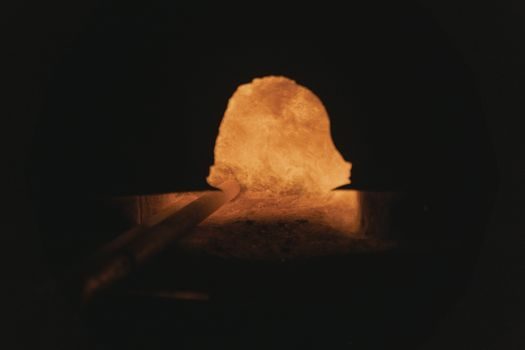
The monolithic refractory lining that backs the crucible or forms the furnace hearth carries a 5–8 year service life before a full re-lining shutdown is required, and intermediate patching every 12–18 months on a high-cycle holding furnace tied to die-cast or continuous casting lines [S2].
The decision is a classic TCO trade — pay more per cubic metre now, or pay for a planned 3-day shutdown plus $20,000–$40,000 of scaffolding and demolition labor later.
Labor, Training, and Downtime: The Hidden 20%
A single unscheduled crucible failure on a Friday night shift can cost 8–16 hours of line stoppage, which on a $400/hour casting line values at $3,200–$6,400 per event before scrap metal is counted.
For a foundry running three crucible furnace units, that single procedural change can move the annual maintenance line by $15,000–$30,000.
Cost Driver Ranking: Acquisition vs Operating Spend
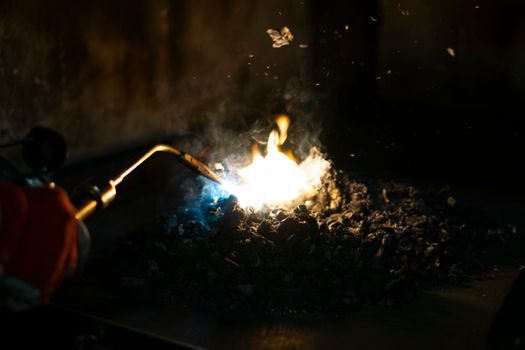
Across the four primary TCO buckets for a small-to-mid crucible furnace, the typical lifecycle distribution ranks: (1) crucible consumables 25–35%, (2) electrical energy 20–30%, (3) refractory and spare parts 12–18%, (4) labor plus downtime 18–25%, with acquisition price at 15–25% [S1][S2][S4]. The cross-vendor comparison below shows how shifting a single driver moves the 10-year number materially.
Option A (entry-level, manual pour, basic controls): $120,000–$170,000 TCO over 10 years. Option B (mid-tier, PID temperature, hydraulic tilt): $180,000–$240,000 TCO over 10 years, with 15–20% lower energy cost offsetting the higher capex. Option C (premium, vacuum-rated, dual crucible, full automation): $260,000–$380,000 TCO over 10 years, justified only for aerospace or specialty alloys where melt cleanliness is contractually mandated.
End-of-Life Disposal and Residual Salvage
Disposal cost (E) and salvage value (S) close the formula and are often the most poorly documented line items in a procurement-stage TCO model [S2][S5].
Specification discipline at purchase — separable crucible cassettes, documented refractory composition, and RoHS-compliant electrical panels — is what allows the salvage line to work in your favor rather than against it [S4][S5]. TCO is not a one-time exercise; it must be re-baselined whenever crucible grade, alloy mix, or shift pattern changes materially [S2].
Standards, Sourcing, and What to Verify Before Purchase
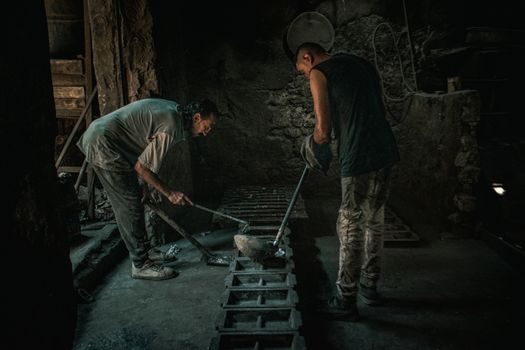
No single ISO or IEC standard governs crucible furnace TCO methodology; instead, buyers should anchor the analysis on the procurement-process TCO formula referenced by major public-sector sourcing frameworks — TCO = P + PV(O + T + M + W + E − S) — and validate vendor energy claims against kWh/kg, not against nameplate kW [S2][S5]. For context on broader equipment lifecycle cost patterns, see the centrifugal pump spend map and the single girder crane 20-year TCO breakdown, which use the same driver-ranking logic.
Trackable next signals: request a vendor's 12-month kWh/kg log from an installed reference site, and a 3-year crucible-change frequency curve, before locking a purchase order; the difference between a good and a bad crucible-fleet operator is visible in those two numbers within the first 90 days of operation [S1][S4].