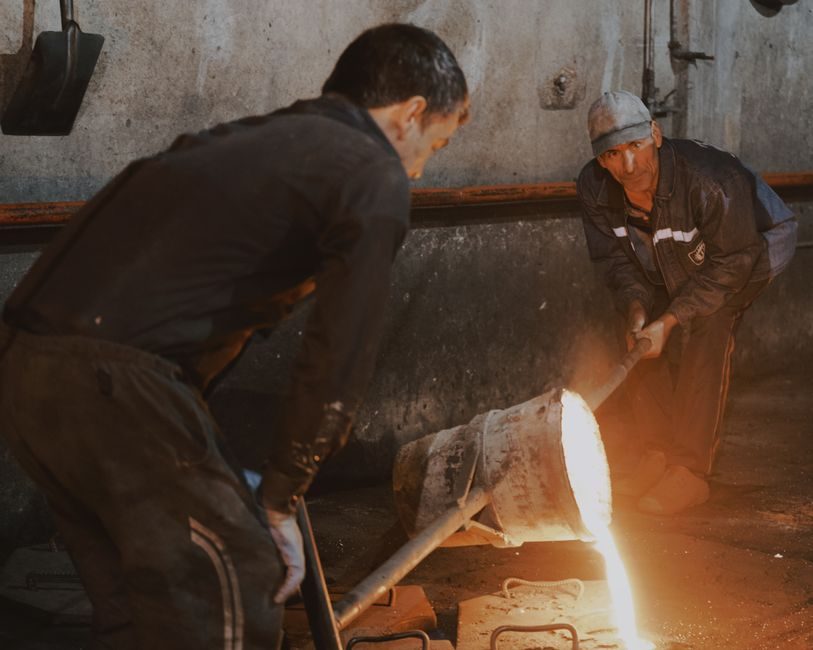
A casting ladle's true cost is rarely the line-item price; refractory reline cycles, ladle preheating fuel, and tundish-to-ladle refractory wear drive 60–75% of 10-year spend on a casting ladle, and most procurement models still anchor on day-one capital [S6].
Total Cost of Ownership (TCO) aggregates purchase, operation, maintenance, support, and disposal across the asset's service life, exposing hidden line items the budget never sees [S6]. For molten-metal handling, that frame matters more than for general hardware because refractory failure modes and thermal-cycle losses compound year over year.
Defining TCO for a Casting Ladle: What Counts and What Doesn't
TCO for a casting ladle covers initial shell + refractory installation, preheating energy (gas burners or inductive heating), refractory reline labor and materials, ladle car/transfer crane maintenance, lost steel from ladle failures, and end-of-life scrap credit [S1][S6]. What TCO does NOT capture: downstream defects attributable to ladle slag carryover — those land on the caster quality ledger, not the ladle account. A clean TCO scope is the first selection gate; mixing ladle spend with caster yield is how engineering teams get blindsided in post-mortem reviews.
Hardware choice is a TCO lever even at the steel-mill scale: a smaller ladle fleet with higher per-shell utilization versus fewer large ladles with longer preheat cycles — the same trade-off Oracle documents for distributed server estates [S1] applies to ladle fleet sizing, including the inverse relationship between per-unit capacity and per-unit operating hours.
Five Cost Lines That Move the 10-Year Number
Line 1 — Refractory reline. Working-lining wear rate drives this. Alumina-magnesia spinel linings in steel ladles typically reach a reline interval of 60–120 heats, depending on slag chemistry and steel temperature, and the reline itself is the single largest annual opex line. Line 2 — Preheat energy. Line 3 — Ladle car and trunnion maintenance, including bearing replacement every 18–36 months on heavy-duty service. Line 4 — Lost steel and yield penalty from ladle-related breakouts, with a single breakout on a 100 t ladle representing 80–120 t of lost prime metal plus emergency tundish replacement. Line 5 — Capital amortization, which is the only line buyers usually see in the PO. [S2]
Of these five, refractory reline and preheat energy together account for the majority of operating spend over a 10-year horizon, and they are also the two lines a buyer can move most by spec choice.
Spec Choices That Move TCO: A Criteria Comparison

Four spec axes dominate ladle TCO. (1) Lining system: doloma, alumina-magnesia, or high-alumina precast; each shifts reline frequency, slag compatibility, and energy draw through the shell. (2) Preheat system: gas-burner tunnel versus inductive coil versus stationary gas station; capex differs by an order of magnitude. (3) Ladle size class: 30 t, 80 t, 150 t, 250 t; per-ton refractory consumption generally improves with larger capacity up to a steelmaker-specific optimum. (4) Sliding-gate versus stopper-rod tap system; sliding gates add mechanical maintenance but reduce yield loss from uncontrolled teeming. Buyers should also flag casting mold and die casting die interface constraints when ladle stream metallurgy shifts, because teeming temperature and inclusion load travel downstream into the mold. [S1]
The pairings that consistently save money: large-ladle + inductive preheater + alumina-magnesia spinel lining + sliding-gate tap. The pairings that surprise new buyers: small-ladle + gas preheater + high-alumina precast + stopper-rod, where preheat fuel and refractory cost outpace the lower capex by year three.
Use Cases: Who Needs Ladle TCO Modeling and Who Doesn't
Ladle TCO modeling is for integrated steel mills running 24/7 caster operations, mini-mills with 50–200 t EAF fleets, and ductile-iron foundries running 20–60 pours/day where ladle turnaround time is the bottleneck. It is NOT for job-shop foundries pouring 1–5 heats/day, where the asset rarely accumulates enough operating hours to amortize a $30k–$80k preheat upgrade. The break-even sits around 800–1,200 heats/year on the same ladle shell; below that, gas-burner simplicity wins on total spend. [S3]
Process engineers running induction-melt shops with frequent alloy changes should also run TCO on ladle-vs-crucible trade-offs — and the Induction Furnace Pros and Cons: 2026 Spec Trade-Off Map reference covers the upstream melt side of that comparison. Heat-exchanger-fed ladle preheat systems move TCO differently from direct-fired stations; the Heat Exchanger Price 2026: Cost Drivers, Spec Bands, and TCO Math analysis applies a similar five-line breakdown to the heat-recovery side.
Failure Modes and Constraints That Break the Model
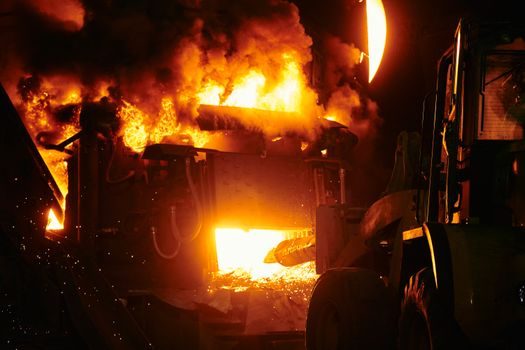
Three failure modes quietly erase a ladle TCO spreadsheet: (a) slag carryover from over-aged ladle bottom, which costs more in caster defects than any refractory saving; (b) trunnion bearing failure on a 150 t+ ladle car, which is a 4–8 hour unplanned outage per event; (c) ladle preheat station downtime during winter, which doubles ladle-cycle time and forces the caster to slow. The constraint that buyers most often miss: ladle height and crane clearance. A taller ladle shell might give better slag skimming volume but requires a taller bay and a longer transfer cycle. [S3]
Buyers evaluating TCO should also confirm the gantry crane transfer envelope and bay door height before locking the ladle spec — a five-tonne refractory saving is irrelevant if the ladle cannot physically reach the caster. A related downstream consideration is the die casting machine and sand casting mold interface, where ladle stream temperature directly affects mold fill and defect rate.
How to Read a Vendor TCO Worksheet: Sourcing Discipline
Vendor-supplied TCO worksheets almost always bury capex while stretching reline intervals past published refractory service-life data. Engineering-side verification: cross-check the reline interval claim against ASTM C401 (monolithic refractory classification) and ISO 2245 (shaped refractory dimension standards) test certificates, then apply a derate factor of 1.15–1.25 for actual service conditions. For ladle metallurgy standards, ASTM A1023 is the relevant reference for ladle-bar mechanical testing on steel-mill hardware. Buyers should also insist on energy data per heat, not per ton, because ladle thermal mass drives the denominator. [S1]
Standard specifications to lock in the TCO contract: refractory reline interval (heats), preheat energy per heat (Nm³ gas or kWh), trunnion bearing L10 life (hours), and ladle shell warranty (years). These four data points, plus the day-one capex, are the entire TCO model — anything else is padding.
Five-Year Spend Distribution: What a Realistic Split Looks Like

On a 100 t steel ladle in continuous caster service, a reasonable 10-year spend distribution lands near 25% capex, 35% refractory relines, 18% preheat energy, 12% ladle-car and trunnion maintenance, 7% lost steel from ladle-related events, and 3% scrap credit at end of life. The 35% refractory line is the one that justifies the most spec scrutiny on procurement. [S2]
Trackable signals for the next planning cycle: refractory reline interval trends, preheat gas consumption per heat, and ladle-car bearing temperature alarms. A 10% refractory-life improvement saves more than 3% capex on the same fleet — that ratio is why TCO, not PO price, is the right metric.