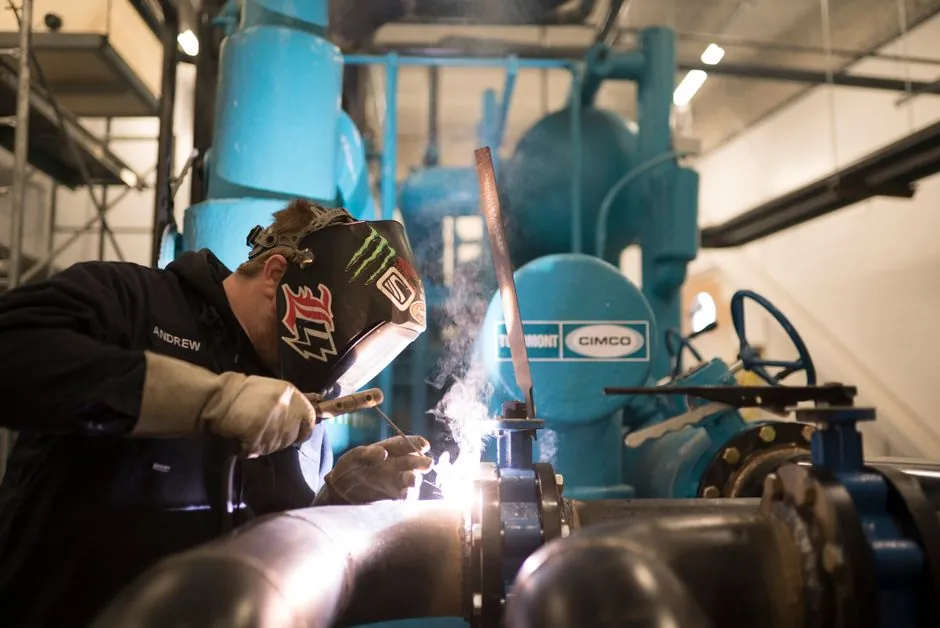
Drawn arc stud welding costs more per stud when ferrules, three-phase power, and heavier equipment are required, but it provides deeper penetration and accommodates larger studs from 3–25 mm [S1][S2].
Capacitor discharge welding usually wins on thin-gauge work because it eliminates the need for post-treatment, completes gap welding in approximately 1 ms, and supports M3–M10 studs on sheet with a minimum thickness of 0.5 mm [S2].
Cost-per-stud decision boundaries
CD has the lower standard cost at small scale because the stud carries a weld pip, no ceramic ferrule is consumed, and the capacitor bank charges to a preset voltage for the selected diameter [S1][S5]. Its gap-welding cycle is approximately 1 ms, providing a low thermal load that allows thin sheets to be welded without damage to the rear side [S2].
DA carries the higher recurring cost because ceramic ferrules contain and shape the molten fillet, must be broken away and discarded, and the gun must maintain spring pressure through a longer arc cycle [S1][S5]. That cost buys useful penetration, tolerance of dirty or curved surfaces, and access to larger fasteners. Neither process can be assigned a defensible universal currency cost without the stud diameter, sheet thickness, weld quantity, ferrule price, labor rate, and equipment capital.
For a production estimate, calculate CD as machine and service allocation plus CD studs plus power plus labor per acceptable weld. Divide each by good studs produced, not theoretical cycle time alone.
Process comparison by the numbers
CD normally wins on consumables and setup for M3–M10 studs on sheet from 0.5 mm upward, while Taylor lists 1–10 mm studs and material from 0.7 mm [S1][S2].
DA normally wins when penetration, larger diameter, or production ruggedness matters, with Taylor reporting stud diameters from 1/4 inch to 1 inch and drawn-arc currents from 400 A to 2,000 A [S1][S3]. Its typical gun current is substantially higher, with one application source describing a 400–2,000 A range [S3].
Where the lower total cost appears

CD is the stronger choice for sheet-metal cabinets, electrical enclosures, appliances, and other thin-sheet assemblies where reverse marking is unacceptable. HBS identifies sheet metalwork, switchboard cabinets, laboratory and medical equipment, food industry equipment, and household appliances as typical CD applications [S2]. Tip ignition can also be the most economical process on thin steel, aluminium, or brass because it removes through-hole preparation and avoids reverse-side damage [S2][S3].
DA becomes the lower total cost when deeper penetration or larger studs make CD unsuitable [S6]. Stud welding affixes a fastener onto a single side of a metal component [S1].
DA is generally used to weld large-diameter fasteners to rougher and thicker base metals, and its cycle is completed in less than a second [S5]. At low volume, machine depreciation, setup, and operator proficiency may dominate; at high volume, automatic loading can improve both repeatability and unit cost [S1][S2].
Ferrule and consumable-cost treatment
A CD cost calculation must not include a ferrule allowance because the cited CD sequence positions the stud against the plate, discharges energy through the timing tip, and forms the joint without a ferrule [S5]. DA requires a ferrule to contain molten metal and shape the fillet, after which the ferrule is broken away and discarded [S1][S5].
For DA, divide the purchased ferrule cost by the number of acceptable weld cycles, then add ferrule-removal and disposal handling. If the supplier sells ferrules individually or by carton, use the delivered unit cost, including freight and minimum-order effects. Drawn arc stud welding uses a ceramic ferrule to concentrate heat below the stud and contain the molten metal within the weld zone [S5].
Short-cycle stud welding is presented as a third stud-welding technique distinct from capacitor discharge and drawn arc [S1].
Power, equipment, and acceptance constraints
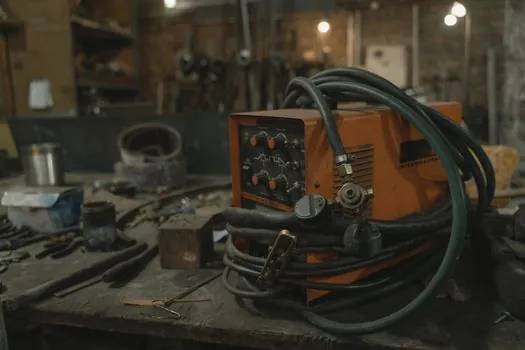
CD equipment uses 110 V, while arc stud welding can use 110 V or 480 V three-phase power; a production CDS-2500 drawn-arc example is rated at 120 kVA, 2,500 A, and three phase [S4][S7]. Higher installed power can add electrical infrastructure cost, but it also supports the deeper welds demanded by heavier sections [S6][S7].
CD is not the universal fallback for difficult metallurgy. Although one comparison describes CD as compatible with nearly any weldable material and able to weld dissimilar metals, that does not remove the need for a qualified weld schedule, suitable base-metal preparation, and acceptance testing [S5]. Drawn arc is generally used for larger-diameter fasteners on rougher and thicker base metals, while capacitor discharge is characterized by very short, low-thermal-load welding [S2][S5].
For safety-critical or contract-governed work, require the project to define weld qualification, inspection, and acceptance criteria rather than infer quality from process name. Verify product-specific requirements with the governing contract, drawing, and applicable welding standard. The available material does not establish a universal AWS code, inspector qualification rule, or allowable design load, so no such limit should be invented.
Recommended purchasing calculation
Choose CD when the stud is M3–M10, the sheet is approximately 0.5–0.7 mm or thicker within the manufacturer’s schedule, the face is clean and flat, reverse marking must be minimal, and no ferrule is required [S1][S2][S5]. Choose DA when penetration, 3–25 mm capacity, dirty or curved surfaces, or single-sided structural attachment justifies the ferrule and three-phase burden [S1][S2].
Use a 30-day or annual production trial rather than a brochure comparison: record cycle time, rework, rejects, ferrule consumption, operator minutes, consumable price, and electricity for each process. This test is essential for comparing stud welders because a lower material cost can be erased by rework or slower handling. For practical equipment alternatives, the decision on stud welder power units should follow the same output and acceptance requirements.
The break-even point is reached when DA’s extra ferrule and handling cost per stud is lower than the combined value of CD’s scrap, rework, added operations, or inability to qualify the joint. If those penalties are negligible, CD gives the cleaner cost result. If they are material, DA is often the cheaper engineered solution even though its consumable cost per weld is higher.