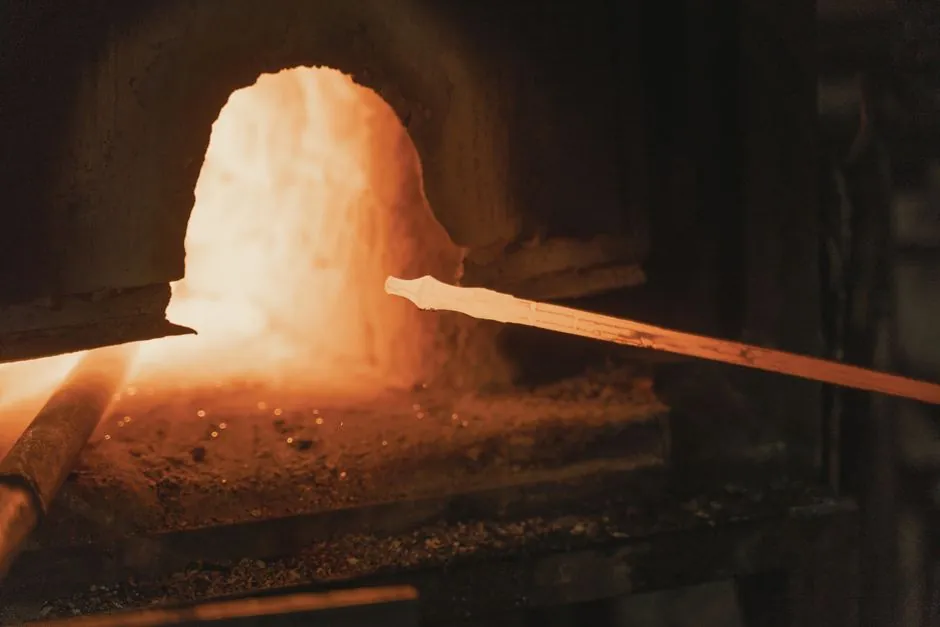
In a cupola furnace, metallurgical coke plays a dual role: combustion fuel for the tuyere zone and the sole carbon donor that raises molten iron from low-charge levels up to 3.2-3.5% C in finished cast iron, as documented in a 1997 melt-control study that targeted a 13.5% coke-by-weight metal-to-coke ratio [S1].
Carbon moves from solid coke into liquid iron by direct contact and by CO/CO2 transfer as the melt drips through the incandescent coke bed, with sulfur riding along as the main undesirable pickup, and operators balance those reactions by adjusting bed height, blast rate, and the iron-to-coke ratio [S2][S5].
Why the Coke Bed Is Both Fuel and Recarburizer
A cupola is more than a melter; the descending charge column sits on top of a hot coke bed, and the iron droplets that fall through it pick up carbon at a rate that scales with contact time and bed temperature, so a taller bed at constant blast means more carbon and more silicon loss, a relationship cupola operators have used for decades [S4].
The feed-metal baseline starts well below eutectic carbon, so the bed has to add roughly 1.0-1.5 percentage points of C to a typical steel-bearing charge; the per-pass pickup number, often called "carbon from the coke bed," is the variable that links cupola operation to the final cast iron specification, and operators use the tuyere raceway as their main trim knob [S6].
TPK Efficiency, Coke Rate, and the Tradeoff Math
TPK, expressed in tons of hot metal per hour per 1,000 standard cubic feet of Equivalent Blast Rate, is the headline productivity number for U.S. cupola lines, and the three published bands (low 2.3-2.8, medium 2.8-3.3, high above 3.3) map directly onto coke rate and pickup behavior, with low-TPK shells typically running cold blast, short stacks, and poor charging that starve the bed of sensible heat [S3].
A worked example from the Foundrygate cupola design manual uses a 15% coke charge at 91% fixed carbon and assumes 0.4% pickup by the metal to back-calculate coke burnt per 100 kg of iron, which is the kind of stoichiometric check a melter should run when a heat comes in high or low on carbon [S8].
The same bed that supplies heat also donates carbon and absorbs sulfur, so a high-sulfur coke pushes hot metal sulfur up faster than it pushes carbon up, and a sulfur trim is usually done outside the cupola rather than by changing coke, because the cupola furnace cannot separate those two inputs [S5].
Bed Height, Raceway Temperature, and the Carbon-Silicon Lever
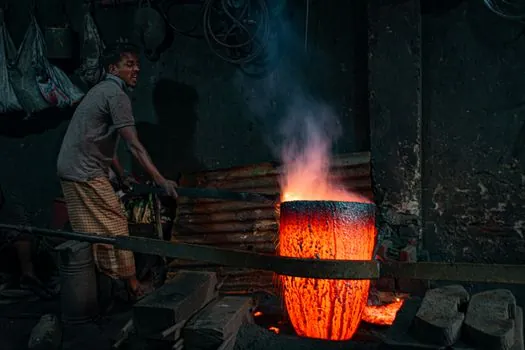
Higher raceway temperature from richer oxygen enrichment speeds the Boudouard reaction, raises the iron temperature at the drip zone, and accelerates carbon pickup, with the classic patent teaching that the higher the iron temperature, the faster the bed carburizes along the iron-carbon equilibrium line [S7].
Operators therefore have two coupled levers: bed height, which sets contact time, and blast temperature or oxygen enrichment, which sets drip-zone superheat, and they must be moved together, because raising blast without raising bed height gives more melt with less carbon, while raising bed without more blast can choke the cupola [S4][S6].
For gray iron the target silicon window of 2.1-2.4% acts as a thermal proxy: high silicon means high melt temperature, which in turn means high carbon, so a silicon slip is almost always a carbon slip as well, and the corrective action usually lives in the blast, not the coke weight [S1].
Foundry Reality: U.S. Cupola Tonnage and Charge Tolerance
U.S. cupolas still pour roughly 4.7 million tons of iron a year, about 32% of foundry iron production, with the top ten producers running near 3 million tons annually and a gray/ductile split of about 2.4 million tpy gray to 2.1 million tpy ductile, a tonnage base that makes cupola carbon control a real production variable rather than a niche concern [S3].
That base matters for spec work because cupolas can digest painted, oily, zinc-coated, and mixed scrap that would wreck an induction lining, so foundries running dirty automotive and demolition scrap keep their iron in the cupola and use the bed to set final carbon, while electric melts handle cleaner charge with closer to a neutral carbon balance [S3].
Where Cupola Carbon Pickup Is the Wrong Tool
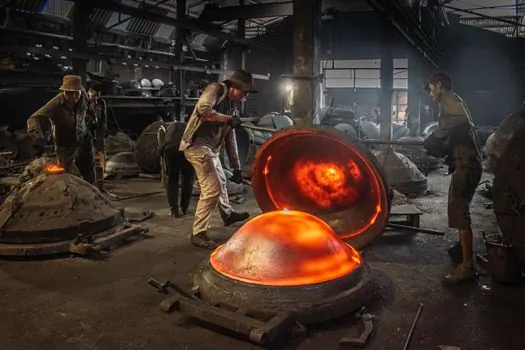
If the target is below about 2.5% C, a cupola running a normal coke bed will over-carburize the heat, and diluting with low-carbon steel scrap is inefficient because the bed keeps donating carbon, so low-carbon and austempered ductile iron production is usually a coreless or channel induction job, with cupola iron blended in only as a controlled feedstock [S3].
Sulfur is the same story: a cupola cannot run a high-sulfur coke and then strip sulfur inside the bed, so any sulfur spec tighter than about 0.10% needs external desulfurization, and the cupola furnace is then sized for melting and carbon pickup, not for final chemistry [S5].
Comparable Coke-Bed Refractory Options for the Tuyere Zone
When a foundry is rebuilding the tuyere and pre-tuyere zone that sees the harshest combination of coke ash, slag, and iron oxide, the practical options line up against four decision criteria: SiC brick or SiC-based castable, high-alumina brick, and carbon-bonded carbon brick are the three main categories, with fireclay brick as the legacy baseline. [S3]
On thermal conductivity and slag resistance, SiC wins; on cost per ton installed, fireclay and high-alumina win; on iron-oxide wetting resistance, carbon-bonded brick wins in the raceway; and on thermal-shock tolerance, high-alumina castables tend to outperform brick in cyclic operation, which is why many modern cupolas run a SiC tuyere sleeve, a high-alumina stack, and a carbon-bonded bosh. A related crucible furnace lining sees similar but lower-intensity chemistry, and the cross-reference is useful when a foundry runs both unit types, as covered in the SiC vs graphite crucible refractory selection matrix.
Trackable Signals for the Next Quarter
Watch for two numbers in any future U.S. cupola survey: the TPK band that the median line reports (whether it climbs out of the 2.3-2.8 low band), and the gray-to-ductile tonnage ratio, since a shift toward ductile compresses the coke-bed carbon window and pushes more foundries toward induction trim or external recarburizer dosing rather than relying on the bed alone [S3].