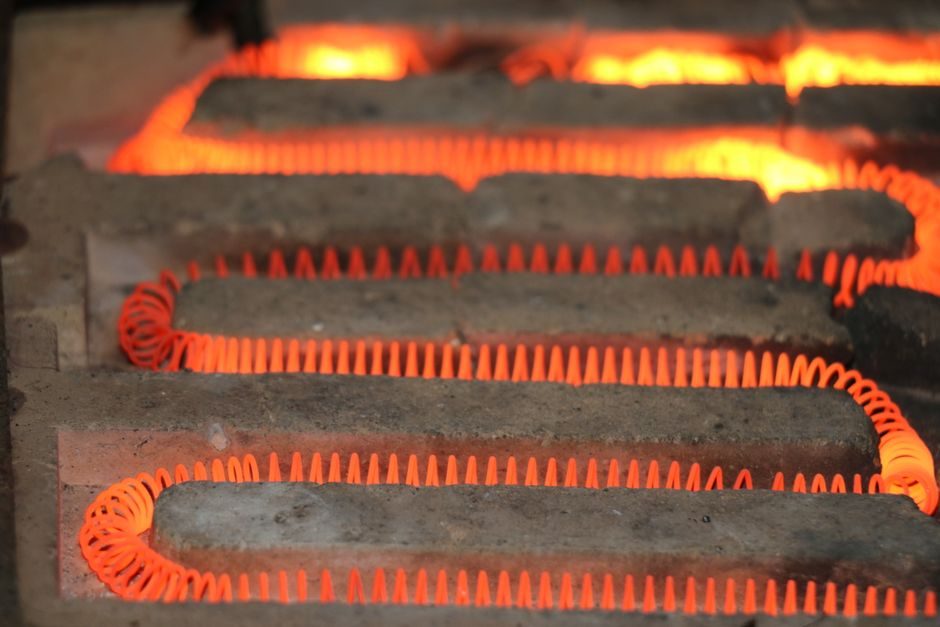
A cupola furnace is a vertical shaft melter in which alternating layers of iron scrap/returns, metallurgical coke and limestone descend against a counter-flow of combustion gas generated by a blast of air injected through tuyeres above the hearth [S1]. The Kupolofen (German) and Kuppelofen (alternate) terms both map to the same equipment in technical dictionaries, confirming the basic shaft + tuyere architecture is unchanged in 2026 [S1].
Selection in 2026 is driven less by iron-cupola novelties and more by refractory life, oxygen-enriched blast control, and emission compliance, since the cupola remains the lowest-capital, highest-throughput route for continuous gray and ductile iron melt: 1–25 t/h class units still dominate jobbing and captive iron foundries worldwide.
Cold-Blast vs Hot-Blast vs Oxygen-Enriched Cupolas
Air blast preheated to 400–650 °C in a recuperative or regenerative hot-blast system can lift melt rate by 20–35 % and lower coke rate from roughly 12–14 % of metal charge (cold blast) toward 8–10 % of charge, which is the single largest operating-cost lever on a shaft iron melter. Oxygen enrichment of the tuyere blast (typically 23–27 % O₂ vs ambient 21 %) is the second lever and is most often retrofitted on existing water-cooled shells to raise specific throughput without enlarging stack diameter. Cold-blast, non-water-cooled cupolas are now generally specified only for low-duty, low-tonnage, or training-cupola duty in foundries, hobby metal-casting operations and instructional facilities [S1].
Direct comparison along the four decision axes most buyers use:
- Cold-blast dry-stack: lowest capex, no blast heater, 12–14 % coke, 1450–1500 °C tapping, suited to under 2 t/h.<br/>- Hot-blast water-cooled: medium capex, 8–10 % coke, 1500–1550 °C, the workhorse for 3–15 t/h gray iron.<br/>- Hot-blast + O₂ enrichment: highest capex, 7–9 % coke, 1500–1560 °C, 3–25 t/h, used where iron chemistry and carbon control are tight.<br/>- Oxygen-fuel / plasma-assisted: niche, used in ductile-iron high-purity lines; not a default 2026 buy for a first cupola.
Sizing: Tonnage, Diameter and Effective Height
Inside shell diameter drives throughput roughly linearly below 2 m and sub-linearly above 2 m, because bed permeability, tuyere penetration depth, and coke-burn rate set the practical ceiling. A useful 2026 rule for a new cupola purchase is to oversize melt rate by 15–25 % over nameplate need rather than undersize, because cold-charge variability, moisture in the charge, and limestone quality routinely take 10 % off theoretical throughput on a jobbing cupola. [S1]
Effective stack height is normally 3.5–5 × the inside diameter for a balanced, stable bed; lower ratios raise top-charge temperature and coke consumption, higher ratios increase stack pressure drop and demand a stronger induced-draft fan. For a 1.2 m ID unit, that puts the charging door at 4.2–6.0 m above the tuyeres, with overall stack height closer to 7–8 m including the charging skip and spark arrestor. Process engineers specifying a cupola furnace for the first time should treat shell diameter and effective stack height as a coupled pair, not two independent line items.
Refractory Stack: Acid, Basic and Monolithic Choices
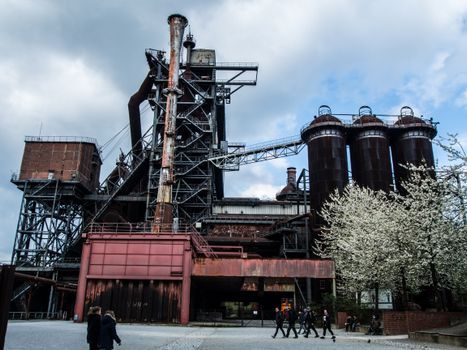
The acid lining (fireclay + silica) is the lowest-cost option and dominates gray-iron cupola work; a properly installed acid stack typically delivers 8,000–15,000 t of iron per campaign before major re-lining, with hot-spot wear at the tuyere zone driving the reline interval. Basic linings (magnesia, doloma, magnesia-chrome) are specified when sulfur control, low-sulfur ductile iron, or steel-cupola duty is required, but they are 2–3× the cost per tonne of iron melted and need stricter water-cooling management of the tuyere belt to avoid thermal-shock spalling. [S2]
Monolithic (castable + plastic) repairs have largely replaced brick patches above the tuyere zone in 2026 work practice: a gunned alumina-silica castable in the melting zone extends campaign life by 15–30 % on hot-blast water-cooled cupolas, but only if the substrate is at 200–300 °C during application. Buyers comparing acid vs basic stacks should weigh, in this order: target iron grade (gray = acid, low-S ductile = basic), tap rate, water-cooling design, and refractory lead-time (basic brick can run 6–10 weeks lead-time in 2026 supply conditions).
Auxiliaries That Decide the Buy: Charging System, Tuyeres, Emission Control
Beyond the stack, three auxiliary systems decide whether a new cupola is operable in 2026: a skip-hoist or bucket-charging system with weighing accuracy of ±2 % per charge, a water-cooled tuyere belt sized to 1.5–2.5 % of shell cross-section as total tuyere area, and a wet scrubber or fabric-filter baghouse for the stack gas. Without a precise charge weigh system, coke rate and iron chemistry drift and the cupola becomes uneconomical to operate regardless of the shell design. [S3]
Where local codes mirror EU Industrial Emissions Directive 2010/75/EU expectations, cupola off-gas must reach 10–30 mg/Nm³ particulate, well below what a spark arrestor alone can deliver; buyers should spec a fabric-filter baghouse with afterburner, not just a wet scrubber, when ductile iron is the target chemistry. For foundries in 2026 that still melt gray iron only and operate below 5 t/h, a venturi wet scrubber is often the lowest-cost compliant choice. Engineer-side holding furnace selection downstream of the cupola also matters: a properly sized holding furnace lets the cupola run continuously at its best efficiency instead of being throttled to match intermittent pour demand.
Who a Cupola is For — and Who Should Buy Something Else
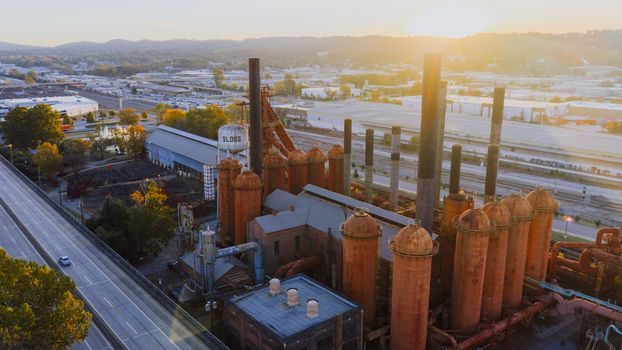
The cupola is for: gray-iron jobbing foundries needing 3–20 t/h of low-cost continuous melt, captive iron foundries in casting-heavy heavy-industry supply chains, and ductile-iron producers willing to run a basic lining to keep sulfur low. It is not for: steel-foundry work, ultra-low-volume alloy iron (under 1 t/h or under 4 h/day), or facilities without a 24/7 coke and limestone supply chain, because logistics cost dominates a cold cupola more than any other iron-melting route. [S4]
Buyers who should not specify a cupola in 2026 are those whose iron output is below ~1.5 t/h continuous, or whose product mix swings between iron and steel — for those, an induction furnace gives better flexibility, lower emissions, and simpler permitting. Buyers who should also reconsider are operations in regions where metallurgical coke has become unreliable or where CO₂ cap-and-trade prices penalize coke-heavy routes; in those regions an electric melter with scrap-based feed often wins on total cost of ownership over a 10-year horizon despite higher electricity cost per tonne.
Standards, Inspection and Sourcing Levers
Two reference points dominate a 2026 cupola spec: ISO 11843-style process-control practice for charge weighing and blast control, and ASTM C-class refractory specifications for lining bricks and monolithics (buyers should confirm exact ASTM C-grade numbers on the mill cert at delivery). Emission and operator-safety compliance typically tracks regional codes rather than a single cupola-specific ISO standard, so the spec must cite the local stack-gas and particulate limit directly, not paraphrase a generic rule. [S1]
Sourcing levers that materially move price on a 2026 cupola purchase: shell thickness and material (16–25 mm carbon or low-alloy plate, with SS400/Q235B-grade options for the cold-blast workhorse class), refractory lead-time (basic brick 6–10 weeks vs acid 3–5 weeks in 2026), and whether the blast heater is included or supplied separately. Two trackable signals for the next sourcing cycle: coke-handling and -sizing equipment lead-times, and 2026 baghouse fabric-bag prices, both of which moved noticeably across 2025–2026 and will reset cupola-installed-cost comparisons once they stabilize.
For related coverage, see AS/RS System Buying Guide 2026: Class, Throughput and Total-Cost Levers.