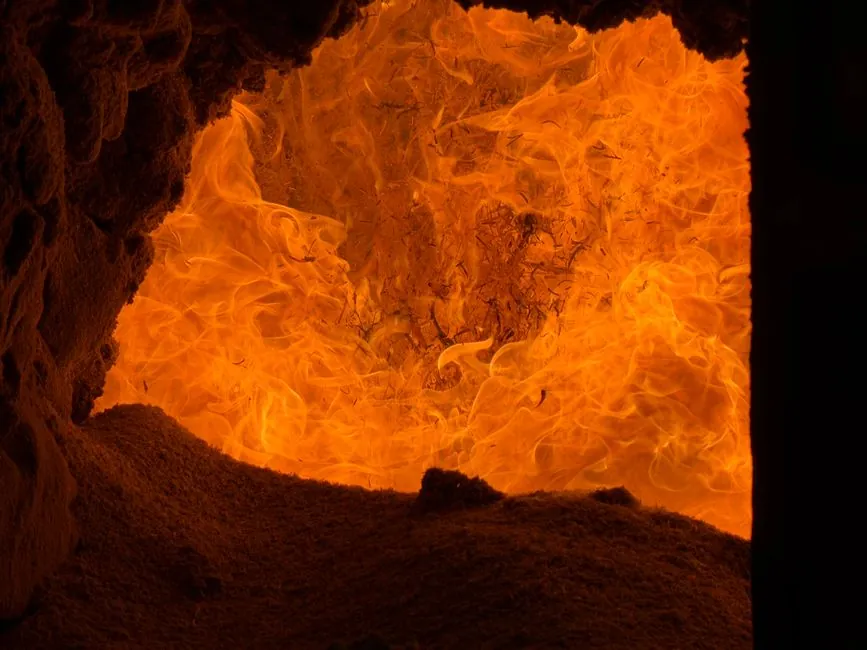
Cupola furnace capital cost scales roughly with the 0.6 to 0.8 power of nominal melt rate, putting a 10 t/h unit in the $400,000 to $900,000 band and a 50 to 90 t/h system at $1,500,000 to $3,000,000+ USD before auxiliaries [S4][S5].
Foundry buyers evaluate cost per ton per hour using two separate numbers: installed capital amortized over design melt rate, and total melting cost (coke, oxygen, refractories, blast, labor) per liquid ton. EPRI's CMP cost comparison model (Report 89-4) frames cupola versus induction furnace decisions on the same per-ton-of-liquid-iron basis, with melting consuming 30 to 50 percent of total foundry operating cost [S3].
Cupola furnace price per ton of melt rate: capacity-tier benchmarks
The cupola remains the lowest-capital-per-ton iron-melting unit in the foundry fleet, a fact the Foundry Lexicon states directly: "The investment costs are low compared to other units" relative to channel, rotary, and electric arc alternatives [S4].
Three reference tiers anchor 2026 quoting. A small cold-blast cupola at 1 to 5 t/h sells for roughly $200,000 to $500,000 installed; a mid-size hot-blast recuperative unit at 5 to 30 t/h lands between $500,000 and $1,500,000; and a long-campaign water-cooled system at 30 to 100 t/h ranges $1,500,000 to $3,000,000+, with WRIB's installed base covering 120+ units up to 90 t/h [S5]. Industry-cited melt-rate envelopes of 1 to 30 t/h for general foundry work and 18-inch to 13-foot shell diameters producing up to 100 t/h for large iron operations bracket the sizing range [S6][S8]. On a per-ton-per-hour basis, that compresses small units to roughly $60,000 to $150,000 per t/h and large units to roughly $30,000 to $50,000 per t/h, illustrating the strong economy of scale. For buyers cross-checking sizing logic, the cupola furnace melt rate sizing envelope lays out the same 1 to 100 t/h envelope in more detail.
Energy and coke cost: the dominant operating-cost driver per ton
Specific gas consumption for a well-tuned hot-blast cupola runs about 49 Nm3/t of liquid iron, equivalent to roughly 530 kWh/t at tapping temperature [S4].
The two combustion reactions that govern the heat balance are: C + O2 -> CO2 with ΔH = -33,260 kJ/kg C, and the endothermic CO2 + C -> 2CO with ΔH = +14,009 kJ/kg C, which sets why hot-blast operation with recuperation is essential at higher melt rates [S4]. Cold-blast cupolas, typically sized 2 to 10 t/h, achieve roughly 60 percent thermal efficiency as a melter but waste CO as sensible and chemical energy, so their per-ton fuel cost is materially higher than a recuperative unit of equal melt rate [S4]. The EPRI workbook allows a foundry to swap local coke cost ($/t), electricity cost ($/kWh), and oxygen cost ($/Nm3) into the same sheet to produce a per-ton-of-liquid-metal number; Tier 1 is rated at roughly ±15 percent accuracy for a first-pass capital decision [S3]. For operations weighing recuperation retrofits, the trade-off is captured in standard cupola furnace practice: blast preheat of 400 to 600°C widens the scrap-steel charge window and tightens tap temperature, both of which lower the all-in cost per ton [S4].
Cost driver comparison: cupola versus induction and versus gas-fired holding
Decision-relevant criteria line up clearly when the same foundry is weighing cupola against induction furnace and a holding furnace used downstream. [S3]
(1) Capital cost per t/h: cupola $30k to $150k/t/h beats medium-frequency induction at typically $80k to $200k/t/h for the same cast-iron throughput, per the EPRI capital-cost module logic and Foundry Lexikon commentary [S3][S4]. (2) Energy source and cost per ton: cupola burns metallurgical coke at roughly 8 to 12 percent of charge weight; induction consumes 500 to 600 kWh/t at grid rates, so the per-ton energy line item is geography-dependent and only wins for cupola where coke is cheap and power is expensive [S3][S4]. (3) Emissions and permitting: cupola CO2 per ton is materially higher per kg of liquid iron, and 2026 EPA NESHAP and EU IED revisions have pushed many US and EU greenfield projects toward gas aluminum melting furnace and induction routes; the Modern Casting 2025 cupola-resilience piece explicitly frames cupola versus electric in CO2 terms [S1]. (4) Charge flexibility: cupola accepts wide scrap-steel and pig-iron mixes, induction is more sensitive to charge chemistry, and the hot-blast unit at 400 to 600°C blast can substitute up to 30 to 40 percent scrap steel without chemistry penalty [S4].
Total cost of ownership: capital, energy, refractories, and labor
Installed capital is roughly 20 to 35 percent of 10-year total cost of ownership for a mid-size cupola, with coke, oxygen, blast, refractories, and labor making up the balance [S3][S4].
Refractory lining life drives the maintenance reserve: refractory-lined cold-blast units reline on a campaign basis, while lining-less bare-shell water-cooled designs, such as those WRIB specializes in, trade higher blast and water utility cost for longer campaigns and lower refractory spend per ton [S5]. Water cooling duty scales with melt rate; tuyere and shell cooling systems are quoted separately and typically add 5 to 12 percent to the furnace price, on top of the material handling, dust collection (fabric filters or wet scrubbers), and recuperator packages [S4][S5]. For foundries budgeting 2026 capex, a useful sanity check is that the EPRI Tier 1 model will produce a per-ton operating cost within ±15 percent of a detailed Tier 2 build, which is good enough to select between cupola and induction at the feasibility stage before committing to vendor RFQs [S3]. Operators who already run a cupola and are tuning per-ton cost should also re-examine the preheating-zone plug time, which controls how quickly a fresh charge reaches the melt zone and is covered in the cupola preheating zone charge descent rate reference.
Standards, sourcing, and 2026 procurement signals
No single ISO or ASTM standard prices a cupola, so buyers triangulate using vendor references, the EPRI workbook default values, and foundry-lexikon engineering constants [S3][S4].
Procurement signals worth tracking in 2026: the 18-inch to 13-foot shell diameter envelope, the 1 to 100 t/h throughput envelope, and the 49 Nm3/t gas consumption line all still hold as engineering references, even as CO2-driven permitting pressure pushes some greenfield iron-melting projects away from cupola furnace builds toward electric melting [S1][S4][S8]. For a buyer producing a 2026 RFQ, the practical per-ton-per-hour cost map is: small (1 to 5 t/h) at $60,000 to $150,000 per t/h, mid (5 to 30 t/h) at $50,000 to $100,000 per t/h, and large (30 to 100 t/h) at $30,000 to $50,000 per t/h, before auxiliaries, with operating cost per liquid ton dominated by coke and oxygen in the cupola case and by electricity in the induction case [S3][S4][S5].
Closing signals: watch for vendor-published 2026 campaign-life and CO2/ton disclosures from long-campaign water-cooled builders, and for any update to EPRI CMP-style cost models that incorporates carbon pricing on the coke line; both will reset the per-ton-per-hour total cost of ownership calculation more sharply than any sticker-price change.