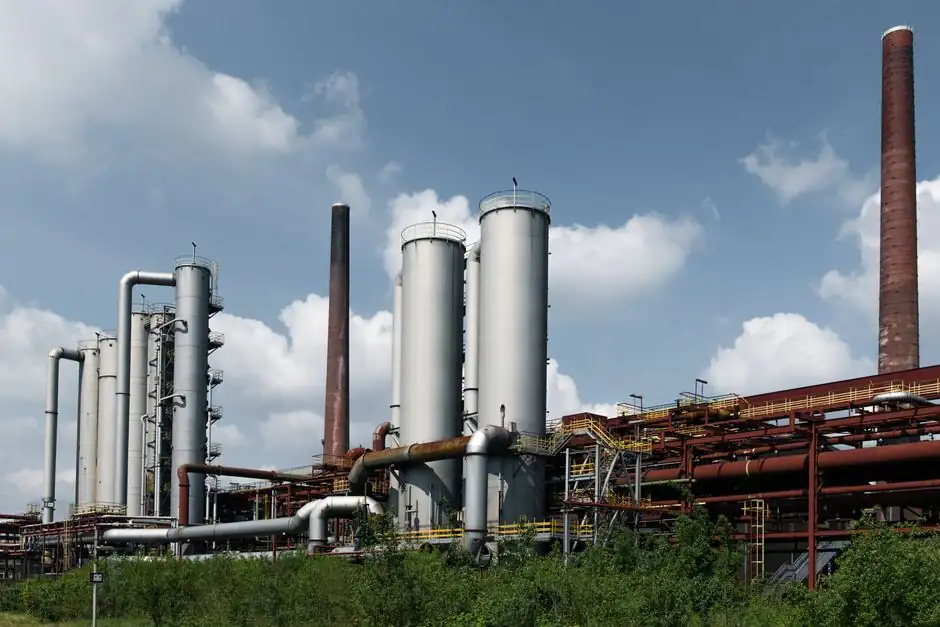
Coal injection as a tuyere supplement is a blast furnace technology, not a cupola technology, and the cost math is fundamentally different in a shaft melter [S3][S4].
The relevant levers inside a cupola furnace are coke rate (kg coke per tonne of liquid iron), blast temperature, oxygen enrichment, and the split between pig iron, returns, and steel scrap in the metallic charge, plus the type of coke itself (metallurgical, foundry, or HC coke) [S4].
Why coal injection does not translate directly from BF to cupola
Pulverised coal injection (PCI) works at the blast furnace tuyere because the BF tuyere raceway is a large, well-instrumented volume fed with 1000-1300°C hot blast and oxygen-enriched wind, designed specifically to combust fine coal and replace coke at the tuyere [S3]. A cupola tuyere is a much smaller tuyere belt with cold or moderately preheated blast (400-600°C in hot-blast designs), and the cupola's counter-flow design burns coke in a packed bed rather than combusting an injected fine solid in a raceway [S4].
For foundries considering the PCI approach, the practical read-across is "use a better coke" or "inject oxygen," not "switch to coal injection" [S1]. Oxygen enrichment in PCI-equipped blast furnaces raises coke rate by about 30 lb per ton of hot metal at matched coal injection rate, because the higher flame temperature accelerates coke gasification at the tuyeres [S1]. In a cupola, by contrast, oxygen injection raises flame temperature, which lets the operator either cut coke charge or raise melting rate, and is one of the few "tuyere-side" levers the foundry actually controls [S4].
What the cupola coke rate target looks like in 2026
These ranges are for shaft-type coke-fired cupolas; they are not transferable to induction or channel holding furnaces, which have no coke line at all.
The economic mechanics work like this: at a foundry coke price around 450-550 USD/t delivered and pig iron value around 550-650 USD/t, every 10 kg/t of coke reduction is worth roughly 4.5-5.5 USD/t of liquid iron on the fuel line, before considering the productivity benefit of a faster melting rate [S5]. A move from a 14% cold-blast coke rate to a 9% hot-blast rate is therefore a 50 kg/t coke cut, worth 22-27 USD/t, before any gain from faster throughput or higher scrap tolerance.
The real cost levers: hot blast, oxygen, charge mix, coke quality
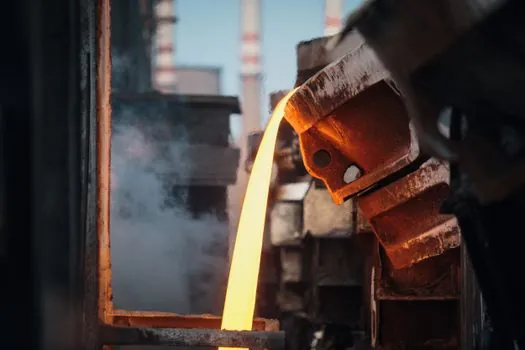
Hot blast is the single largest variable. A cold-blast cupola at 8-10 t/h melting rate carries about 60% thermal efficiency because a large share of the CO generated from the Boudouard reaction (C + CO2 = 2CO, +14009 kJ/kgC) leaves with the stack gas unburned [S4]. A recuperative hot-blast unit burns that CO in a heat exchanger and sends 400-600°C air back through the tuyeres, which is the equivalent of free energy that the cold-blast unit simply vents [S4].
Charge-mix levers also move the number. Foundries running higher proportions of steel scrap need more thermal headroom, and that gets paid for in either higher coke rate or oxygen boost at the tuyeres [S6]. Limestone consumption typically sits at 3-6% of the metallic charge and is not a major cost line, but it is a control variable because excess limestone steals heat in the calcining reaction and pushes the coke rate up to compensate [S6].
Coke quality is the third lever. Pulverised cast iron makers that spec foundry-grade coke with CSR above 60% and CRI below 25% (the standard BF indices, used here as a proxy) typically run on the lower end of the 8-12% hot-blast range, because reactive coke consumes itself in the Boudouard reaction before the iron is fully melted [S3].
Where the PCI comparison actually breaks down
For a blast furnace, PCI at 150-200 kg/thm replaces coke at a 0.7-0.9 kg coke per kg coal replacement ratio, and the global trend has been a steady decline in specific coke consumption as injection rates and burden quality have improved [S7][S8]. The economic saving on a 5000 m³ BF is in the tens of millions of USD per year at 200 kg/thm injection [S7].
For a 5-15 t/h foundry cupola, the same PCI retrofit is not technically standard, and the replacement ratio math does not apply because the cupola has no equivalent raceway geometry and no fine-coal injection lance design [S3][S4]. The honest foundry answer to "can we inject coal?" is "not in the cupola; buy better coke and tighten the blast, or move to a holding furnace and induction duplexing for the iron quality that PCI would otherwise buy you" [S5].
Selection: when to keep the cupola, when to switch
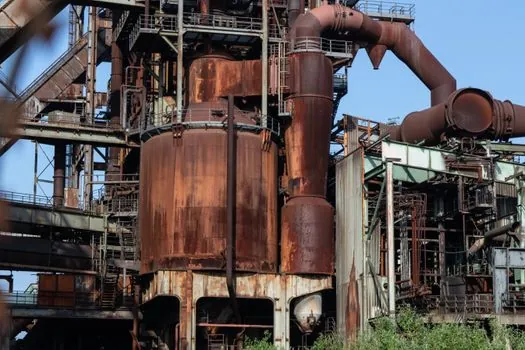
Keep the cupola when production is over 8 t/h, the product mix is dominated by gray or ductile iron with forgiving Fe chemistry, and the foundry already has a coke supply chain locked in [S4]. Switch to induction melting (or an induction/cupola duplex) when energy cost per kWh is low relative to delivered coke, when emissions caps make the cupola's CO and SO2 footprint uneconomic, or when the iron mix requires precise chemistry control beyond what shaft melting can deliver [S5].
Operators running cupola charge calculations as a routine should refresh the cupola charge calculation ratios quarterly, because the coke price ratio to electricity price has been the dominant switching signal since 2022. A more detailed geometric picture of the tuyere belt and well zone, which controls how oxygen and blast actually enter the bed, is laid out in the cupola cross section reference.
Track three signals over the next two quarters to confirm the direction: foundry-grade coke delivered price against electricity tariff per kWh at the same site, the hot-blast temperature actually being held at the tuyeres (not just the recuperator outlet), and the share of metallic charge that is steel scrap versus pig iron, which sets the minimum thermal headroom the coke bed must deliver [S4][S5].